The impacts of the Age of Absolutism focused primarily on several key areas, including: the centralization of government, the growth of national power and professional armies, the development of court culture, the spread of Enlightenment ideas, and the rise of revolutionary movements. The Age of Absolutism was a defining era in European history that stretched from the early 17th century to the late 18th century. During this time, absolute monarchs across Europe consolidated total power in their own hands, reshaping the political and cultural landscape of the continent in ways that continue to influence the modern world.
WHAT WAS THE AGE OF ABSOLUTISM?
The Age of Absolutism was a period in European history during which monarchs claimed total and unchecked power over their kingdoms, answering to no parliament, noble class, or church. Instead, these rulers justified their authority through the idea of the divine right of kings, which held that God had granted them the right to rule and that opposing the king was therefore the same as opposing God. The most well-known absolute monarchs of this era included Louis XIV of France, Peter the Great of Russia, Frederick the Great of Prussia, and Catherine the Great of Russia. The Age of Absolutism eventually gave way to the Age of Enlightenment and the revolutionary movements of the late 18th century, which challenged and largely dismantled the foundations of absolute rule across Europe.
IMPACTS OF THE AGE OF ABSOLUTISM – CENTRALIZATION OF GOVERNMENT
One of the most significant and lasting impacts of the Age of Absolutism was the centralization of government across much of Europe. Before the Age of Absolutism, political power in most European kingdoms was fragmented among feudal nobles, the Catholic Church, regional assemblies, and local institutions. Kings existed but often struggled to enforce their authority beyond their immediate territories, as powerful noble families controlled their own armies, collected their own taxes, and administered justice within their own lands.
Absolute monarchs systematically dismantled this fragmented system and replaced it with centralized structures in which all authority flowed from the crown. They appointed loyal ministers and bureaucrats to manage different areas of government, such as finance, the military, and foreign affairs, and used these officials to extend royal control deep into the provinces. For instance, Louis XIV of France replaced the powerful regional nobility with loyal administrators and required senior nobles to live at his court at Versailles, removing them from their independent power bases. Peter the Great of Russia created a new system of government colleges and a Senate to replace the old noble council, centralizing administration under his personal authority.
This centralization had lasting consequences for the development of the modern state. The administrative structures built by absolute monarchs, including professional civil services, standardized tax systems, and national legal codes, became the foundations on which later constitutional governments were built. In reality, the centralized state that absolute monarchs created did not disappear when absolutism ended. Instead, it was inherited and adapted by the democratic and constitutional governments that followed.
IMPACTS OF THE AGE OF ABSOLUTISM – GROWTH OF NATIONAL ARMIES
A second major impact of the Age of Absolutism was the dramatic growth of national professional armies that were paid by and loyal to the monarch rather than to the feudal nobility. During the Middle Ages, European kings had relied on feudal levies raised by noble lords, which meant that the size and reliability of a royal army depended on the cooperation of the nobility. Absolute monarchs changed this fundamentally by building large permanent armies funded directly from the royal treasury.
Louis XIV of France built the largest army in Europe during his reign, with forces that at their height numbered more than 400,000 men. Frederick the Great of Prussia maintained one of the most rigorously trained and disciplined armies in European history, using it to win a series of remarkable military victories against far larger enemies during the Seven Years’ War. Peter the Great of Russia rebuilt the Russian military entirely along Western European lines, creating a professional army and navy where neither had previously existed in any meaningful form.
These large national armies transformed the nature of warfare in Europe. Conflicts became larger, more expensive, and more devastating than the smaller feudal wars of the Middle Ages. Furthermore, the enormous cost of maintaining these armies placed serious financial strain on European states, particularly France, and contributed directly to the fiscal crises that eventually helped trigger the revolutionary movements of the late 18th century. As such, the military buildup of the Age of Absolutism had consequences that extended far beyond the era itself.
IMPACTS OF THE AGE OF ABSOLUTISM – COURT CULTURE AND THE ARTS
A third important impact of the Age of Absolutism was the development of a distinctive court culture that transformed the arts, architecture, and cultural life of Europe. Absolute monarchs understood that the magnificence of their courts was a reflection of their power and prestige, and they invested heavily in art, music, architecture, and literature as tools of royal propaganda and cultural leadership.
Louis XIV’s Palace of Versailles is the most striking example of this phenomenon. The palace, which became the model for royal residences across Europe, was designed to project an image of royal grandeur and power that was visible to anyone who entered its halls. Its formal gardens, painted ceilings, and mirrored galleries were intended to overwhelm visitors with the wealth and authority of the French crown. The French court under Louis XIV became the cultural standard for all of Europe, with French language, fashion, manners, and art imitated by courts from Madrid to St. Petersburg.
This patronage of the arts during the Age of Absolutism produced some of the most celebrated cultural achievements in European history. The Baroque style in art and architecture flourished under the patronage of Catholic absolute monarchs in France, Spain, and the Habsburg lands. Composers such as Jean-Baptiste Lully at the French court and, later, Johann Sebastian Bach in Germany produced some of the greatest music of the period. Furthermore, Catherine the Great of Russia used her patronage of the arts to position Russia as a major European cultural power, founding the Hermitage Museum in St. Petersburg and assembling one of the greatest art collections in the world.
IMPACTS OF THE AGE OF ABSOLUTISM – SPREAD OF ENLIGHTENMENT IDEAS
One of the most paradoxical and consequential impacts of the Age of Absolutism was its contribution to the spread of Enlightenment ideas that ultimately challenged and undermined absolute monarchy itself. Several of the most important enlightened absolute monarchs, including Frederick the Great and Catherine the Great, were enthusiastic supporters of Enlightenment philosophy and maintained personal correspondences with leading Enlightenment thinkers such as Voltaire, Diderot, and Montesquieu.
By engaging with Enlightenment ideas, these monarchs helped spread and legitimize a body of thought that argued for rational government, individual rights, religious tolerance, and the accountability of rulers to their people. Frederick the Great introduced religious tolerance and legal reforms in Prussia and hosted Voltaire at his court for several years. Catherine the Great corresponded with French philosophers and founded schools, hospitals, and cultural institutions across Russia in the Enlightenment spirit. In doing so, both rulers helped make Enlightenment ideas more widely known and respectable across European society.
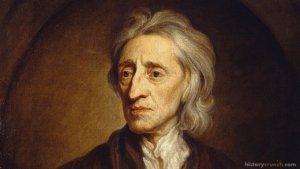
More specifically, the educated middle classes who read the works of Voltaire, Rousseau, and Locke did not stop at endorsing enlightened kings. They went further, demanding representative government, individual rights, and an end to the privileges of the old nobility. In this sense, the absolute monarchs who embraced Enlightenment ideas helped plant the seeds of their own political downfall. The ideas that circulated at the courts of Frederick and Catherine eventually found expression not in enlightened monarchy but in revolution.
IMPACTS OF THE AGE OF ABSOLUTISM – THE RISE OF REVOLUTIONARY MOVEMENTS
The most dramatic and far-reaching impact of the Age of Absolutism was the revolutionary reaction it ultimately provoked. The concentration of power in the hands of absolute monarchs, the enormous financial burdens created by constant warfare and lavish court expenditure, and the growing influence of Enlightenment ideas that challenged the legitimacy of absolute rule all combined to create conditions in which revolutionary movements could take hold.
The American Revolution of 1776 was the first major successful challenge to hereditary absolute authority in the modern era. The American colonists drew heavily on Enlightenment arguments, particularly the ideas of John Locke, to justify their rejection of British royal authority and to establish a new government based on the consent of the governed. Their success demonstrated that it was possible to overthrow a hereditary monarchy and replace it with an elected republican government.
The French Revolution of 1789 was the most dramatic and direct consequence of the Age of Absolutism. France, which had been the most celebrated example of absolute monarchy under Louis XIV, had by the late 18th century accumulated enormous debts from decades of warfare and lavish royal spending, while the vast majority of its population lived in poverty and paid crippling taxes. When revolution broke out, it swept away the absolute monarchy with extraordinary violence. Louis XVI was arrested, tried, and executed in 1793. The revolution proclaimed the principles of liberty, equality, and popular sovereignty in direct opposition to everything the Age of Absolutism had stood for.
The reverberations of the French Revolution spread across Europe, inspiring further challenges to absolute monarchy in the decades that followed and setting the continent on a long and often violent path toward constitutional government and democracy. As such, the rise of revolutionary movements was the most consequential impact of the Age of Absolutism, transforming not just the political systems of individual countries but the entire course of modern history.