The Thirteen Colonies were a group of British territories established along the Atlantic coast of North America between 1607 and 1732. Governed under the authority of the British Crown, these colonies grew over more than a century into thriving communities with their own economies, laws, and cultures. By the 1770s, growing conflicts with Britain over taxation and self-government pushed the colonies toward rebellion, and in 1776 they declared their independence and joined together to form the United States of America.
What Was Colonial America?
Colonial America refers to the period in North American history during which European powers, primarily Britain, France, and Spain, established permanent settlements along the continent. For Britain, this era lasted from the founding of the first permanent English settlement at Jamestown, Virginia, in 1607, through the American Revolution of 1775 to 1783. During this time, Britain built a string of colonies along the eastern seaboard that were populated by settlers from across Europe, governed by a mix of royal authority and local assemblies, and sustained by economies built on farming, trade, and in many cases the labor of enslaved Africans. The Thirteen Colonies that eventually broke from Britain and declared independence were the heart of this colonial world, and their history shaped nearly every aspect of what the United States would become.
The Founding of the First Colonies
The first permanent British settlement in North America was established at Jamestown, Virginia, in the spring of 1607. An expedition organized by the London Company brought 105 settlers to the shores of the Chesapeake Bay, where they founded the colony primarily in hopes of finding gold and other profitable resources. The early years were brutal. The colonists were poorly prepared for survival, and fewer than half lived through the first winter. Disease, starvation, and conflict with local Native American tribes threatened to destroy the settlement entirely.
The colony’s survival ultimately came down to tobacco. In 1612, a colonist named John Rolfe began successfully growing a variety of tobacco that proved highly popular in England. Tobacco became Virginia’s main export and the foundation of its economy, and the colony began to grow steadily. The first enslaved Africans were brought to Virginia in 1619, beginning a practice that would become deeply embedded in the economy of the southern colonies.
The second major wave of settlement came in 1620, when a group of English Puritans known as the Pilgrims arrived aboard the Mayflower and established Plymouth Colony in what is now Massachusetts. Ten years later, a larger group of Puritans founded the Massachusetts Bay Colony nearby. These settlers came not for profit but primarily for religious freedom, hoping to build communities based on their Protestant faith. With the help of local Native peoples, the Massachusetts colonies learned to farm, fish, and trade, and they grew quickly. From Massachusetts, new settlements spread outward into what became the other New England colonies of Connecticut, Rhode Island, and New Hampshire.
The Three Colonial Regions
The Thirteen Colonies are traditionally divided into three regions, each with its own distinct character, economy, and way of life.
The New England Colonies
The New England Colonies consisted of Massachusetts, Connecticut, Rhode Island, and New Hampshire. Religion played a central role in founding and shaping this region. The Puritans who settled Massachusetts wanted to build communities organized around their faith, and that religious spirit influenced everything from how towns were governed to how schools were built. In fact, Massachusetts established the first public school system in the colonies, requiring towns of a certain size to provide education for their children.
The economy of New England was built on fishing, shipbuilding, and trade. The rocky soil of the region made large-scale farming difficult, so colonists turned to the sea. New England ports became busy centers of commerce, trading fish, timber, and manufactured goods with Britain and the Caribbean. Connecticut wrote the Fundamental Orders in the late 1630s, a document often called the first written constitution in the colonies. Rhode Island was founded in 1636 by Roger Williams, a religious dissenter who had been expelled from Massachusetts, and it became known for its unusual degree of religious tolerance.
The Middle Colonies
The Middle Colonies included New York, New Jersey, Pennsylvania, and Delaware. This region was the most diverse of the three, attracting settlers from across Europe including English, Dutch, German, Swedish, and Irish immigrants. For this reason, the Middle Colonies are sometimes called the breadbasket of colonial America, as they produced large quantities of grain, wheat, and other crops that fed both the colonies and European markets.
Pennsylvania was founded in 1681 when King Charles II granted land to William Penn, a Quaker who wanted to create a colony based on the principles of religious tolerance and peaceful relations with Native Americans. Penn advertised his colony across Europe, and it grew quickly into one of the most prosperous and diverse settlements in the Americas. New York had originally been a Dutch colony called New Netherland before England seized it in 1664 and renamed it in honor of the Duke of York. Delaware was originally part of Pennsylvania before receiving its own assembly in 1701.
The Southern Colonies
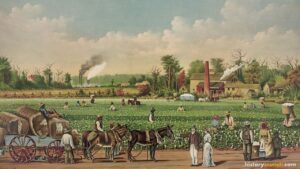
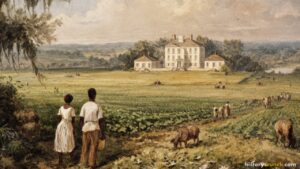
The Southern Colonies consisted of Maryland, Virginia, North Carolina, South Carolina, and Georgia. This region had the warmest climate of the three and the most fertile land for large-scale farming. The economies of the southern colonies were built on cash crops, particularly tobacco in Virginia and Maryland, and rice and indigo in the Carolinas and Georgia. These plantations required enormous amounts of labor, and the southern colonies became increasingly dependent on the labor of enslaved Africans as the 17th century progressed.
Maryland was founded in 1632 as a refuge for English Catholics, though it later adopted a policy of religious tolerance for all Christians. Georgia was the last of the thirteen colonies to be established, chartered in 1732 by King George II and founded by James Oglethorpe. It was originally intended as a refuge for England’s poor, with rules against slavery and large landholdings. Over time, however, those rules were abandoned, and Georgia came to resemble the other southern colonies in its dependence on enslaved labor.
Government and Daily Life
Each of the Thirteen Colonies had its own government, though all operated under the authority of the British Crown. Most colonies had an elected assembly that could pass local laws and levy taxes, giving colonists a meaningful degree of self-government from an early stage. This experience of local democracy became deeply important to colonial identity. Over 90 percent of colonists worked as farmers, though port cities such as Boston, New York, and Philadelphia grew into significant centers of trade and commerce.
Daily life varied considerably from region to region. In New England, towns were clustered around a central meeting house that served as both a church and a community gathering place. In the southern colonies, life was often more spread out across large plantations. By 1770, the economic output of the Thirteen Colonies made up roughly 40 percent of the gross domestic product of the entire British Empire, reflecting how productive and prosperous the colonies had become.
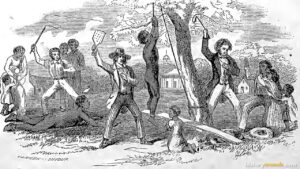
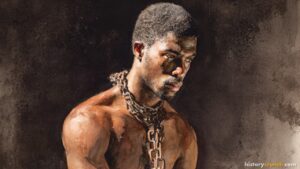
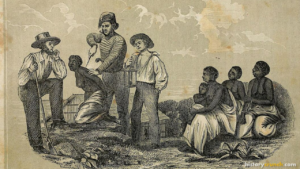
Slavery was legal and practiced in all thirteen colonies, though its scale and importance varied. In the southern colonies, enslaved people formed a large portion of the population and performed nearly all of the agricultural labor on large plantations. In the northern colonies, enslaved people were fewer in number but still present, often working as household servants or skilled laborers. Rhode Island, for instance, was deeply involved in the Atlantic slave trade, with ships from the colony making around 1,000 voyages to transport enslaved Africans to the Americas.
Relations with Native Americans
From the very beginning, the relationship between European colonists and Native American peoples was marked by tension, conflict, and displacement. Some early colonies, such as Plymouth, established initial relationships of trade and cooperation with neighboring tribes. The Pilgrims famously received help from members of the Wampanoag people in their early years, which is commemorated in the story of the first Thanksgiving.
As the colonies expanded, however, conflict became increasingly common. Land was taken from Native nations through a combination of purchase, treaty, and outright force. Wars broke out repeatedly between colonists and Native peoples throughout the 17th and early 18th centuries, including King Philip’s War in New England in 1675 and 1676, one of the deadliest conflicts in colonial American history. By the mid-18th century, the colonial population had grown to more than 2 million, and Native American communities across the eastern seaboard had been dramatically reduced by disease, warfare, and the loss of their lands.
Growing Tensions with Britain
Through most of the colonial period, Britain followed a policy of relatively loose control over the colonies, allowing local assemblies to govern day-to-day affairs. This changed significantly after the French and Indian War, which ended in 1763. Britain had spent enormous sums fighting that war and expected the colonies to help pay the debt. Parliament began passing a series of new taxes and regulations, including the Stamp Act of 1765 and the Townshend Acts of 1767, that colonists found deeply objectionable.
The central grievance was representation. Colonists argued that it was fundamentally unjust for a parliament in which they had no elected representatives to tax them. The phrase “no taxation without representation” became a rallying cry across the colonies. Protests, boycotts, and acts of defiance followed, including the Boston Tea Party of December of 1773, when colonists dumped a shipment of British tea into Boston Harbor to protest a tax on tea.
Britain responded with harsh punitive measures known as the Intolerable Acts, which further inflamed colonial opinion. By 1775, open armed conflict had broken out between colonial militias and British troops at Lexington and Concord in Massachusetts. The Thirteen Colonies were at war with Britain.
Independence and the Formation of the United States
On July 4, 1776, the Continental Congress formally adopted the Declaration of Independence, written primarily by Thomas Jefferson. The document declared that the thirteen colonies were free and independent states, no longer under British rule, and laid out the philosophical principles on which the new nation would be founded. The Revolutionary War that followed lasted until 1783, when Britain formally recognized American independence in the Treaty of Paris.
The thirteen colonies that had spent more than 150 years developing their own distinct identities, economies, and governments now had to build a nation together. The experience of colonial self-government, the traditions of local democracy, and the disputes over rights and representation that had driven the Revolution all shaped the Constitution that was drafted in 1787 and the country that grew from it.
Significance of the Thirteen Colonies
The Thirteen Colonies left a profound mark that reaches into nearly every part of American life today. The traditions of elected government, freedom of religion, and individual rights that developed in the colonial period became foundational principles of the United States. The experience of local self-government that colonists built over more than a century gave the founders of the new nation both the confidence and the practical knowledge to design a democratic republic from scratch.
At the same time, the colonial era established patterns of racial inequality, the dispossession of Native peoples, and the institution of slavery that the country would struggle with for generations. The wealth that made the colonies so productive was built in large part on the forced labor of enslaved Africans, a fact that shaped American society long after the Revolution was won.
The colonies that became the original thirteen states remain the geographic and historical foundation of the nation. Their history from 1607 to 1776 is in many ways the story of how the United States began.