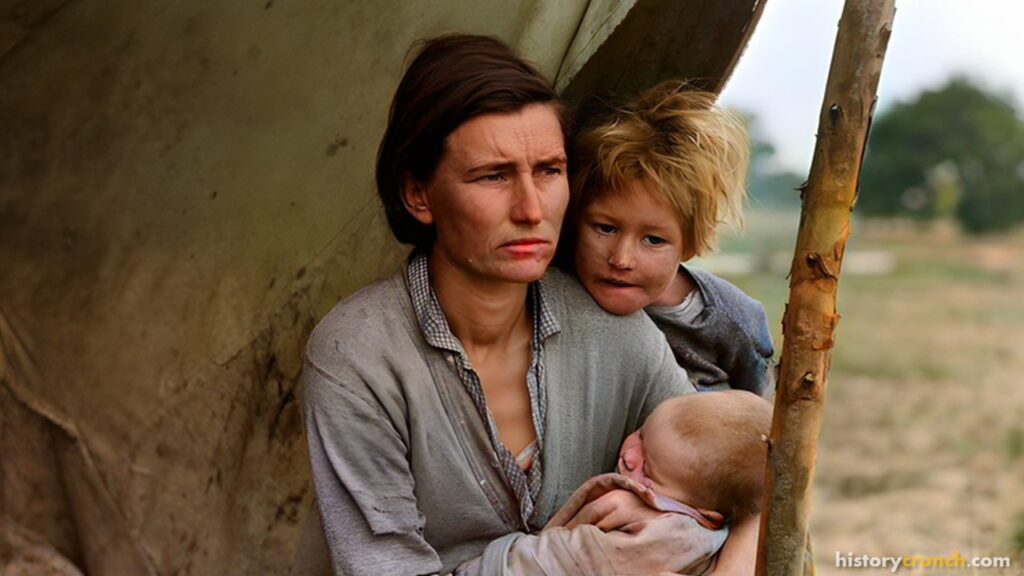
Women in the Great Depression played a key role in the daily lives of their families and communities. The Great Depression, a period of severe economic downturn that began in 1929, profoundly affected every aspect of American life. For instance, women during the Great Depression experienced incredible hardships. This article explores the role of women in the Great Depression, highlighting their significant contributions to their families, communities, and the broader economy.
WOMEN IN THE GREAT DEPRESSION – ECONOMICS AND THE WORKFORCE
The economic turmoil of the Great Depression led to widespread job losses and wage cuts. In fact, an important aspect of the economic hardships of the time, centered on the issue of mass unemployment. As men lost their jobs or faced reduced incomes, women became increasingly more responsible for entering the workforce and earning an income for the family. For instance, they often took on low-paying, labor-intensive jobs. They took on various roles, from factory workers and domestic helpers to clerical positions. Women also played vital roles as teachers, nurses, and social workers, providing essential services to their communities.
However, they faced numerous challenges, including wage discrimination and poor working conditions. Despite these obstacles, women workers contributed significantly to the economy, maintaining essential services and production. While women had entered the workforce before, the Great Depression caused such economic hardship that it led to more widespread employment for women while they also played important roles in the homes and lives of their families.
WOMEN IN THE GREAT DEPRESSION – FAMILY LIFE
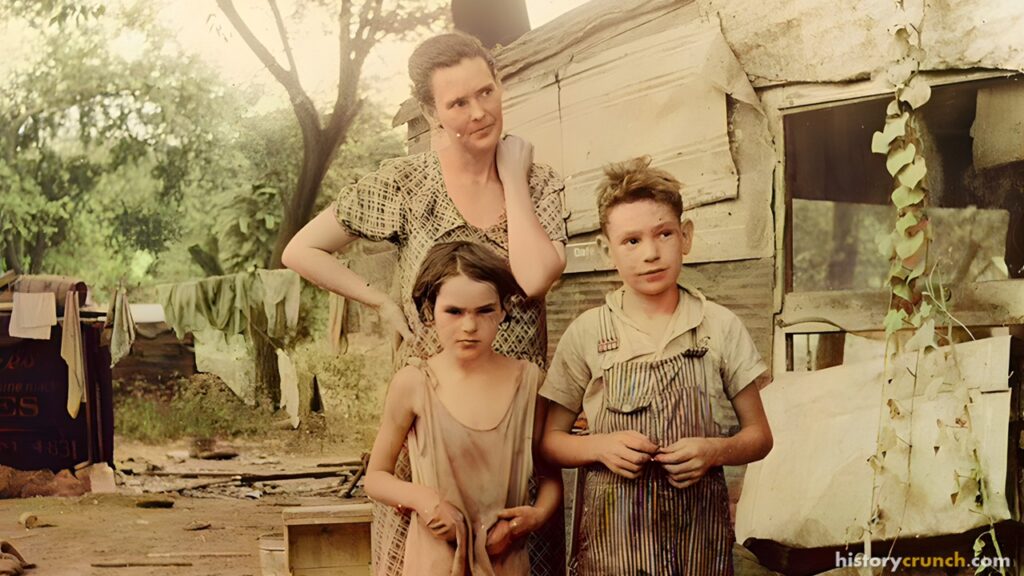
The economic pressures of the Great Depression were so great that they reshaped family dynamics, with women shouldering increased responsibilities both at home and in the workplace. Traditional gender roles were often upended as women balanced multiple roles, managing household chores, caring for children, and earning an income. These shifts highlighted the critical role of women in maintaining family stability during times of crisis.
With that said, the experiences of women during the Great Depression varied significantly between urban and rural settings. In cities, women often found employment in factories, retail sectors, and domestic service, while rural women faced the additional burden of agricultural work.
The struggle of African American women in the Great Depression should also be noted. They often faced also racial and gender discrimination, yet played crucial roles in their communities through work and activism.
WOMEN IN THE GREAT DEPRESSION – NOTABLE WOMEN
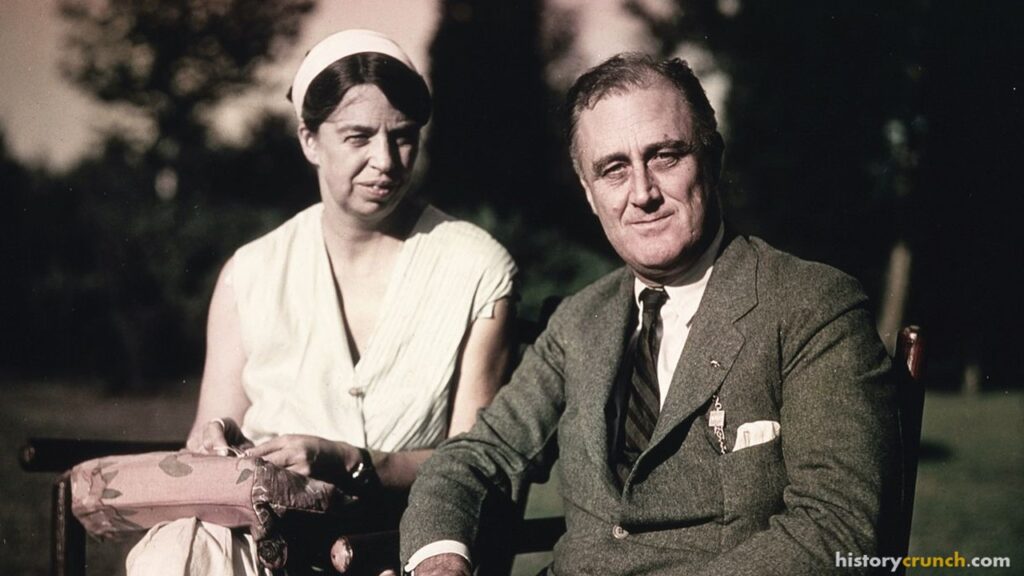
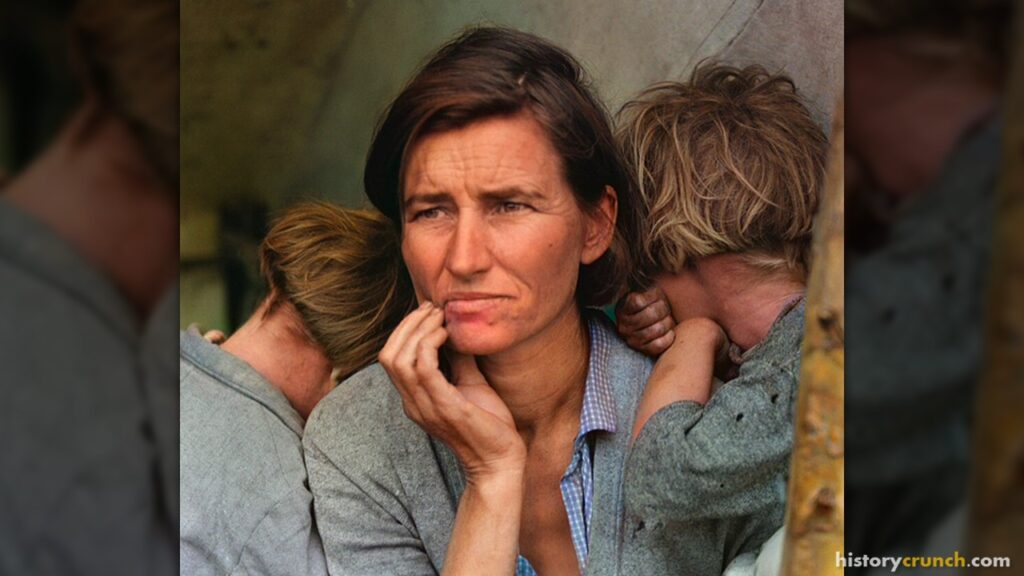
Several women stood out for their contributions during the Great Depression. First was Eleanor Roosevelt. As First Lady, she championed social causes and worked to improve the lives of women and the disadvantaged. Another was Frances Perkins who served as the Secretary of Labor at the time. She was instrumental in crafting New Deal policies and advancing labor rights. Finally, Dorothea Lange was a renowned photographer. Lange documented the struggle of rural families, bringing attention to their hardships through her powerful images.