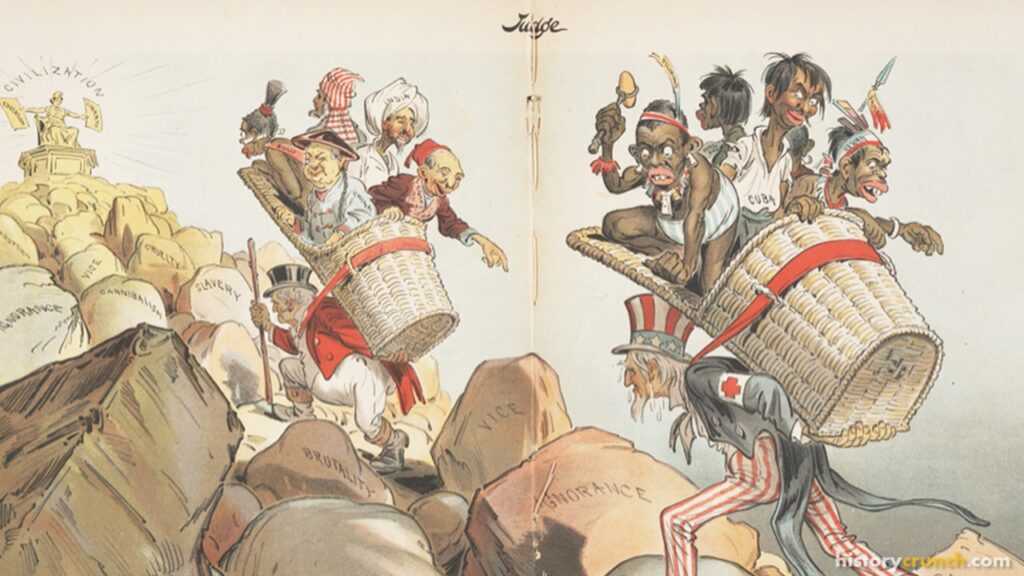
Ethnocentrism in the Age of Imperialism played an important role in European colonization of regions, such as: Africa, India, Australia and the Americas. Ethnocentrism is the idea of judging other ethnicities or cultures based upon your own ethnicity or culture. While this comparison doesn’t necessarily need to be negative in nature, ‘ethnocentrism’ is often associated with aspects of racism and prejudice. For example, when people are being ethnocentric, they are sometimes expressing the view that another ethnicity or culture is inferior. As such, the concept of ethnocentrism is often associated with historical events, which best exemplify this, including the Age of Imperialism.
ETHNOCENTRISM OVERVIEW
As stated above, ethnocentrism is the idea of judging other ethnicities and cultures based upon your own ethnicity or culture. In general, ethnocentrism as a term is part of the study of anthropology and other social sciences. In these fields, ethnocentrism is considered to be a form of judging others as inferior or worse. This then tends to result in feelings of prejudice, which is when one group of people considers another group to be lesser. As such, historians consider ethnocentrism to be a learned view, in that it is something that people are taught as they grow up. As well, ethnocentrism is an important tool in terms of understanding someone’s worldview. For example, ethnocentrism is an important part of major historical events such as the Age of Imperialism. During this time, certain groups judged others they viewed as inferior.
ETHNOCENTISM IN THE AGE OF IMPERIALISM (EUROCENTRISM)
Further to the idea of ethnocentrism is the term ‘eurocentrism’. Eurocentrism is a more modern term and is generally used by historians in reference to European colonialism in the Age of Imperialism. During this timeframe, which occurred throughout the 19th century and early 20th century, the major European nations expanded their empires throughout regions such as Africa and Asia. The European nations (Britain, Belgium, France, Germany, Portugal and Spain) viewed the indigenous people that they encountered as inferior to Europeans and treated them in terrible ways. For instance, Eurocentric views resulted in the enslavement of millions of Africans in the African Slave Trade. European slave traders didn’t view the Africans as people and instead saw them as a commodity – something to be bought and sold.
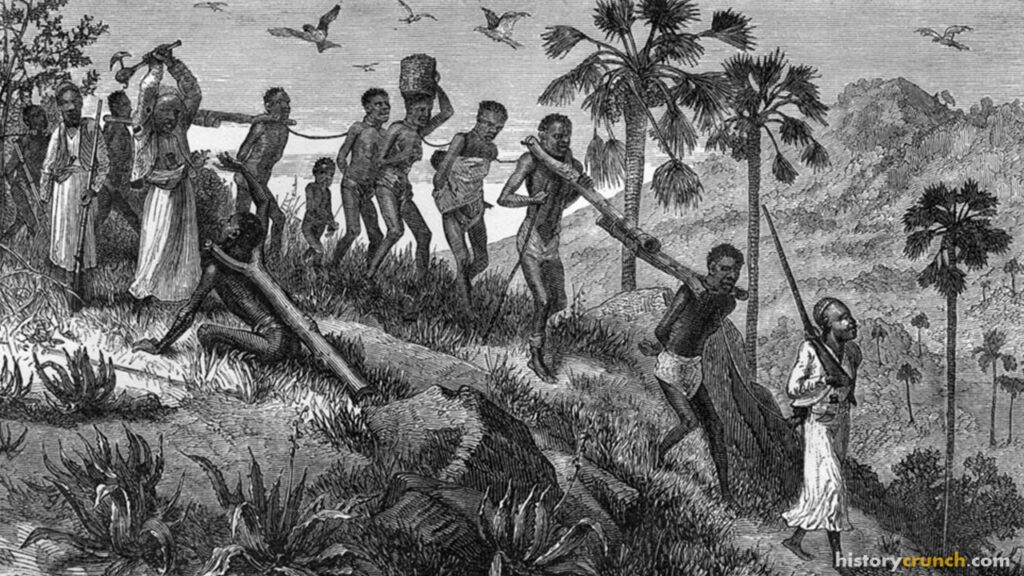
European imperialism throughout Africa was centered on the concept of ethnocentrism (or eurocentrism). In fact, historians consider European ethnocentrism in the 19th century to be one of the main causes of the Scramble for Africa. The ‘Scramble for Africa’ is the term that historians use to refer to the expansion of European empires into Africa. It is referred to as a ‘scramble’ due to the way in which the European nations raced to capture territory to expand to their empires. The Scramble for Africa is considered to have occurred from approximately 1870 until the outbreak of World War I in 1914.
As Europeans travelled the globe and colonized different regions, they came into contact with all sorts of different indigenous people. As such, European beliefs about their own supposed racial superiority helped inform their interactions with the people they encountered, including native Africans. Their Eurocentric beliefs were justified by European governments due to a concept called Social Darwinism. In short, Social Darwinism is the idea that some ethnic groups or races are superior to others and therefore more ‘fit’ to rule over those that are less ‘fit’.
Charles Darwin was the renowned British scientist who is credited with developing the theory of evolution in his famous book ‘Origin of Species’. While Darwin was referring to biological studies of species, others used his ideas and applied them to human beings. Therefore, supporters of Social Darwinism attempted to use the ideas of Charles Darwin to scientifically justify or prove ethnocentric beliefs. Social Darwinism was particularly popular in the early 1870s, when Europeans were carrying out their massive imperialistic campaigns as part of the Age of Imperialism.
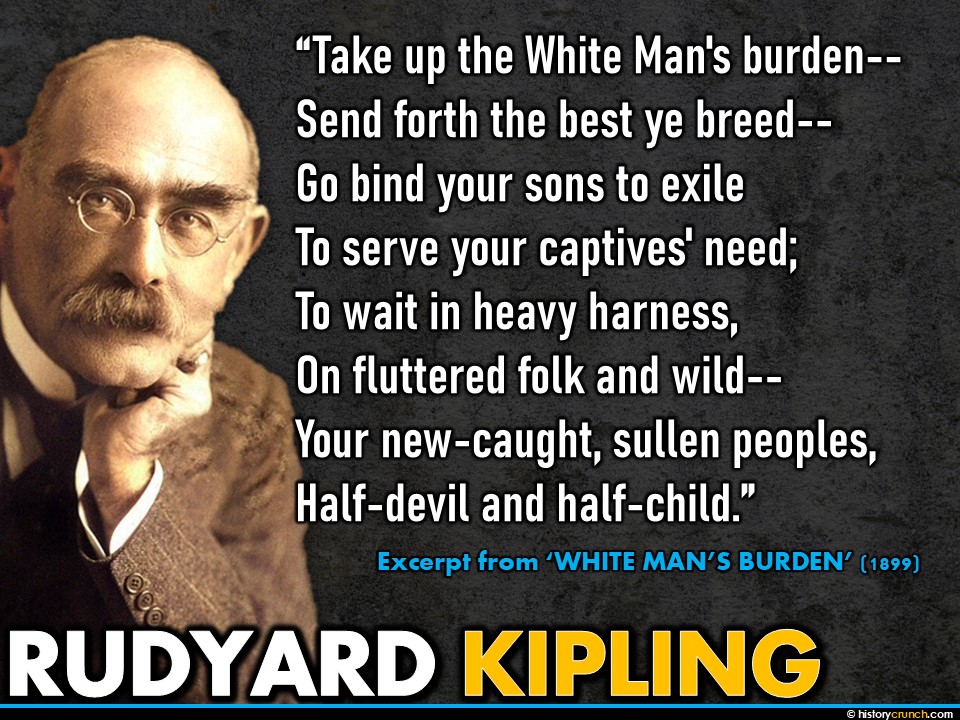
The beliefs of ethnocentrism and Social Darwinism can be seen in a famous poem by Rudyard Kipling called ‘The White Man’s Burden’. In the poem, Kipling calls on Europe to ‘send forth the best ye breed’ to ‘take up the white man’s burden’. In general, Kipling is promoting the idea that people of European descent are biologically more superior to other people from around the world, and the ‘burden’ of the white man is to ‘fix’ the uncivilized indigenous peoples. As a result, the beliefs of ethnocentrism and eurocentrism led to the events of the Scramble for Africa in 1870 because the views of superiority on the part of the Europeans empowered them to dominate the people they encountered.