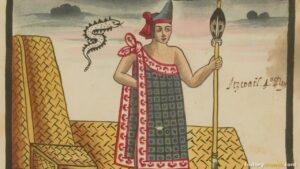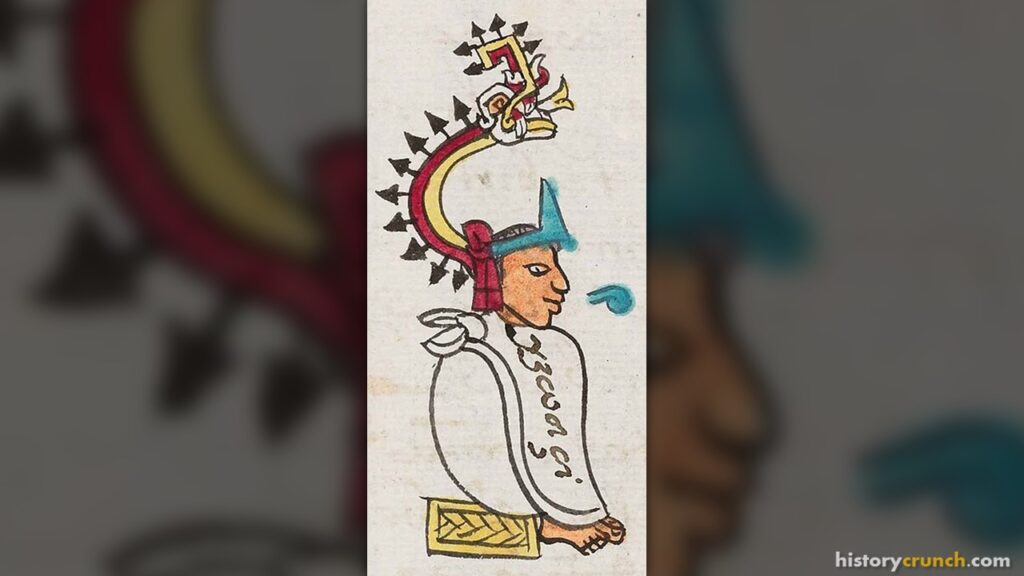
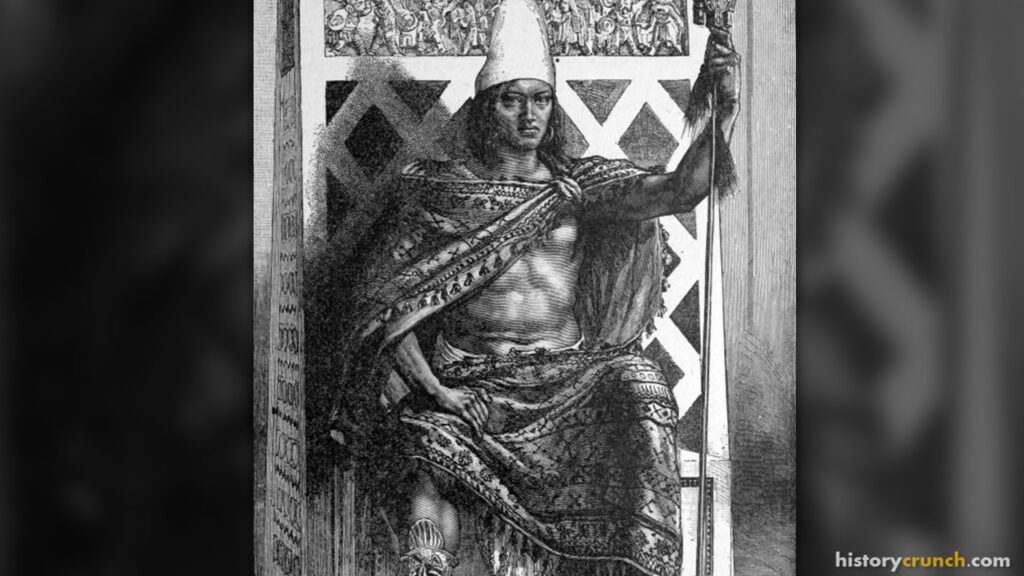
Aztec Emperors (Huey Tlatoani) were the main rulers of the Aztec Empire. Also known as the ‘Great Speaker’, the emperor held absolute political, military, and religious control over Aztec society. Chosen from the noble class by a council of elites, the huey tlatoani was believed to rule by divine right, acting as the representative of the Aztec gods.
WHO WERE THE AZTEC?
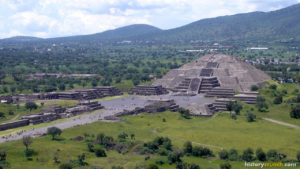
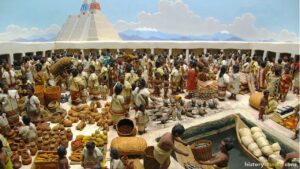
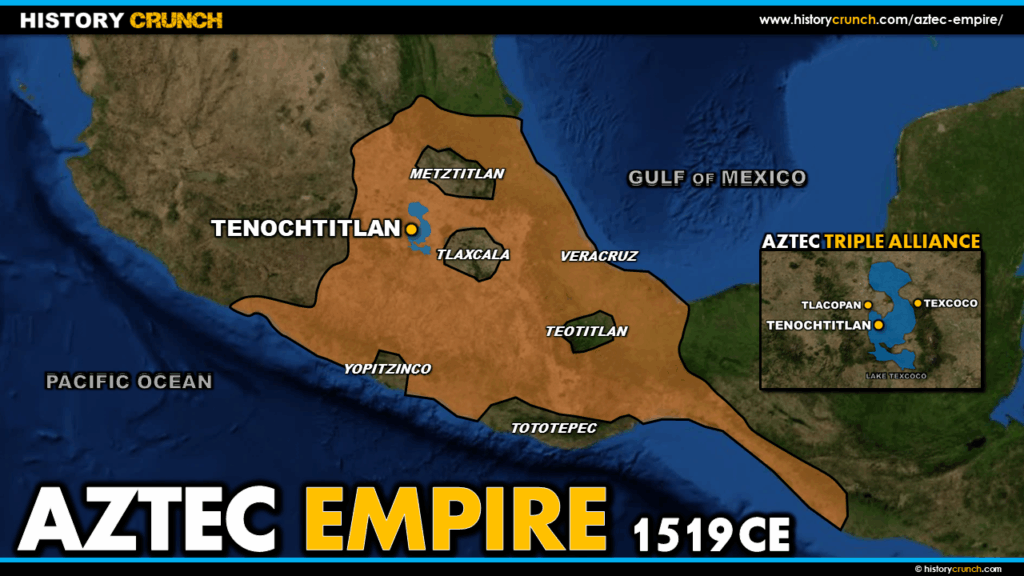
The Aztec Empire was a civilization in central Mexico that thrived in the time before the arrival of European explorers during the Age of Exploration. Throughout its history as a civilization the Aztec Empire expanded across much of central Mexico and other surrounding areas, to become the most dominant and powerful people in the region. Tenochtitlan was the center of this vast empire.
AZTEC CITY-STATES – ALTEPETL
Mesoamerican city-states or ‘altepetl’ (as they were referred to as in the Aztec language of Nahuatl) were the basic structure of the Aztec Empire. Following the Aztec’s founding and construction of their capital city and altepetl of Tenochtitlan in the Valley of Mexico in 1325, they quickly established their authority across the other societies in the valley. At the time the Valley of Mexico was populated by many different powerful civilizations and altepetl, including: Chalco, Tepanec, Tlacopan, Texcoco, Culhuacan, and Chichimec. Several of these civilizations were also on the shores of Lake Texcoco, including the Culhuacan, which were on the south shore. The spread of Aztec authority throughout the region meant that the Aztec Empire expanded and came to control, many of these different societies and their altepetl.
AZTEC EMPERORS – HUEY TLATOANI
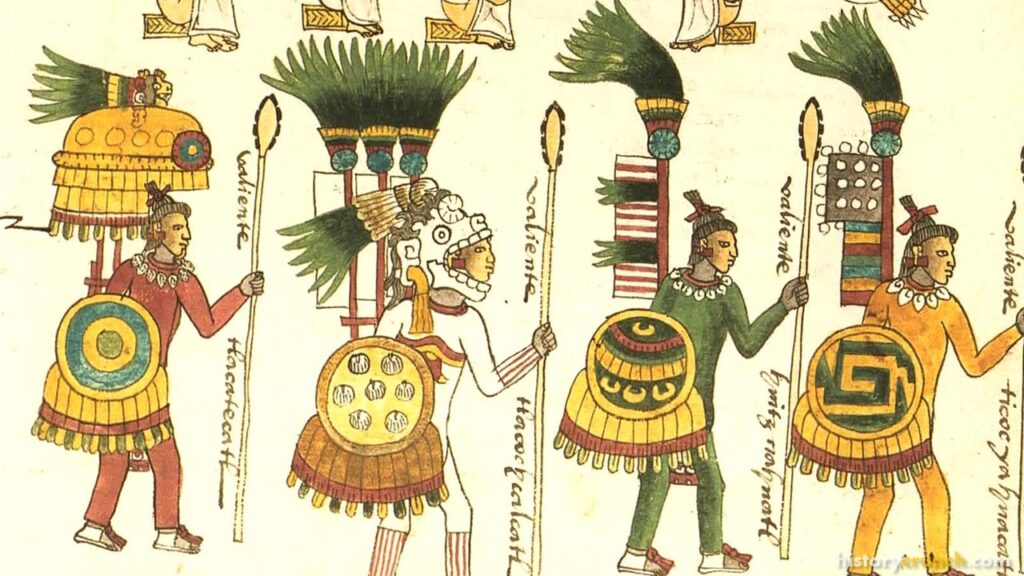
Each altepetl was ruled by a leader referred to as a ‘tlatoani’, which translates to as ‘Speaker’. The tlatoani was an important figure in Mesoamerica city-states because they essentially controlled and organized the government, military and economy of the altepetl. In general, each tlatoani were from the higher classes and had links to the royal families present in the society at that time. As such, authority over an altepetl usually stayed within a single powerful family and passed down through hereditary lines. Also, tlatoani served in their position for life. The second in command of the altepetls was referred to as the cihuacoatl. This person also came from the higher classes and assisted the tlatoani by organizing different aspects of the altepetl.
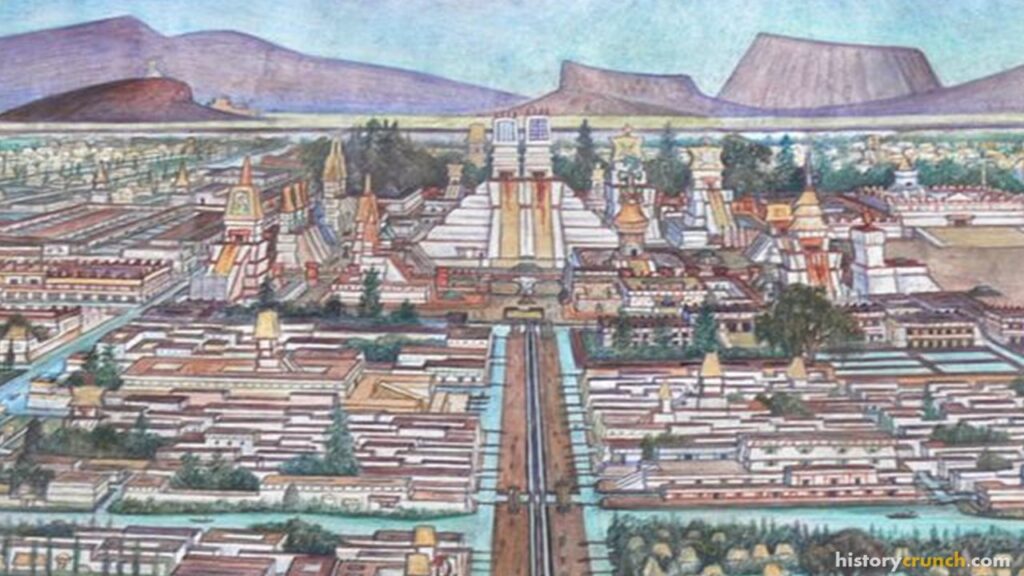
The leader of the Aztec capital Tenochtitlan and the one who ruled over all of the other altepetls in the Aztec Empire was called the ‘huey tlatoani’ or ‘Great Speaker’. The huey tlatoani played an important role in Aztec history and the expansion of the Aztec Empire. They primarily ruled over the Aztec Empire as a whole. For instance, the huey tlatoani oversaw the tribute system present in the Aztec Empire, the military and any wars that were carried out, and the expansion of the empire to new regions. Since the huey tlatoani was concerned with the affairs of the overall empire, the cihuacoatl in Tenochtitlan carried out the administration of the city itself. Today, historians refer to the huey tlatoani as Emperors since they oversaw all aspects of the far-reaching Aztec Empire.
While the huey tlatoani had significant power in the government of the Aztec Empire it’s also important to recognize the role and power of the Aztec Council. The Council was made up of four members who advised the huey tlatoani on matters related to the military, economy and tribute system. As well, the Council was generally made up of members of the nobility. As such, new huey tlatoani were usually previous members of the Council. The Council provided an important role for the wealthy classes to have control over different aspects of the society while also influencing the heuy tlatoani.
LIST OF AZTEC EMPERORS
As stated above, the Aztec civilization existed from 1325 when the city of Tenochtitlan was founded until 1521 when the Aztec were conquered by Spanish conquistadors under the leadership of Hernán Cortes. During that period of time, the Aztec were ruled by 11 different huey tlatoani. These emperors are listed below. Click on the links to learn more.
- Acamapichtli (from 1369 to 1391 CE)
- Huitzilihuitl (from 1391 to 1415 CE)
- Chimalpopoca (from 1415 to 1426 CE)
- Itzcoatl (from 1427 to 1440 CE)
- Moctezuma I (from 1440 to 1469 CE)
- Axayacatl (from 1469 to 1481 CE)
- Tizoc (from 1481 to 1486 CE)
- Ahuitzotl (from 1486 to 1502 CE)
- Moctezuma II (from 1502 to 1520 CE)
- Cuitlahuac (1520 CE)
- Cuauhtemoc (1521 to 1525 CE)