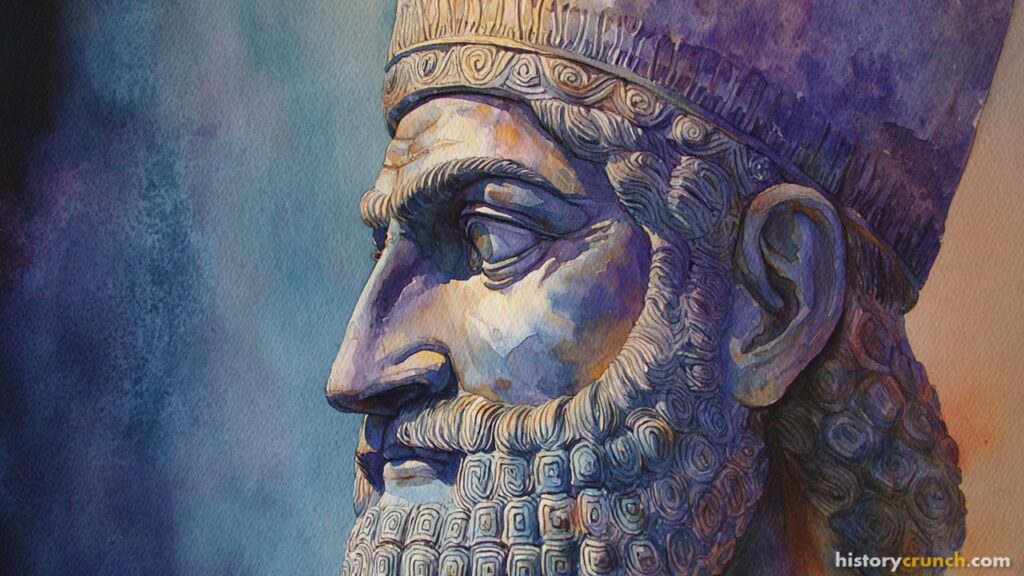
Hammurabi lived from 1810 until 1750 BCE and was the sixth king of the Babylonian kingdom. Today he is remembered as a significant figure in ancient Mesopotamian history and for the Code of Hammurabi. As a result, Hammurabi and his contributions are considered to be significant milestones in the development of human rights and codified laws. As well, Hammurabi is an important figure in ancient history and the ancient history of the Middle East.
HAMMURABI – EARLY LIFE
Hammurabi was born in the Kingdom of Babylon in 1810 BCE. Babylon was located in ancient Mesopotamia, which was situated between the Tigris and Euphrates rivers in the Middle East. Hammurabi served as the sixth king of the Babylonian kingdom and reigned over the kingdom from 1792 until 1750 BCE.
Hammurabi’s father, Sin-Muballit, served as the king of Babylon before Hammurabi and helped to expand the Kingdom of Babylon to include more territory. With that said, the political landscape in ancient Mesopotamia was quite complex, as there were several powerful empires that rose to power in that timeframe. For example, other powerful kingdoms in the region included: Elam, Assyria, Isin, Eshnunna, and Larsa.
HAMMURABI – KING OF BABYLON
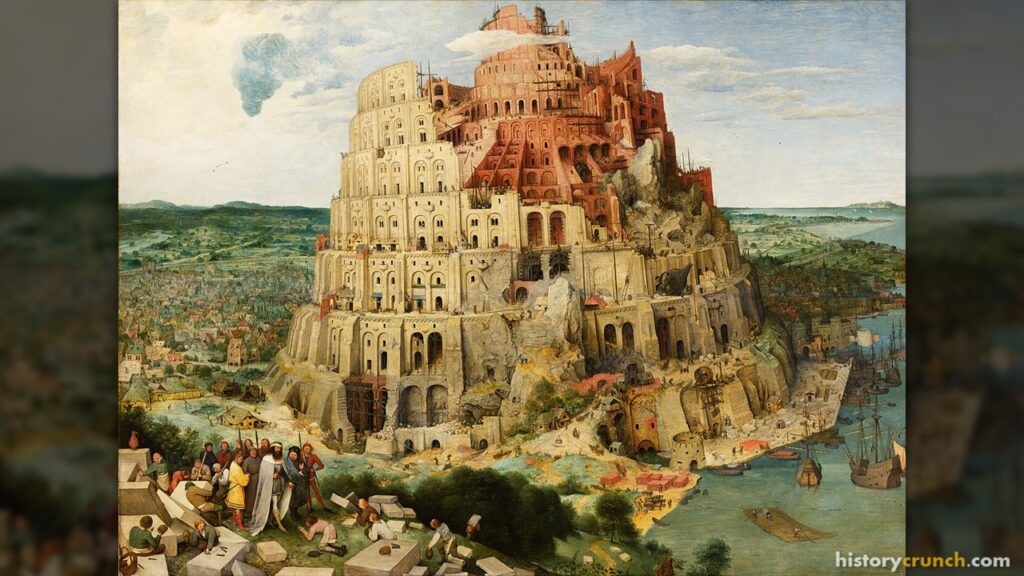
Regardless, Hammurabi rose to power and took command over Babylon in 1792 BCE after his father stepped down due to failing health. During Hammurabi’s reign as king of Babylon, he worked to expand the power and authority of the kingdom. For instance, Hammurabi forged alliances with other powerful city-states in the region and defeated his enemies. By 1763 BCE Hammurabi had gained control over most of the southern regions of Mesopotamia. A few years later he worked to defeat the remaining empires in the region and essentially took command over the entire Mesopotamian territory.
HAMMURABI – CODE OF HAMMURABI
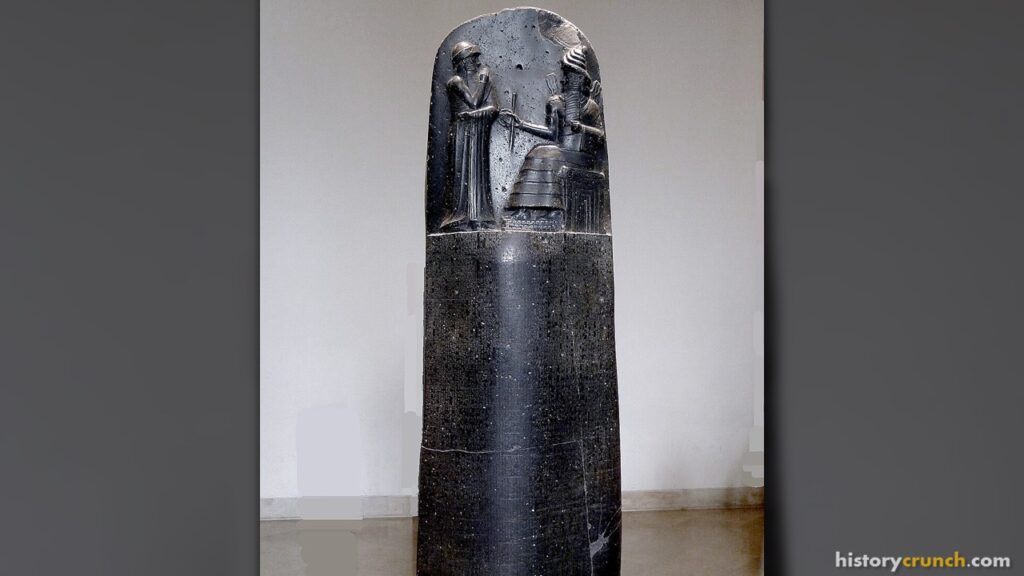
While his expansion of the Kingdom of Babylon was significant, Hammurabi is best remembered today for his codification of laws. The Code of Hammurabi is significant because it is one of the first examples of codified laws in ancient history and inspired the development of laws and rights in the centuries that followed. In fact, the Code of Hammurabi is one of only a few texts from that time period that have survived into modern times. A copy of the Code of Hammurabi is currently located in the Louvre Museum in Paris, France. It is a large stone slab (referred to as a ‘stele’) that stretches 7 and a half feet tall. In the time of Hammurabi, it is said that the large slab was positioned in the center of the city, so that the Babylonian citizens could read and view the laws. Furthermore, the language used on the stone is Akkadian, which was the common language used in the kingdom.
As a text, the Code of Hammurabi totaled 282 laws, which were organized on the large stone slab in sets of different groups. The top portion of the stone slab states that Hammurabi received the laws contained in the Code of Hammurabi from the Babylonian god of justice, which is ‘Shamash’. In general, the laws of the Code of Hammurabi covered a wide range of topics, including: Adultery, Divorce, Duties of Workers, Fraud, Slander, Slavery, Theft, and Trade. Furthermore, the laws focused heavily on punishments for those guilty of disobeying the laws. For example, many of the laws in the Code of Hammurabi centered on the theme of ‘an eye for an eye’. In fact, law number 196 in the Code of Hammurabi was “If a man destroy the eye of another man, they shall destroy his eye. If one break a man’s bone, they shall break his bone. If one destroy the eye of a freeman or break the bone of a freeman he shall pay one gold mina. If one destroy the eye of a man’s slave or break a bone of a man’s slave he shall pay one-half his price”.
Although the Code of Hammurabi focused on trying to create equality between those who committed a crime, and those who were victims of crime, it should be noted that Babylonian society at the time was inherently unequal. For instance, the Code of Hammurabi distinguishes the punishments based on the status of the particular person in society. Those in the higher classes were punished less if their crime was against those in the lower classes, while the opposite was true if a lower class person committed a crime against someone in the higher class.
HAMMURABI – DEATH AND SIGNIFICANCE
Hammurabi died in 1750 BCE and is remembered today as a very significant figure in the history of ancient Mesopotamia. Furthermore, the Code of Hammurabi is considered to be one of the most important milestones in the history of the development of human rights, especially in the timeframe of ancient history. In general, human rights are understood to be the rights provided to individuals which protect them from persecution or mistreatment by others or governments. They describe how we all expect to be treated with a focus on human dignity and respect. Today, international organizations, such as the United Nations, are concerned with protecting and advocating for human rights.