The February Revolution of 1917, was an important aspect of the overall Russian Revolution, and marked a significant turning point in Russian history. This article investigates the causes, events, and significance of the February Revolution, exploring the many factors that eventually led to the downfall of the Romanov dynasty within Russia and set the stage for subsequent revolutionary developments and establishment of communism.
What Caused the February Revolution?
Historians consider the spark that ignited the overall Russian Revolution to be the events of the February Revolution of 1917. However, what led to the February Revolution? In general, it was a combination of factors, including: economic hardships and social inequality, anger with the leadership of Russia at the time, and the consequences of World War I.
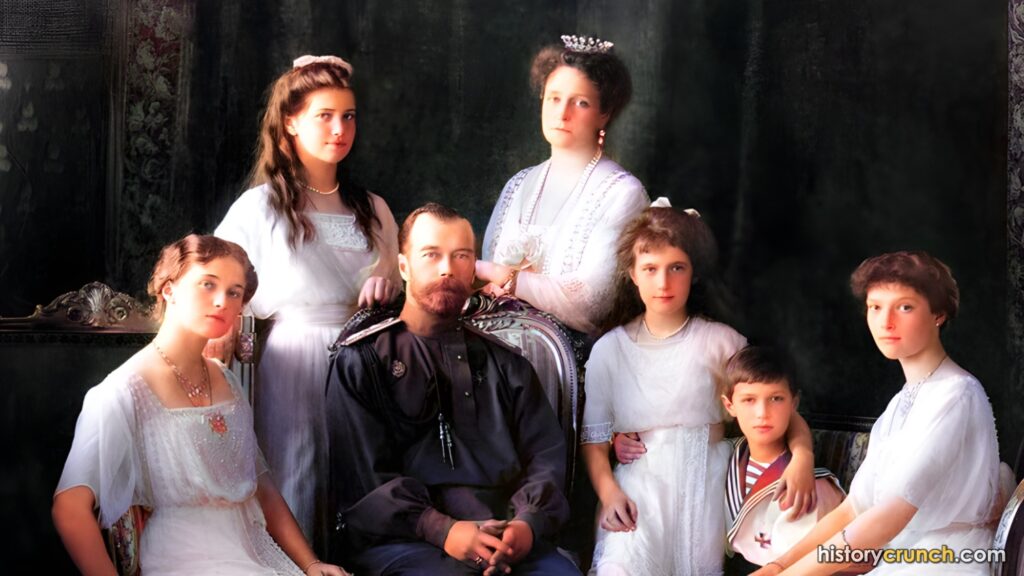
In short, Russia’s participation in World War I strained the economy, leading to widespread food shortages, inflation, and economic instability. The burden fell heavily on the working class and the peasantry, worsening existing social inequalities. This ultimately led to growing anger among many of the Russian citizens towards Tsar Nicholas II and Russian leadership.

The influence of Grigori Rasputin, a mystic, in the royal court further destroyed the image of the monarchy and Tsar Nicholas II. Rasputin’s involvement in political affairs and his perceived power over the government created anger among the Russian public, which further established an atmosphere of distrust.
As stated above, Russia’s participation in World War I proved disastrous. The military campaign was marked by poor planning, inadequate resources, and significant casualties. The strain of the war on the economy and the well-being of the Russian people contributed to widespread anger towards Tsar Nicholas II. At the same time, there were also food shortages that angered the Russian citizens and further intensified the growing frustration towards the Russian leadership. As such, this led to mass protests and strikes in Petrograd (modern-day St. Petersburg).
Major Events of the February Revolution
As food shortages intensified, workers, soldiers, and women took to the streets in February of 1917, demanding an end to the war, improved living conditions, and political reforms. The protests quickly escalated into larger demonstrations, with slogans demanding bread, peace, and the end of autocracy.
Eventually, the civil unrest forced Tsar Nicholas II to abdicate the throne. Faced with mounting pressure and realizing the loss of support from both the military and the populace, Nicholas II abdicated the throne on March 15th of 1917. This marked the end of the Romanov dynasty and sent Russia on a path of political upheaval.
As well, the February Revolution led to the establishment of a Provisional Government, which initially included liberal and moderate socialist elements. In fact, the new government promised democratic reforms and an end to autocracy. However, the Provisional Government faced challenges as it struggled to meet the demands of the people and navigate the complexities of war.

Significance of the February Revolution
The success of the February Revolution inspired revolutionary movements globally and set the stage for the more radical October Revolution later in 1917, where the Bolsheviks seized power under the leadership of Vladimir Lenin.