Korea before the Korean War was a period of occupation, division, and rising Cold War tensions that reshaped the Korean Peninsula. From the end of Japanese rule in 1945, following the end of World War II, to the outbreak of war on June 25th, 1950, Korea before the Korean War changed from a single Japanese-controlled colony into two rival states, North Korea and South Korea, each claiming the right to rule all of Korea.
KOREA BEFORE THE KOREAN WAR – JAPANESE RULE AND LIBERATION
To understand Korea before the Korean War, it is necessary to begin with Imperial Japanese rule. Japan formally annexed Korea in 1910 and governed the peninsula as a colony for 35 years. During that period, Korean political freedom was heavily restricted, and many Koreans resisted Japanese control through protests, nationalism, and independence movements at home and abroad. This colonial experience was significant because when World War II ended, Korea did not regain independence with a stable national government already in place.
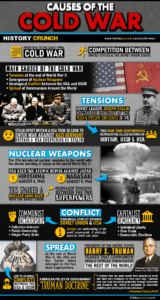
The situation changed in August of 1945, when Japan was defeated in World War II. Soviet forces moved into northern Korea, while American forces moved into the south. The peninsula was divided along the 38th parallel as a temporary measure for accepting the surrender of Japanese forces. At first, this division was not meant to become a permanent border. However, the growing rivalry between the Soviet Union and the United States , during the early stages of the Cold War, quickly turned it into the foundation of a much deeper political split.
KOREA BEFORE THE KOREAN WAR – DIVISION OF THE PENINSULA
Korea before the Korean War was shaped most directly by the division of the peninsula after 1945. In the north, the Soviet Union helped build a communist political structure. In the south, the United States Army Military Government in Korea ruled from September 9th, 1945, to August 15th, 1948. What began as two occupation zones slowly turned into two different political systems.
This division became more serious because the Soviet Union and the United States did not agree on how Korea should be reunited. Talks failed, and both sides supported leaders who matched their own political interests. In the north, Kim Il-Sung rose with Soviet backing. In the south, Syngman Rhee became the leading anti-communist figure. As a result, Korea before the Korean War was no longer simply about liberation from Japan. It was now also about whether Korea would become communist or anti-communist in the early Cold War.
KOREA BEFORE THE KOREAN WAR – SEPARATE STATES EMERGE
By 1948, the division had hardened. Elections supervised by the United Nations were held only in the south, and this deepened the split because many Koreans had hoped for one national government across the whole peninsula. On August 15th, 1948, the Republic of Korea was established in Seoul, South Korea, with Syngman Rhee as president. On September 9th, 1948, the Democratic People’s Republic of Korea was established in Pyongyang, North Korea, with Kim Il-Sung as leader.
This was one of the most important developments in Korea before the Korean War because both new governments claimed to be the legitimate government of all Korea. In other words, the peninsula was not simply divided into two separate countries that accepted each other. Instead, both governments believed reunification should happen under their own rule. Therefore, the political crisis built directly toward future conflict.
KOREA BEFORE THE KOREAN WAR – VIOLENCE AND RISING TENSIONS
Korea before the Korean War was not peaceful, even before full-scale war began in 1950. Political violence, repression, and unrest appeared in both parts of the peninsula. In the south, opposition to separate elections and the growing division of Korea contributed to serious internal conflict, including the Jeju Uprising, which began on April 3rd, 1948, on Jeju Island, South Korea. The suppression of that uprising became extremely violent and showed how unstable southern Korea had already become before the Korean War officially started.
At the same time, the border along the 38th parallel became increasingly dangerous. Small clashes, raids, and military confrontations took place between northern and southern forces in 1949 and early 1950. These incidents mattered because they showed that Korea before the Korean War was already moving toward open armed conflict. The peninsula had become one of the first major Cold War flashpoints, and both sides were preparing for a wider struggle.
The international situation also made war more likely. In 1949, communist victory in the Chinese Civil War changed the balance of power in East Asia, and the Soviet Union tested its first atomic bomb that same year. At the same time, most Soviet and American occupation troops had left Korea, but both superpowers continued backing their allies. Regardless, the deeper issue remained the same: Korea before the Korean War had become divided between two rival states, two rival ideologies, and two rival claims to national legitimacy.
KOREA BEFORE THE KOREAN WAR – SIGNIFICANCE
Korea before the Korean War was significant because it explains why the war began in the first place. The conflict of 1950 did not appear suddenly out of nowhere. It grew out of Japanese colonial rule, the temporary division of 1945, the failure of reunification, the rise of Cold War rivalry, and the creation of two competing Korean governments.
Korea before the Korean War was also important because it showed how the Cold War could turn a local national crisis into a much larger international struggle. By 1950, Korea had become a place where the Soviet Union, the United States, communism, anti-communism, nationalism, and the legacy of Japanese empire all collided. As such, Korea before the Korean War set the stage for one of the first and most important wars of the Cold War.