The New Economic Policy (NEP) was an economic policy introduced by Soviet leader Vladimir Lenin in 1921. Following the Russian Revolution of 1917 and the resulting Russian Civil War, the Soviet economy was in ruins. Faced with the challenge of reconstruction, Vladimir Lenin, the leader of the Bolsheviks, introduced the New Economic Policy with the goal of reorganizing the Russian economy. This economic approach marked a temporary departure from strict socialist principles in favor of a more market-focused strategy to rebuild the war-torn nation.
Why Did Lenin Introduce the New Economic Policy?
The Russian Revolution of 1917 and the Russian Civil War had plunged Russia into economic chaos. Industries were disrupted, agriculture was struggling, and the people faced severe shortages. The situation demanded immediate attention from the Bolsheviks, who took power in Russia following the downfall of Tsar Nicholas II. In fact, Lenin’s New Economic Policy was like a reset button for the Soviet Union’s economy after years of war, revolution, and economic upheaval. It was a way to stabilize aspects of the Soviet economy and get the country back on its feet.
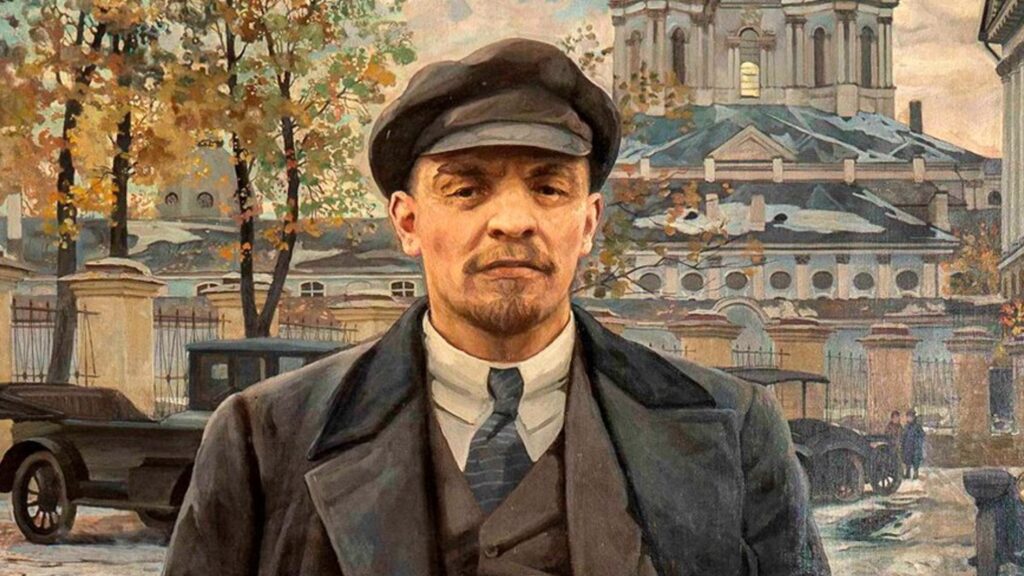
Lenin called the New Economic Policy a ‘temporary retreat’ from full socialism, because he viewed the introduction of capitalist ideas to be temporary in nature. His goal was to rebuild the economy of the country and to then establish the socialist ideas of Marxism-Leninism.
Main Principles of the New Economic Policy
As mentioned above, the New Economic Policy was unique in that it introduced some capitalist policies into the socialist state of the Soviet Union. Before the New Economic Policy, the government controlled almost everything, including farms and businesses. This is because a socialist state operates on the principle of a centrally-planned economy, meaning that the central leadership of the country controls the means of production. However, with the New Economic Policy, Lenin allowed farmers and small businesses to operate on their own. They could sell their products in markets and keep some of the profits for themselves. As such, this was economic freedom, which is a central principle of capitalism and capitalist states.
Further to this idea, the New Economic Policy allowed small businesses, like local shops and restaurants, to be privately owned. People could start their businesses and trade freely. Also, in the past, the government told farmers what to produce and how much to produce. With the New Economic Policy, farmers could sell their extra crops and products in markets. This meant more variety and choices for people.
As well, during the tough economic times in the country, the Soviet government introduced a system where people exchanged goods directly without using money. But with the New Economic Policy, money was restored. People could buy and sell things using currency, making transactions easier. This helped to spur on economic growth, which is what Lenin hoped to achieve.
The New Economic Policy also allowed the Soviet Union to make deals with other countries. They could trade goods and services, bringing in things they needed and selling what they had in surplus.
While small businesses and farmers had more freedom, the government still controlled major industries and banks. So, it was like a mix of individual freedom and government guidance. As such, historians view the New Economic Policy as a socialist program with some free market principles.

Outcome of the New Economic Policy
It is generally accepted that the New Economic Policy helped the Soviet economy recover following the devastation of the Russian Revolution and the Russian Civil War. There was more food in the markets, people had more choices, and life became a bit easier for many.
One of the notable outcomes of the New Economic Policy was the impact it had on agriculture in the Soviet Union. By allowing peasants to sell their surplus produce in markets, agricultural productivity increased. This led to improved food availability and a reduction in food shortages that had been devastating the country.
As mentioned earlier, the New Economic Policy was viewed by Lenin as a temporary measure, and he insisted that it was a ‘strategic retreat’ necessary for the country’s immediate needs. After Lenin’s death in 1924, Joseph Stalin implemented the First Five-Year Plan in 1928, signaling a shift away from the New Economic Policy and towards centralized planning and rapid industrialization.