The end of the Cold War was one of the most dramatic series of events in modern history. In general, historians consider the Cold War to have ended between 1989 and 1991, and was the result of a series of aspects, including: the reform policies of Soviet leader Mikhail Gorbachev, the growing economic weakness of the Soviet Union, the collapse of communist governments across Eastern Europe, the fall of the Berlin Wall, and the eventual end of the Soviet Union on December 25th, 1991. As such, the end of the Cold War fundamentally reshaped the political map of the world and brought to a close one of the significant conflicts of the 20th century.
WHAT WAS THE COLD WAR?
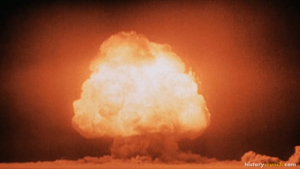
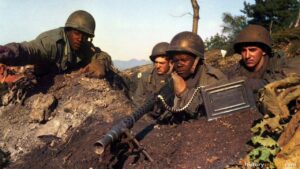
The Cold War was a period of intense political, ideological, and military tension between the United States and the Soviet Union that lasted from the end of World War II in 1945 until the early 1990s. At its heart, the Cold War was a ‘face off’ or competition between the two superpowers, rooted in a fundamental ideological conflict between the capitalism and democracy of the United States and the communism and dictatorship of the Soviet Union. Although the Cold War never escalated into direct military conflict between the two nations, it involved proxy wars, nuclear arms races, and a series of dangerous confrontations and crises. Many of the most significant events of the Cold War increased the tensions between the two nations, including: the Cuban Missile Crisis, the Vietnam War, the Korean War, and the nuclear arms race. However, by the mid-1980s a combination of internal and external pressures had begun to undermine the foundations of Soviet power in ways that would ultimately bring the Cold War to an end.
END OF THE COLD WAR – CAUSES
Historians have identified several main causes that led to the end of the Cold War, including: the economic weakness of the Soviet Union, the burden of the arms race and the Soviet invasion of Afghanistan, the reform policies of Mikhail Gorbachev, and the pressure applied by the United States under President Ronald Reagan.
One of the most important underlying causes was the growing economic weakness of the Soviet Union by the 1980s. Throughout the Cold War, the Soviet Union had maintained enormous military spending in order to compete with the United States in the arms race. By the early 1980s, this military spending was consuming an estimated 15 to 25 percent of the Soviet economy, which placed an enormous strain on an already stagnating system. For instance, Soviet citizens faced persistent shortages of consumer goods, poor housing conditions, and a declining standard of living compared to the nations of Western Europe and the United States. As such, the Soviet economy was in serious difficulty long before the significant reforms of the 1980s began.
The Soviet invasion of Afghanistan, which began in December of 1979, added further strain to the Soviet system. Soviet forces became bogged down in a prolonged and costly conflict against Afghan fighters, known as the Mujahideen, who received weapons and support from the United States. The war lasted for nearly a decade, resulting in the deaths of approximately 15,000 Soviet soldiers, wounding of tens of thousands more, and an enormous financial drain on the Soviet government. As such, the Soviet-Afghan War significantly weakened both the military reputation and the economic resources of the Soviet Union in the years leading up to the end of the Cold War.
At the same time, United States President Ronald Reagan, who served from January of 1981 to January of 1989, pursued an aggressive policy toward the Soviet Union that placed additional pressure on the already strained Soviet system. For instance, Reagan dramatically increased American military spending, including the announcement of the Strategic Defense Initiative in 1983, which proposed developing a missile defense system that the Soviet Union feared it could not match technologically or financially. Reagan also openly challenged Soviet leadership in June of 1987 when he delivered his speech at the Berlin Wall in which he challenged Soviet leader Mikhail Gorbachev to ‘tear down this wall.’
END OF THE COLD WAR – GORBACHEV’S REFORMS
The most direct cause of the end of the Cold War was the reform program introduced by Mikhail Gorbachev after he became General Secretary of the Communist Party of the Soviet Union on March 11th, 1985. Gorbachev recognized that the Soviet Union faced serious economic and political problems and introduced two significant policies known as ‘perestroika’ and ‘glasnost’. Perestroika, meaning ‘restructuring’, referred to attempts to reform the struggling Soviet economy and government. Glasnost, meaning ‘openness’, encouraged greater freedom of speech, more open public discussion, and less censorship throughout the Soviet Union and its sphere of influence.
These reforms were intended to strengthen and modernize the Soviet system, not to destroy it. However, they had consequences far beyond what Gorbachev had anticipated. As censorship weakened and public debate became possible for the first time in decades, widespread criticism of the Soviet government, its economic failures, and its political repression began to emerge openly. In fact, rather than restoring confidence in the Soviet system, glasnost exposed just how deep the problems within it ran. As such, Gorbachev’s reforms inadvertently accelerated the very collapse he had sought to prevent.
Furthermore, Gorbachev signaled that the Soviet Union would no longer use military force to preserve communist governments in Eastern Europe, moving away from the Brezhnev Doctrine that had justified Soviet military intervention in Hungary in 1956 and Czechoslovakia in 1968. This decision had enormous consequences, as it removed the main guarantee that kept the communist governments of Eastern Europe in place.
END OF THE COLD WAR – COLLAPSE OF COMMUNISM IN EASTERN EUROPE
The year 1989 saw a wave of revolutions sweep across Eastern Europe that brought communist governments to an end in country after country. In general, these revolutions were made possible by Gorbachev’s decision not to intervene militarily on behalf of the communist governments being challenged. For instance, in Poland, the Solidarity trade union movement, which had been building pressure since 1980, successfully forced partially free elections in June of 1989 and swept to a decisive victory. This was the first major electoral defeat for a communist government in Eastern Europe and set off a chain reaction across the region.
In Hungary, the government began dismantling the border fence with Austria in May of 1989, allowing East Germans to cross into the West. This opened a hole in the once powerful ‘Iron Curtain’ and prompted a mass movement of East Germans westward. In East Germany, large-scale street protests throughout the end of 1989 placed enormous pressure on the government. For instance, on November 9th, 1989, the Berlin Wall fell and became one of the most powerful symbols of the end of the Cold War era. In the weeks and months that followed, communist governments fell in Czechoslovakia, Romania, and Bulgaria. As such, by the end of 1989, the political landscape of Eastern Europe had been transformed almost entirely.
END OF THE COLD WAR – COLLAPSE OF THE SOVIET UNION
The collapse of Soviet control over Eastern Europe sped up the political crisis within the Soviet Union itself. Inspired by the changes occurring elsewhere and empowered by Gorbachev’s glasnost reforms, nationalist movements in several Soviet republics began demanding greater autonomy or outright independence from the Soviet leadership. For instance, the Baltic states of Estonia, Latvia, and Lithuania all moved strongly toward independence. In fact, Lithuania declared independence on March 11th, 1990, becoming the first Soviet republic to do so, and the other Baltic states followed.
Gorbachev attempted to hold the Soviet Union together by negotiating a new union treaty that would have granted the republics greater autonomy while preserving the Soviet state. However, on August 19th, 1991, a group of communist hardliners who opposed the reforms launched a coup attempt and placed Gorbachev under house arrest at his vacation home in Crimea. The coup collapsed within three days after mass public opposition in Moscow and the refusal of key military units to support the plotters.
Regardless, the failed coup ultimately damaged Gorbachev’s authority and led to the advancement of the independence declarations of Soviet republics. One by one, the republics of the Soviet Union declared independence. On December 8th, 1991, the leaders of Russia, Ukraine, and Belarus signed the ‘Belovezha Accords’, formally declaring that the Soviet Union no longer existed and establishing the Commonwealth of Independent States in its place. On December 25th, 1991, Mikhail Gorbachev resigned as president of the Soviet Union. That same evening, the Soviet flag was lowered from the Kremlin and replaced with the Russian tricolor. The following day, December 26th, 1991, the Soviet Union was formally dissolved. The Cold War was over.
END OF THE COLD WAR – SIGNIFICANCE
The end of the Cold War was significant for several important reasons. First, it brought to a close one of the most significant conflicts in modern history. For over four decades, the Cold War had shaped the foreign policy of nations around the world, divided Europe between two opposing blocs, and kept the world under the shadow of potential nuclear war. As such, its end was seen as a positive, considering the two superpowers never directly fought each other.
Second, the end of the Cold War transformed the political map of the world. The collapse of the Soviet Union produced fifteen independent nations where there had previously been one state. Countries across Eastern Europe that had lived under communist rule for decades were able to establish democratic governments and, in many cases, join NATO and the European Union in the years that followed. As such, the end of the Cold War produced a fundamental realignment of global politics that continued to shape international affairs for decades.
Third, the end of the Cold War left the United States as the world’s dominant superpower, marking the beginning of what many historians describe as a unipolar moment in world history. In December of 1989, United States President George H.W. Bush and Soviet leader Mikhail Gorbachev met at the Malta Summit and declared that the Cold War was over. This meeting symbolized the end of the decades-long struggle between the two superpowers and the beginning of a new era in international relations. As such, the end of the Cold War remains one of the most important turning points of the 20th century.