The Selma to Montgomery March was a series of three protest marches that took place in March of 1965 in Alabama. The marches were organized by civil rights groups, including the Southern Christian Leadership Conference (SCLC) and the Student Nonviolent Coordinating Committee (SNCC), to demand that African Americans in the South be allowed to exercise their right to vote without interference. The first march, on March 7th, 1965, ended in a violent attack by police on peaceful demonstrators at the Edmund Pettus Bridge in Selma, an event that became known as ‘Bloody Sunday’. The third and final march successfully completed the 54-mile (87-kilometer) route from Selma to the state capital of Montgomery on March 25th, 1965. The events in Selma directly led to the passage of the Voting Rights Act of 1965.
WHAT WAS THE CIVIL RIGHTS MOVEMENT?
The Civil Rights Movement was a widespread social and political campaign for equal rights that took place primarily during the 1950s and 1960s in the United States. The movement was driven by African Americans and their allies who sought to end the system of racial segregation and discrimination that had existed in the United States for centuries. Racial segregation meant that African Americans were legally separated from white Americans in schools, restaurants, transportation, hospitals, and other public spaces, and were routinely denied the same rights and opportunities available to white citizens.
The Civil Rights Movement used a variety of methods to challenge this system, including: peaceful protests, legal challenges through the courts, boycotts, and political pressure on the United States government. Some of the most important events of the Civil Rights Movement included the Supreme Court ruling in Brown v. Board of Education in 1954, the Montgomery Bus Boycott of 1955, the March on Washington in 1963, and the passage of the Civil Rights Act of 1964 and the Voting Rights Act of 1965. The Selma to Montgomery March was one of the most dramatic and consequential campaigns of the Civil Rights Movement, and its events directly produced one of the most important pieces of civil rights legislation in American history.
SELMA TO MONTGOMERY MARCH – BACKGROUND
Despite the passage of the Civil Rights Act of 1964, which prohibited racial discrimination in public life, African Americans in many parts of the South were still effectively prevented from voting. In Selma, Alabama, located in Dallas County, African Americans made up a majority of the population but accounted for only approximately 2 percent of registered voters. Local officials used a combination of intimidation, violence, literacy tests, and other obstacles to prevent African Americans from registering. Civil rights organizations had been working in Selma since 1963 to register voters, but their efforts were consistently blocked by county officials and local law enforcement.
In January of 1965, Dr. Martin Luther King Jr. and the SCLC joined the voting rights campaign in Selma. Peaceful demonstrations in the weeks that followed resulted in the arrests of thousands of protesters, including King himself. On February 18th, 1965, state troopers attacked a nighttime demonstration in the nearby town of Marion and fatally shot a young African American man named Jimmie Lee Jackson as he tried to protect his mother from being beaten by police. In response, civil rights leaders planned a march from Selma to the state capital of Montgomery to bring attention to the ongoing violence and demand voting rights protection from the state government.
SELMA TO MONTGOMERY MARCH – THE THREE MARCHES
The first march departed from Brown Chapel AME Church in Selma on Sunday, March 7th, 1965. Approximately 600 marchers, led by SNCC chairman John Lewis and SCLC’s Hosea Williams, walked peacefully through Selma toward the Edmund Pettus Bridge. As they crossed the bridge, they were met by a line of Alabama state troopers and county deputies who ordered them to turn back. When the marchers did not immediately comply, the troopers advanced with clubs and tear gas, beating the peaceful demonstrators in full view of television cameras. John Lewis suffered a skull fracture and over 60 marchers were hospitalized. The footage of the attack was broadcast across the country that evening and produced widespread national outrage. The day became known as ‘Bloody Sunday’.
Two days later, on March 9th, Dr. King led a second march to the bridge. When the marchers again encountered state troopers blocking their path, King led the group in prayer and then turned back, having reached a quiet agreement with federal representatives to avoid further violence while a court order was sought. The day became known as ‘Turnaround Tuesday’. That same evening, a white minister from Boston named James Reeb, who had traveled to Selma to support the marchers, was beaten by a group of white men and died from his injuries two days later.
The violence of ‘Bloody Sunday’ and the death of Reeb prompted President Lyndon B. Johnson to address a joint session of Congress on March 15th, 1965, calling for the passage of federal voting rights legislation. On March 17th, a federal judge ruled that the marchers had a constitutional right to complete their march. On March 21st, the third and final march departed Selma under the protection of federalized National Guard troops. The marching crowd grew steadily as the days passed, and approximately 25,000 people arrived at the steps of the Alabama state capitol in Montgomery on March 25th, 1965. Dr. Martin Luther King Jr. addressed the crowd from the capitol steps.
SELMA TO MONTGOMERY MARCH – SIGNIFICANCE
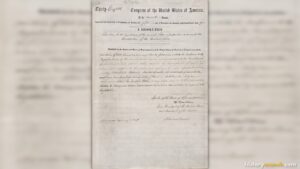
The Selma to Montgomery March was significant for several reasons. First, the Selma to Montgomery March was significant because the violence of ‘Bloody Sunday’ forced the federal government to act on voting rights. The televised images of peaceful marchers being beaten by police on the Edmund Pettus Bridge shocked Americans across the country and created overwhelming public pressure on Congress to pass voting rights legislation. President Johnson responded by introducing the Voting Rights Act to Congress, and the act was signed into law on August 6th, 1965. The Voting Rights Act prohibited the use of literacy tests and other discriminatory barriers to voting and required federal oversight of voter registration in areas where such barriers had been used. It resulted in a dramatic increase in African American voter registration across the South.
The Selma to Montgomery March was also significant because it demonstrated the power of nonviolent protest to achieve political change even in the face of violent opposition. The marchers did not respond to the attacks of ‘Bloody Sunday’ with violence but continued their campaign through peaceful and legal means until they achieved their goal. As such, the march became one of the clearest examples of how the tactics of the Civil Rights Movement could succeed in forcing the government to act on behalf of African American citizens.
Finally, the Selma to Montgomery March was significant because it is remembered as one of the defining moments in the history of American democracy. The right to vote is fundamental to a democratic system of government, and the events in Selma exposed the extent to which that right was being denied to African Americans in the South. The march and the legislation it produced helped ensure that African Americans could participate more fully in the democratic process, and its legacy continues to shape debates about voting rights in the United States to the present day.