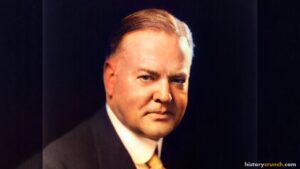
Otto von Bismarck was the Minister-President of Prussia and later as the first Chancellor of the German Empire. He is best known for his role in uniting the many separate German states into a single unified nation, which he achieved through a combination of skilled diplomacy and three decisive wars. Bismarck is often referred to by the nickname the ‘Iron Chancellor’, which references his style of politics and his long period of dominance over German and European affairs. Historians consider Bismarck to be one of the most important leaders of the 19th century, and his actions had a profound impact on the events of the 20th century, including World War I and World War II. As such, he was an important political figure in the Age of Nationalism in Europe.
Early Life of Otto von Bismarck
Otto Eduard Leopold von Bismarck was born on April 1st, 1815, in Schönhausen, a small town west of Berlin in the Kingdom of Prussia. He came from a noble Prussian family known as Junkers. This means that Junkers were members of the Prussian landowning aristocracy, a class of wealthy nobles who owned large estates and held an important role in Prussian political and military life. His father was a typical Junker landowner, while his mother came from an educated family of government officials and academics. This combination of aristocratic heritage and intellectual background shaped Bismarck’s outlook on politics and power from an early age.
Bismarck received an education and went on to study law at the University of Göttingen and later at the University of Berlin. However, he struggled with the discipline required of a career in law or the civil service, and after the death of his mother in 1839, he returned to manage the family estates in Pomerania, where he spent several years as a country landowner. In 1847, he married Johanna von Puttkamer and was elected to the Prussian parliament in the same year. It was here that his political career truly began. Bismarck quickly became known as a strong conservative voice who defended the authority of the king and the Prussian aristocracy against the liberal movements that were spreading across Europe at the time.
Otto von Bismarck as a Diplomat
Following his entry into politics, Bismarck gained valuable experience as a diplomat representing Prussia in several important roles. For example, in 1851, he was appointed as Prussia’s representative to the German Confederation in Frankfurt. The German Confederation was a loose association of the many German-speaking states that existed in central Europe at the time. This experience gave Bismarck a detailed understanding of the rivalries and tensions between the different German states and convinced him that Prussia needed to take a stronger and more dominant role among them.
Between 1859 and 1862, Bismarck served as Prussian ambassador to Russia and then to France. These positions gave him a wider understanding of European politics and of the strengths and weaknesses of the major powers. By studying the rivalries between the major European nations, Bismarck developed the political approach that would define his career. Historians refer to this approach as ‘Realpolitik’, which is a German term that refers to the idea that political decisions should be based on practical power and what actually works rather than on ideals or principles. For instance, Bismarck was willing to use whatever methods were necessary, including war and manipulation, to achieve his goals. In September of 1862, King Wilhelm I of Prussia appointed Bismarck as Minister-President of Prussia, which was the most powerful political position in the kingdom.
Otto von Bismarck and the Unification of Germany
The most important achievement of Bismarck’s career was the unification of Germany. Before Bismarck came to power, Germany did not exist as a single country. Instead, the region was made up of dozens of separate kingdoms, duchies, and smaller states that shared a common language and culture but were governed independently. Bismarck believed that Prussia was destined to lead the unification of these German states, but understood that it could only be achieved through what he famously described as ‘blood and iron’, meaning through military force rather than through negotiation alone.
Bismarck pursued unification through a strategy of three carefully planned wars. The first was the Second Schleswig War of 1864, in which Prussia and Austria fought together against Denmark over the German-speaking territories of Schleswig and Holstein. Prussia and Austria won the conflict, and the two territories came under their joint control. The second was the Austro-Prussian War of 1866, in which Prussia quickly defeated Austria. This was a critical step because Austria had previously been the dominant power among the German states. Prussia’s victory removed Austrian influence from German affairs and allowed Bismarck to create the North German Confederation, which brought the German states north of the River Main under Prussian leadership.
The third and final war was the Franco-Prussian War, which lasted from 1870 to 1871. Bismarck deliberately manipulated a diplomatic dispute between France and Prussia to provoke France into declaring war. He famously edited a diplomatic telegram, known as the Ems Dispatch, to make it appear more insulting to France than it actually was, which inflamed public opinion in both countries and led France to declare war on Prussia. Prussia and its German allies quickly defeated France in a series of major battles, including the decisive Battle of Sedan, in which French Emperor Napoleon III was captured. The southern German states, which had fought alongside Prussia in the war, now agreed to join the unified German nation. On January 18th, 1871, King Wilhelm I of Prussia was proclaimed Emperor of the new German Empire in the famous Hall of Mirrors at the Palace of Versailles in France. Bismarck was appointed as the first Chancellor of the German Empire.
Otto von Bismarck as Chancellor of Germany
As Chancellor of the German Empire, Bismarck dominated German politics from 1871 until 1890. He held enormous power, controlling both foreign and domestic policy with a firm hand. Bismarck’s main goal as Chancellor was to consolidate the new German Empire and to maintain a stable balance of power in Europe that would prevent any other major nation from threatening Germany’s position.
In terms of foreign policy, Bismarck worked to ensure that France remained isolated diplomatically so that it could not seek allies and take revenge for its defeat in the Franco-Prussian War. One of his most important tools for achieving this was the creation of alliances. For instance, in 1882 Bismarck was the driving force behind the creation of the Triple Alliance, which was a military agreement between Germany, Austria-Hungary, and Italy. This means that each member nation agreed to come to the military aid of the other members in the event that they were attacked. The Triple Alliance was one of the most significant alliances in European history and played an important role in the events leading up to World War I.
In terms of domestic policy, Bismarck used his power to deal with groups he saw as threats to German stability. For example, in the 1870s he launched a campaign against the political influence of the Catholic Church in Germany, known as the Kulturkampf, which means ‘culture struggle’. In the 1880s, he passed laws restricting the activities of socialist political organizations, which he feared would undermine the authority of the government. At the same time, Bismarck introduced a series of social reforms that were ahead of their time, including health insurance, accident insurance, and old-age pensions for German workers. He introduced these reforms not out of sympathy for the working class, but as a strategy to reduce support for socialist movements by showing that the government could provide for the basic needs of ordinary people.
Later Years and Death of Otto von Bismarck
Bismarck’s long period of dominance over German politics came to an end in 1890. King Wilhelm I, who had supported Bismarck throughout his career, died in 1888. He was briefly succeeded by his son Frederick III, who also died in the same year. The next emperor was Kaiser Wilhelm II, who was young, ambitious, and determined to rule Germany in his own way. Wilhelm II and Bismarck disagreed strongly on matters of both foreign and domestic policy. As a result, in March of 1890, Kaiser Wilhelm II dismissed Bismarck from all of his offices, bringing his remarkable political career to an end after nearly three decades in power.
After his dismissal, Bismarck retired to his estate at Friedrichsruh, near Hamburg. In his final years he wrote his memoirs and was frequently critical of Kaiser Wilhelm II and the direction of German policy. Otto von Bismarck died on July 30th, 1898, at the age of 83.
Significance of Otto von Bismarck
Otto von Bismarck was significant for several reasons. First, Bismarck was significant because he was the driving force behind the unification of Germany. Before his time in power, Germany was a collection of separate and often competing states. Through his use of diplomacy and military force, Bismarck transformed this fragmented region into one of the most powerful nations in Europe. In fact, France and Germany became heavily involved in an arms race in the decades following unification, with each country doubling the size of their armies between 1870 and 1914. This arms race was a direct consequence of the power shift that Bismarck had created on the European continent.
Bismarck was also significant because his policies and decisions had lasting consequences for the history of Europe that stretched far beyond his own lifetime. For instance, the loss of the territories of Alsace and Lorraine by France as a result of the Franco-Prussian War created deep resentment and a desire for revenge in France that became a major factor in the causes of World War I. As well, the Triple Alliance that Bismarck created in 1882 became one of the two main alliance systems that divided Europe in the years before World War I and contributed directly to the outbreak of the conflict in 1914. Click on the link to learn more about the Triple Alliance and World War I. Finally, the powerful and unified German Empire that Bismarck created set the stage for the events of both World War I and World War II, making him one of the most significant political figures in all of modern history.