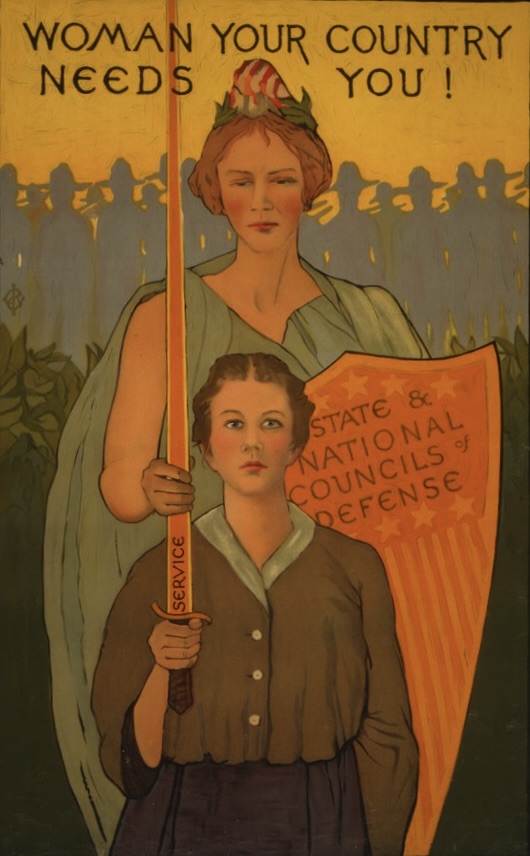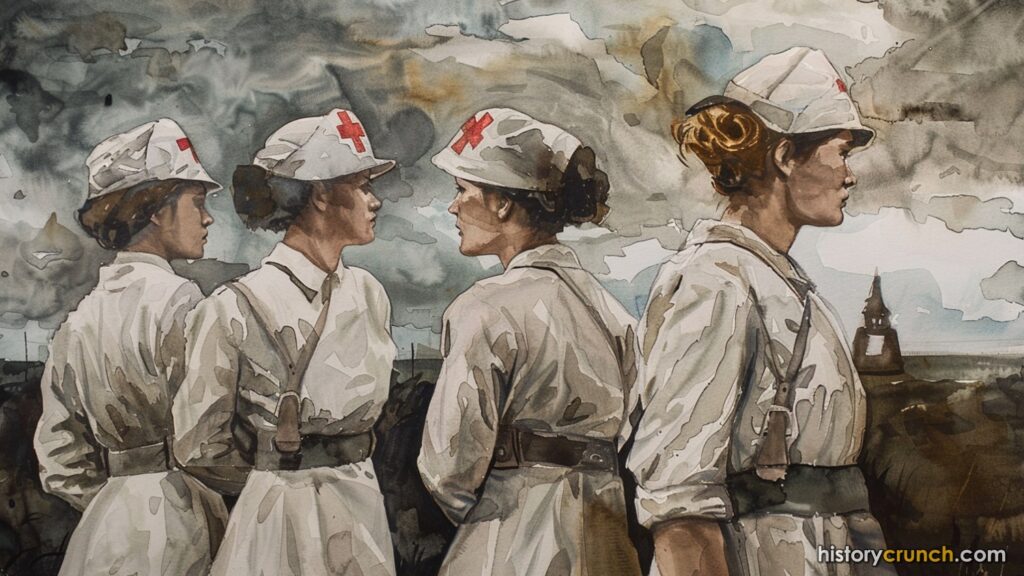
American women in World War I experienced several major impacts from the events of the First World War. World War I was a major historical conflict that took place from 1914 until 1918 and involved most of the major nations at the time. In particular, the United States played a significant role in the war based on its trade with the Allied Powers and direct military involvement beginning in 1917. The United States’ involvement in World War I had a dramatic impact on the lives of the American people and the home front of the United States. This was especially true regarding the lives of American women, who saw their lives changed during the years of the war.
AMERICAN WOMEN IN WORLD WAR I – MILITARY
As stated above, American women experienced several major impacts from the events of World War I. First, World War I was the first was in which American women could play a direct role militarily. Although they were not placed in active fighting situations, American women joined the armed forces of the United States and played an important role in the United States’ response to the war. For instance, more than 13,000 American women enlisted in the United States Navy. They were primarily posted in positions in the United States and helped with duties toward the war effort. Furthermore, over 1,400 women served as nurses in the United States Navy with some being posted overseas. Also, the United States Marine Corps enlisted 305 women in World War I to serve in administrative positions.
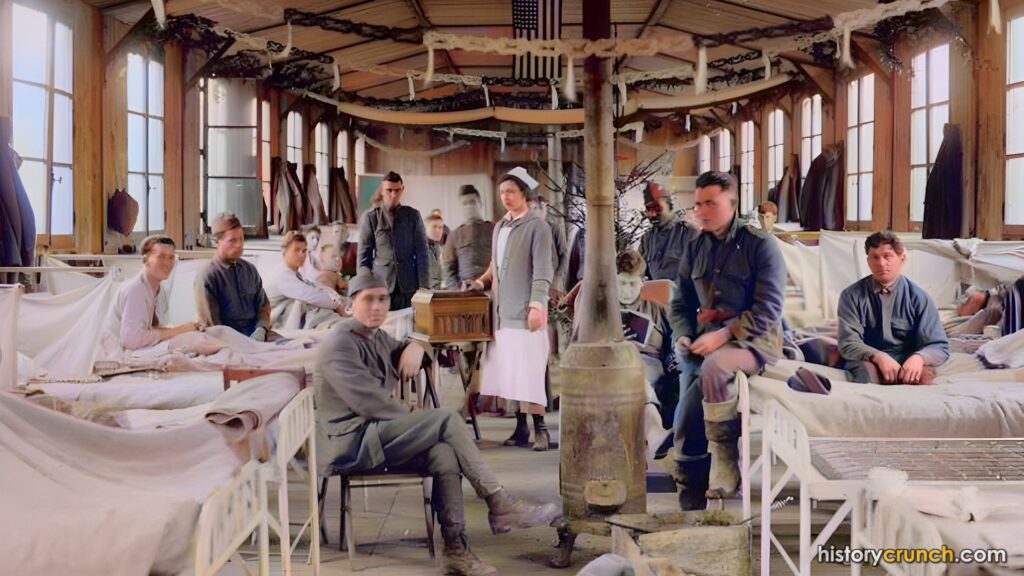
Next, over 21,000 American women served as nurses in the United States Army during World War I. They often served near the battlefields and were important in aiding injured soldiers on the front lines of battle. As well, 450 served as switchboard operators in the Signal Corps Female Telephone Operators Unit. They relayed messages and were bilingual in both English and French. At the time, they were known as the ‘Hello Girls’ by soldiers.
These roles served by American women were important as they helped free men to fight on the front lines in the battlefields of Europe while also providing the necessary support for the overall American war effort. In fact, many of the women were rightly treated as veterans at the end of the war.

AMERICAN WOMEN IN WORLD WAR I – WORK
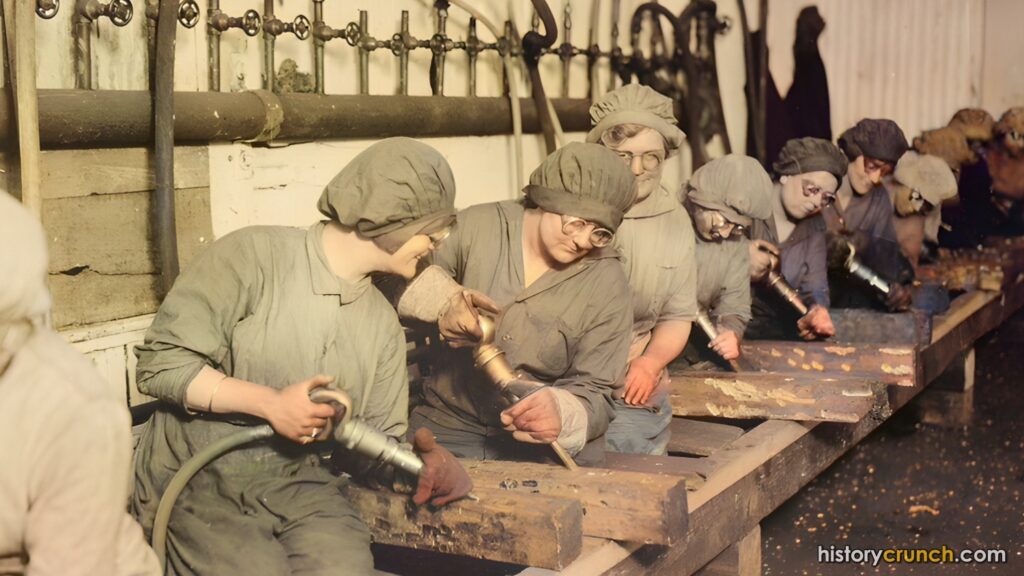
The second way that World War I impacted life for American women was their role in helping supply the United States and its allies for the war. When the United States joined the war effort in 1917, women were needed to enter the workforce. Furthermore, many of the women found employment in factories that produced weapons and ammunition for the war effort. This was an incredibly important change for the lives of many American women, because before the start of World War I most women did not work outside of the home. Not only, were many women working for the first time, but they were also working in jobs that were generally employed by men. This included jobs in heavy industry, manufacturing, police, firefighters, etc. This was the first time in American history that American women had worked in many of these positions and in such large numbers. The contributions of women in these roles was significant as it helped maintain American society at a difficult time while also supplying the necessary resources for the war.
AMERICAN WOMEN IN WORLD WAR I – FAMILY
Third, American women were responsible for maintaining the family in the absence of the men, who were away fighting in the war. This was incredibly significant because women were tasked with caring for children and taking care of the home during a major world-wide conflict. Another aspect of this was the challenge faced by women (and others on the home front) in dealing with the role of rationing.
During World War I, there was a nation-wide emphasis on food and fuel production and consumption. Both food and fuel were important resources necessary to the overall war effort. The soldiers on the front lines in the battlefields of Europe required both in order to carry out victory against the Central Powers. As such, the United States government sought to ration their consumption by American civilians on the home front during World War I. This is best evidenced by creation of both the United States Food Administration and the Federal Fuel Administration. Both agencies sought to limit the use of their respective resource by introducing certain measures and carrying out different public campaigns. For example, the United States Food Administration (which was headed by future President of the United States Herbert Hoover) introduced days such as ‘meatless Tuesdays’ and ‘wheatless Wednesdays’. The Federal Fuel Administration similarly introduced ‘heatless Mondays’. These campaigns obviously had an impact on the lives of Americans living on the home front during World War I and placed certain types of hardships on the everyday lives of American women who were tasked with many of the issues on the American home front.