The end of the American Civil War was one of the most important moments in United States history. After four years of devastating conflict between the Union states of the North and the Confederate states of the South, the war came to a close in the spring of 1865, with the formal surrender of Confederate forces and the eventual reunification of the country.
What Was the American Civil War?
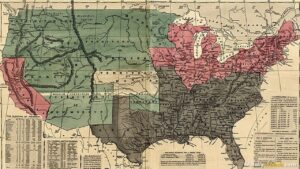
The American Civil War was a major conflict fought between 1861 and 1865 between the Northern states, known as the Union, and the Southern states, known as the Confederacy. The war grew out of decades of tension over the issue of slavery, as well as disagreements over states’ rights and the future of slavery in new western territories. When Abraham Lincoln was elected president in 1860, several Southern states chose to leave the Union and form the Confederate States of America. The fighting began in April 1861 and lasted four years, making it one of the deadliest wars ever fought on American soil. By the time the conflict ended, hundreds of thousands of soldiers had lost their lives and the Southern states had suffered enormous destruction.
Collapse of the Confederacy
By early 1865, the Confederacy was in serious trouble. Years of warfare had drained the South of men, supplies, and resources. The Union Army, led by General Ulysses S. Grant, had been applying relentless pressure on Confederate forces throughout the previous year. One of the most important campaigns of this final phase was the Siege of Petersburg, Virginia, where Grant’s forces had surrounded the Confederate Army and cut off supply lines to the Confederate capital of Richmond. Confederate General Robert E. Lee’s army grew increasingly exhausted and outnumbered, and the ability of the Confederacy to continue the war was rapidly breaking down.
On April 2, 1865, Lee’s forces evacuated Richmond after their defensive lines at Petersburg finally collapsed. Confederate President Jefferson Davis and other government officials fled the capital as Union troops moved in. The fall of Richmond was a major blow to the Confederacy and signaled that the end of the war was very close. With his army surrounded and his options gone, Lee recognized that further resistance would only mean more unnecessary deaths among his soldiers.
Surrender at Appomattox Court House
The most significant event marking the end of the American Civil War was the surrender of General Robert E. Lee to Union General Ulysses S. Grant on April 9, 1865, at Appomattox Court House in Virginia. Lee’s Army of Northern Virginia was the largest and most important Confederate military force, and its surrender effectively ended organized Confederate resistance in the Eastern Theater of the war.
The two generals met at the home of Wilmer McLean in the village of Appomattox Court House. Grant offered generous surrender terms, allowing Confederate soldiers to return home peacefully as long as they agreed to lay down their arms and not take up arms against the United States again. Officers were permitted to keep their sidearms, and soldiers who owned horses were allowed to keep them as well for the spring farming season. The terms reflected a desire to bring the conflict to a dignified close and begin the process of healing the nation. Lee accepted the terms, and the formal surrender documents were signed that afternoon.
Remaining Confederate Surrenders
Although Lee’s surrender at Appomattox is the event most closely associated with the end of the Civil War, several other Confederate forces remained in the field and had yet to lay down their arms. In the weeks that followed, these remaining armies also surrendered one by one.
On April 26, 1865, Confederate General Joseph E. Johnston surrendered his army to Union General William T. Sherman at Durham Station in North Carolina. This was the second-largest Confederate army still fighting at the time and its surrender removed another major force from the field. Shortly after, Confederate General Richard Taylor surrendered his forces in Alabama on May 4, 1865. In the Trans-Mississippi region west of the Mississippi River, Confederate General Edmund Kirby Smith surrendered his command at Galveston, Texas on May 26, 1865. In Indian Territory, Brigadier General Stand Watie, a Cherokee Confederate commander, became the last Confederate general to formally surrender on June 23, 1865. Even after all land forces had given up, the Confederate warship CSS Shenandoah continued raiding Union ships at sea before finally surrendering to British authorities in Liverpool, England on November 6, 1865, making it the last formal Confederate surrender of the war.
Assassination of President Lincoln
Just days after Lee’s surrender at Appomattox, a tragedy struck the nation. On the evening of April 14, 1865, President Abraham Lincoln was shot while attending a performance at Ford’s Theatre in Washington, D.C. The assassin was John Wilkes Booth, an actor and Confederate sympathizer who hoped that killing Lincoln would destabilize the Union government and allow the South to continue its resistance. Lincoln died from his wounds early the next morning on April 15, 1865. He had led the country through the entirety of the Civil War and had been planning for the difficult work of bringing the nation back together. His death shocked both North and South and cast a shadow over what should have been a moment of celebration. Vice President Andrew Johnson was sworn in as president and took over the task of guiding the nation through Reconstruction.
Emancipation and Juneteenth
One of the most important consequences of the end of the Civil War was the end of slavery in the United States. President Lincoln had issued the Emancipation Proclamation on January 1, 1863, which declared that all enslaved people in Confederate states were free. However, the proclamation could only be enforced as Union forces took control of Confederate territory. It was not until the war ended and Union troops moved into the remaining Confederate states that enslaved people throughout the South were actually freed.
On June 19, 1865, Union General Gordon Granger arrived in Galveston, Texas and issued an order announcing that all enslaved people in the state were free. This date, now known as Juneteenth, marked the moment that news of emancipation finally reached the last enslaved people in the Confederacy. Juneteenth is today recognized as a national holiday in the United States. The legal end to slavery across the entire country was secured with the passage of the Thirteenth Amendment to the Constitution, which was ratified on December 6, 1865, formally abolishing slavery throughout the United States.
Official End of the Civil War
While the military fighting had effectively stopped by the summer of 1865, the war did not have a formal legal end until later. President Andrew Johnson issued proclamations declaring the insurrection over in most Confederate states on April 2, 1866. Texas, which had been slower to establish a new state government, was included in a final proclamation issued on August 20, 1866, which formally declared that the war was over and that peace and civil authority had been restored throughout the entire United States. This date is recognized as the official legal end of the American Civil War.
Significance of the End of the Civil War
The end of the American Civil War had enormous consequences for the United States. The Union had been preserved and the Confederate attempt to form a separate nation had failed. More than four million enslaved African Americans were freed as a direct result of the war’s outcome. The Southern states, which had suffered tremendous destruction during the fighting, now faced the long process of rebuilding. The country as a whole entered a period known as Reconstruction, during which the federal government worked to bring the former Confederate states back into the Union, rebuild Southern infrastructure, and define the rights of formerly enslaved people.
The war also led to major changes to the United States Constitution. The Thirteenth Amendment abolished slavery, the Fourteenth Amendment granted citizenship to formerly enslaved people, and the Fifteenth Amendment prohibited the denial of the right to vote based on race. Together these three changes, known as the Reconstruction Amendments, fundamentally reshaped American society and law. The end of the Civil War did not immediately resolve all of the social and political tensions that had caused the conflict, but it did bring the fighting to a close and set the country on a new path toward a more unified nation.