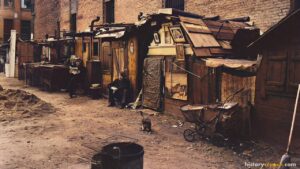
The Great Depression in Canada was one of the most difficult periods in the country’s history. It was a time of widespread economic hardship that affected millions of Canadians from all walks of life. The Great Depression was a worldwide economic recession that occurred primarily during the 1930s and had a devastating impact on countries around the world, including Canada. In Canada, the effects of the Great Depression were felt deeply, particularly in the agricultural regions of the country. As a result, the Great Depression led to significant changes in Canadian politics, society, and economic policy that shaped the country for decades to come.
What was the Great Depression?
In general, the Great Depression was a worldwide economic recession that began in the United States with the stock market crash of October 1929. A recession is a term that refers to a general economic downturn resulting in high levels of unemployment and a reduction in consumer spending. The Great Depression quickly spread beyond the United States and affected countries around the world, including Canada. In Canada, the Great Depression is often referred to as the “Dirty Thirties,” a term that reflects both the economic hardship and the devastating drought conditions that struck the country during this period. The Great Depression in Canada lasted from approximately 1929 until the late 1930s, when the outbreak of World War II helped bring the economic crisis to an end.
Canada Before the Great Depression
In order to understand the impact of the Great Depression on Canada, it is important to first understand the state of the Canadian economy before the crisis began. Like many countries at the time, Canada experienced a period of economic growth and prosperity during the 1920s. This period of economic growth was closely tied to the global demand for Canadian exports, particularly wheat, timber, and other natural resources. For example, the wheat farms of the Canadian prairies were producing large quantities of grain that were sold to markets around the world. As well, Canada’s manufacturing sector was growing during this period, particularly in cities like Toronto and Montreal. In general, the 1920s were a time of relative economic prosperity for Canada, with low unemployment and rising wages for many workers. However, this prosperity was built on an economic foundation that proved to be fragile when the global economy began to collapse in 1929.
Causes of the Great Depression in Canada
The Great Depression in Canada was caused by a combination of factors, both international and domestic. The first and most significant cause was the stock market crash of October 1929 in the United States. The crash caused a massive loss of wealth and confidence in the global economy, which quickly spread to Canada. As a result, demand for Canadian exports dropped sharply as countries around the world reduced their spending. For example, the global demand for Canadian wheat fell dramatically in the early 1930s, which devastated the farming communities of the prairies.
The second major cause of the Great Depression in Canada was the collapse of global trade. Many countries responded to the economic crisis by introducing protective tariffs, which are taxes placed on imported goods to protect domestic industries. For instance, the United States introduced the Smoot-Hawley Tariff in 1930, which placed high taxes on imported goods and made it much harder for Canadian exporters to sell their products in the American market. Since the United States was Canada’s largest trading partner, this had a severe impact on the Canadian economy.
The third cause was the overproduction of wheat and other agricultural goods in the years before the Depression. Canadian farmers had borrowed heavily to expand their operations during the 1920s, and when prices for wheat and other crops fell sharply in the early 1930s, many were unable to repay their debts. As a result, thousands of Canadian farmers lost their land and their livelihoods.
The Dust Bowl and the Prairie Drought
One of the most devastating aspects of the Great Depression in Canada was the drought that struck the Canadian prairies during the 1930s. This drought is closely associated with the Dust Bowl, which was a period of severe drought and dust storms that affected both Canada and the United States during this time. In Canada, the drought was centered on the prairie provinces of Alberta, Saskatchewan, and Manitoba, which were the heart of the country’s agricultural economy.
The drought caused massive crop failures across the prairies. Strong winds picked up the dry topsoil and created enormous dust storms that darkened the sky and buried farms and roads. Many farmers described these events as “black blizzards” due to the darkness caused by the clouds of dust. As well, the drought caused grasshopper infestations that further damaged crops and made conditions even more difficult for farming families. In all, the combination of falling crop prices and devastating drought conditions made the Canadian prairies one of the hardest hit regions in the world during the Great Depression.
As a result of the drought and economic hardship, thousands of farming families were forced to abandon their land and migrate to other parts of the country in search of work and food. Many left Saskatchewan and Alberta and moved to British Columbia or Ontario in hopes of finding employment. However, the economic crisis was affecting the entire country, and many of those who migrated found little relief in the cities.
Unemployment and Poverty in Canada
The Great Depression caused unemployment levels in Canada to rise dramatically. At the height of the Depression in 1933, approximately 27% of Canadians were unemployed, meaning that more than one in four workers had no job. For many Canadians, this meant relying on government relief programs or charity organizations to survive. In fact, soup kitchens and breadlines became a common sight in Canadian cities during this period, as thousands of unemployed workers lined up for basic food and supplies.
The economic hardship was particularly severe for young men, many of whom left their homes in search of work. These men, often referred to as “relief camp workers,” traveled across the country on freight trains in search of employment. The Canadian government responded by establishing relief camps, which were work camps set up in remote areas of the country where unemployed men were put to work on public projects such as road building and land clearing. The conditions in these camps were poor, and the workers received very little pay. As well, many Canadians experienced severe poverty in the cities, where rents were high and jobs were scarce.
Political Response to the Great Depression in Canada
The Great Depression had a significant impact on Canadian politics and led to major changes in government policy. When the Depression began, Canada was led by Prime Minister William Lyon Mackenzie King of the Liberal Party. King was initially reluctant to provide federal relief funding to the provinces, believing that the economic crisis was a temporary situation that would resolve itself. His response to the Depression proved unpopular, and in the federal election of 1930, Canadians voted him out of office in favor of Conservative leader Richard Bennett.
Richard Bennett became Prime Minister in 1930 and promised to use high tariffs and government intervention to protect the Canadian economy. For example, Bennett introduced a series of tariffs on imported goods in an attempt to protect Canadian industries and workers. However, these measures proved largely ineffective and the Depression continued to worsen. As a result, Bennett’s popularity fell sharply and Canadians grew increasingly frustrated with the government’s response to the crisis.
In 1935, Bennett introduced a series of reform programs inspired by the New Deal policies of American President Franklin D. Roosevelt. These reforms, which became known as the “Bennett New Deal,” included measures to regulate working conditions, support unemployed workers, and reform the banking system. However, many of these reforms were later ruled unconstitutional by the courts, as they were seen as overstepping the boundaries of federal authority. In the federal election of 1935, Canadians returned Mackenzie King to power, and he went on to lead the country through the remainder of the Depression and into World War II.
The On-to-Ottawa Trek and the Regina Riot
One of the most significant events of the Great Depression in Canada was the On-to-Ottawa Trek of 1935. The On-to-Ottawa Trek began when workers in the federal relief camps of British Columbia organized a protest against the poor conditions and low wages in the camps. In June of 1935, approximately 1,000 relief camp workers boarded freight trains in Vancouver and began traveling east toward Ottawa to present their grievances directly to Prime Minister Bennett.
As the trek moved eastward, more workers joined along the way, and the group eventually swelled to several thousand participants. However, the federal government ordered the Royal Canadian Mounted Police (RCMP) to stop the trek before it reached Ottawa. The trek was halted in Regina, Saskatchewan, where the workers held a public rally in the city’s Market Square on July 1st, 1935. The rally turned violent when the RCMP and city police moved in to arrest the trek’s leaders. The resulting confrontation became known as the Regina Riot and resulted in injuries to many workers and police officers, as well as the death of one police officer. In all, the On-to-Ottawa Trek and the Regina Riot highlighted the frustration and desperation of many Canadians during the Great Depression and became an important event in the history of the Canadian labor movement.
New Political Movements in Canada
The Great Depression also gave rise to several new political movements in Canada that challenged the traditional dominance of the Liberal and Conservative parties. The most significant of these was the Co-operative Commonwealth Federation (CCF), which was founded in Calgary in 1932. The CCF was a democratic socialist political party that called for government ownership of key industries, social welfare programs, and greater economic equality. It drew strong support from farmers and workers in western Canada who had been hardest hit by the Depression. The CCF later evolved into the New Democratic Party (NDP), which remains one of Canada’s major political parties today.
Another significant political movement that emerged during the Depression was Social Credit, which was founded in Alberta. Social Credit was based on the economic theory that the government should directly distribute money to citizens in order to stimulate consumer spending and end the Depression. The Social Credit party won the Alberta provincial election in 1935 under the leadership of William Aberhart, and went on to govern Alberta for several decades.
Significance of the Great Depression in Canada
In all, the Great Depression was one of the most significant events in Canadian history. It caused widespread economic hardship for millions of Canadians and led to major changes in the way the government approached economic policy and social welfare. For example, the Depression demonstrated that the Canadian government needed to play a more active role in supporting citizens during times of economic crisis. As a result, the years following the Depression saw the introduction of several important social programs in Canada, including unemployment insurance, old age pensions, and eventually universal health care.
As well, the Great Depression had a lasting impact on Canadian politics. It gave rise to new political movements such as the CCF and Social Credit, which challenged the traditional political order and pushed for greater government intervention in the economy. In fact, many of the social programs that Canadians enjoy today can be traced back to the political changes that were set in motion during the Great Depression.
Finally, the Great Depression ended in Canada with the outbreak of World War II in 1939. The war effort required massive government spending and the rapid expansion of Canadian industry, which effectively ended unemployment and brought the economic crisis to a close. In all, the Great Depression left a lasting mark on Canada and shaped the country’s political, economic, and social development for generations to come.