The Great Depression in Europe was one of the most significant economic events in the history of the continent. It was a time of widespread hardship that affected millions of people across many different countries and had profound consequences for European politics, society, and international relations. The Great Depression was a worldwide economic recession that began in the United States with the stock market crash of October 1929 and quickly spread to countries around the world, including those in Europe. In Europe, the Depression did not affect all countries equally. Some nations suffered more severely than others, depending on their economic structure, their ties to the United States, and the political decisions made by their governments. In general, however, the Great Depression caused enormous suffering across Europe and played a major role in the political instability that ultimately contributed to the outbreak of World War II.
What was the Great Depression?
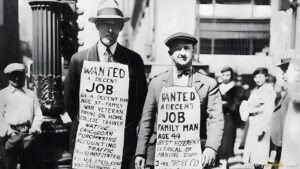
In general, the Great Depression was a worldwide economic recession that began in the United States in 1929 and spread rapidly to other parts of the world. A recession is a term that refers to a general economic downturn resulting in high levels of unemployment and a significant reduction in consumer spending and industrial production. In Europe, the Depression arrived in the early 1930s and affected countries across the continent, including Germany, Britain, France, and many others. The Depression caused unemployment to rise sharply, industrial production to fall, and living standards to decline for millions of ordinary people. As well, the economic crisis created enormous political pressures in many European countries, leading to the rise of extremist political movements that promised to restore prosperity and national pride.
Europe Before the Great Depression
In order to understand the impact of the Great Depression on Europe, it is important to first consider the state of the European economy in the years before the crisis began. World War I had left much of Europe economically weakened and heavily in debt. Many European countries had borrowed large sums of money from the United States to finance their war efforts, and in the years after the war they struggled to repay these debts. Germany, in particular, faced enormous economic difficulties following the war due to the heavy reparations payments demanded by the Treaty of Versailles. These reparations required Germany to pay billions of dollars to the Allied Powers as compensation for the damage caused by the war.
Despite these difficulties, many European economies experienced a period of relative recovery during the mid-1920s. For example, the Dawes Plan of 1924 helped stabilize the German economy by restructuring its reparations payments and providing American loans to support economic recovery. As well, Britain and France experienced modest economic growth during this period. However, this recovery was fragile and heavily dependent on American loans and investment. When the American economy collapsed in 1929, the flow of American money into Europe dried up almost immediately, triggering a severe economic crisis across the continent.
How the Great Depression Spread to Europe
The Great Depression spread to Europe primarily through two main channels. The first was the collapse of American loans and investment. During the 1920s, American banks had lent large sums of money to European countries, particularly Germany. When the American stock market crashed in October of 1929, American banks began calling in these loans and reducing their investment in Europe. As a result, European countries that had been dependent on American money suddenly found themselves without the financial support they needed to maintain their economies.
The second channel through which the Depression spread to Europe was the collapse of international trade. As countries around the world struggled with their own economic crises, they introduced protective tariffs to shield their domestic industries from foreign competition. For example, the United States introduced the Smoot-Hawley Tariff in 1930, which placed high taxes on imported goods and dramatically reduced the volume of international trade. European countries responded by introducing their own tariffs, which further reduced trade and deepened the economic crisis. In all, the collapse of international trade caused industrial production to fall sharply across Europe and led to rising unemployment in many countries.
Great Depression in Germany
Germany was one of the European countries most severely affected by the Great Depression. This was due in large part to Germany’s heavy dependence on American loans following World War I. When American banks began calling in their loans after the stock market crash of 1929, the German economy collapsed rapidly. Unemployment in Germany rose from approximately 1.3 million in 1929 to over 6 million by 1932, meaning that nearly one in three German workers had no job. Industrial production fell by almost half during the same period, and many businesses were forced to close.
The economic crisis had profound political consequences in Germany. The Weimar Republic, which was the democratic government that had been established in Germany after World War I, struggled to respond effectively to the Depression. Many Germans lost faith in the democratic system and began turning to more extreme political movements that promised to restore prosperity and national strength. In particular, the economic crisis contributed significantly to the rise of Adolf Hitler and the Nazi Party, which gained enormous popularity during the early 1930s by promising to end unemployment and restore Germany’s greatness. In the federal elections of 1932, the Nazi Party became the largest party in the German parliament, and in January of 1933, Hitler was appointed Chancellor of Germany. As such, the Great Depression played a direct role in creating the conditions that led to the rise of Nazi Germany and ultimately to the outbreak of World War II.
The Great Depression in Britain
Britain was also significantly affected by the Great Depression, though its experience differed somewhat from that of Germany. Britain had been struggling economically even before the Depression began, due in part to the decline of its traditional industries such as coal mining, steel production, and shipbuilding. When the Depression arrived in the early 1930s, it deepened these existing problems and pushed unemployment to very high levels. At the height of the Depression in 1932, approximately 3.4 million British workers were unemployed, representing about 22% of the workforce.
The British government responded to the Depression by introducing a policy of austerity, which involved cutting government spending in order to balance the budget. For example, the government reduced unemployment benefits and cut the wages of public sector workers. These measures proved deeply unpopular and led to widespread protests across the country. As well, Britain abandoned the gold standard in 1931, which is a monetary system that ties the value of a country’s currency to a fixed amount of gold. By leaving the gold standard, Britain was able to reduce interest rates and make its exports more competitive, which helped to stabilize the economy somewhat. In general, Britain’s recovery from the Depression was slow and uneven, with some regions of the country, particularly in the south, recovering more quickly than others.
Great Depression in France
France was initially less severely affected by the Great Depression than Germany or Britain. This was due in part to the fact that the French economy was more self-sufficient and less dependent on international trade than many other European economies. As well, France had a large agricultural sector that provided some stability during the early years of the Depression. However, as the crisis deepened and spread across Europe, France was increasingly affected. Unemployment rose significantly during the early 1930s, and industrial production fell sharply.
The political consequences of the Depression in France were also significant. The economic crisis led to political instability and a rapid succession of governments during the early 1930s. In response to the growing threat of fascism in Europe, French left-wing political parties formed a coalition known as the Popular Front in 1936. The Popular Front government, led by Leon Blum, introduced a series of social reforms including the 40-hour work week, paid holidays for workers, and collective bargaining rights for trade unions. These reforms were significant because they represented a major expansion of workers’ rights in France and helped to address some of the social inequality that the Depression had highlighted.
Political Consequences of the Great Depression in Europe
One of the most significant consequences of the Great Depression in Europe was its impact on the political landscape of the continent. The economic hardship caused by the Depression created enormous frustration and anger among ordinary people who felt that their governments had failed them. In many countries, this frustration led to the rise of extremist political movements that promised to restore prosperity and national pride through radical means.
In Germany, as stated above, the Depression contributed directly to the rise of Adolf Hitler and the Nazi Party. In Italy, the economic crisis strengthened the position of Benito Mussolini and his Fascist government, which had come to power in 1922. In Spain, the economic and political tensions of the Depression era contributed to the outbreak of the Spanish Civil War in 1936. As well, in several Eastern European countries, democratic governments were replaced by authoritarian regimes during the 1930s as people lost faith in democracy’s ability to solve the economic crisis.
In general, the rise of fascism and authoritarianism in Europe during the 1930s was closely connected to the economic desperation caused by the Great Depression. Many people who had lost their jobs, their savings, and their faith in the existing political system were attracted to leaders who offered simple and powerful solutions to complex problems. As such, the Great Depression played a major role in creating the political conditions that led to the outbreak of World War II in 1939.
Significance of the Great Depression in Europe
In all, the Great Depression was one of the most significant events in European history during the 20th century. It caused enormous economic suffering for millions of people across the continent and led to major changes in the way European governments approached economic policy and social welfare. For example, the Depression demonstrated that free market capitalism alone was not able to prevent or resolve severe economic crises, and led many European governments to adopt policies of greater government intervention in the economy.
As well, the Great Depression had profound political consequences for Europe. It contributed directly to the rise of fascism and authoritarian governments across the continent and played a major role in creating the conditions that led to World War II. In fact, historians widely consider the Great Depression to be one of the key factors that made the rise of Adolf Hitler and the Nazi Party possible in Germany.
Finally, the Great Depression came to an end in Europe with the outbreak of World War II in 1939. The massive government spending required by the war effort effectively ended unemployment across the continent and brought the economic crisis to a close. In all, the Great Depression left a lasting mark on Europe and shaped the political, economic, and social development of the continent for generations to come.