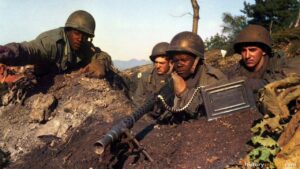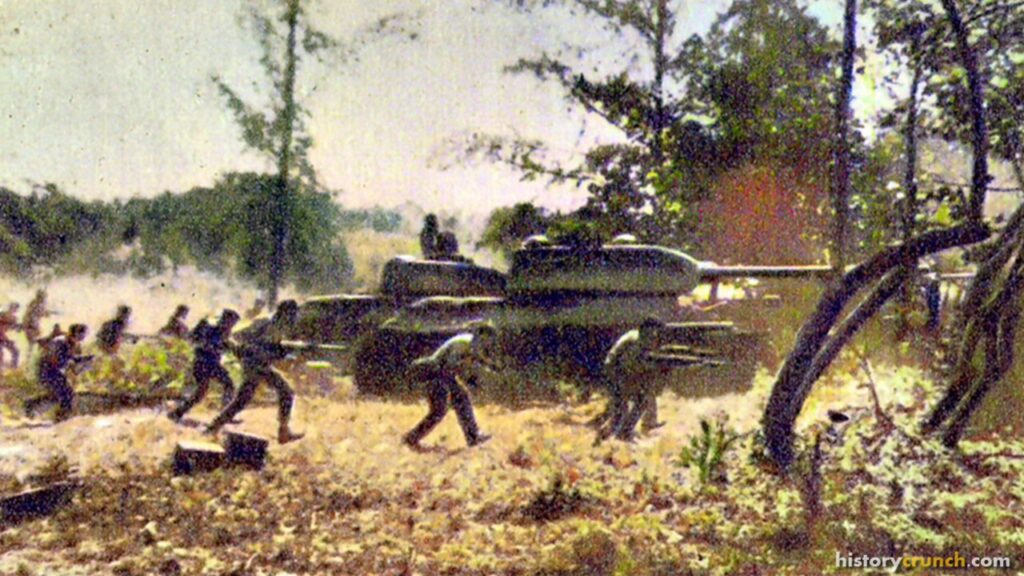
The Bay of Pigs Invasion took place on April 17th, 1961, when approximately 1,400 Cuban exiles trained and equipped by the American Central Intelligence Agency, known as the CIA, landed on the southwestern coast of Cuba with the goal of overthrowing the communist government of Fidel Castro. The operation had been planned during the presidency of Dwight D. Eisenhower and was carried out under the newly elected President John F. Kennedy. The invasion failed completely. The exile force was defeated within three days by Cuban military forces under Castro’s personal command. More than 1,100 men were captured and over 100 were killed. The defeat strengthened Castro’s position in Cuba, pushed him closer to the Soviet Union, and contributed directly to the Cuban Missile Crisis of 1962.
What Was the Cold War?
The Cold War was a period of political tension and rivalry between the United States and the Soviet Union that lasted from approximately 1947 to 1991. The two superpowers competed for global influence without fighting each other directly. Cuba became one of the most important Cold War flashpoints when Fidel Castro’s revolutionary government, which came to power in 1959, aligned itself with the Soviet Union and introduced communist policies just 90 miles from the coast of Florida. The Bay of Pigs Invasion was the United States’ most direct attempt to remove this Soviet-aligned government from the Western Hemisphere.
Bay of Pigs Invasion – Background and Causes
The Bay of Pigs Invasion grew out of the rapidly deteriorating relationship between the United States and Cuba after the Cuban Revolution of 1959. Castro’s government confiscated American-owned businesses and property, nationalized industries, established close ties with the Soviet Union, and publicly denounced American foreign policy. These actions alarmed American officials, who feared a communist Cuba so close to the American mainland posed a serious threat to United States security and influence in the region.
In March of 1960, President Eisenhower authorized the CIA to begin planning a covert operation to remove Castro from power. The CIA recruited Cuban exiles living in Florida who had fled Cuba after Castro took power and organized them into a paramilitary force known as Brigade 2506. They were transported to secret training camps in Guatemala, where they were trained in guerrilla warfare, amphibious landing operations, and the use of American weapons. The plan assumed that once the exile force landed in Cuba, the Cuban population would rise up and join the invasion, providing the mass support needed to overthrow the government.
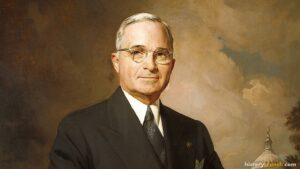
When Kennedy took office in January of 1961, he approved the plan but insisted that American involvement be kept secret. This desire for secrecy led to a series of decisions that would ultimately doom the operation.
Bay of Pigs Invasion – The Invasion
On April 15th, 1961, CIA-supplied bombers flown by Brigade 2506 pilots attacked Cuban airfields to destroy Castro’s small air force. The bombing was only partially successful. Photographs of the repainted American planes quickly became public, revealing American involvement. Under intense diplomatic pressure, Kennedy cancelled a second planned air strike. This left Castro’s aircraft intact and ready to attack the invasion fleet.
On April 17th, the exile force began landing at the Bay of Pigs on the south-central coast of Cuba. The operation immediately went wrong. Castro had been warned about the invasion and placed his forces on high alert. Cuban aircraft attacked the invasion fleet, sinking ships carrying vital ammunition and supplies. Cuban military forces of approximately 20,000 troops surrounded the beachhead within hours. Kennedy refused to authorize direct American military support to save the operation. Without air cover, reinforcements, or supplies, the exile force had no chance of success. By April 19th, all resistance had ended. More than 1,100 men were captured and held in Cuban jails for nearly two years before being ransomed in December of 1962 in exchange for approximately 53 million dollars worth of food and medicine.
Bay of Pigs Invasion – Why It Failed
The invasion failed for several interconnected reasons. The most fundamental was that the CIA badly misjudged Cuban public opinion. Most Cubans were not prepared to join an invasion backed by the United States, and many genuinely supported the revolution. The expected popular uprising never happened. In fact, the bombing of Cuban airfields before the invasion actually rallied public opinion behind Castro.
Second, the cancellation of the second air strike left Castro’s air force intact, which proved decisive. Without air cover, the exile force on the beach was exposed and vulnerable. Third, Kennedy’s decision to change the landing site from the original location to the Bay of Pigs removed the escape route into the mountains that might have allowed the force to continue as a guerrilla campaign if the landing failed. As stated above, Che Guevara later reportedly told a Kennedy aide that the invasion had been a gift to the revolution, as it allowed Castro to consolidate his power and rally the Cuban people behind his government.
Bay of Pigs Invasion – Significance
The significance of the Bay of Pigs Invasion in the history of the Cold War is considerable. For President Kennedy, it was a severe political embarrassment that damaged American credibility internationally. The Soviet Union concluded from the episode that Kennedy was weak and indecisive. For Castro, the failed invasion was a political victory that strengthened his government and gave him justification to move Cuba even closer to the Soviet Union.
In fact, the Bay of Pigs Invasion contributed directly to the Cuban Missile Crisis of October of 1962, when the Soviet Union placed nuclear missiles in Cuba partly in response to the demonstrated willingness of the United States to use military force against the island. Castro remained in power until 2008, demonstrating just how completely the invasion had failed in its primary objective. As such, the Bay of Pigs Invasion stands as one of the most consequential and instructive foreign policy failures of the Cold War era.