Economic Individualism: A Detailed Summary
Economic individualism is centered on the idea of less government involvement or intervention in the economy. This article details the history and main principles of economic individualism.

Economic individualism is centered on the idea of less government involvement or intervention in the economy. This article details the history and main principles of economic individualism.
Collectivism has several main principles, including: economic equality, public ownership, cooperation, collective-interest, economic equality and government regulation. This article details the history and main principles of collectivism in terms of its impact on government and economics.
Capitalism is an economic system that is the foundation for many modern countries. This article details the history and main forms of capitalism.
Classical Liberalism is a right-wing ideology and based upon the values of political and economic individualism. This means that it highly values individual freedoms and limited government intervention in the lives of citizens.
As an ideology, modern liberalism is associated with the center of the economic and spectrum because it allows for elements from both socialist ideologies and capitalist ideologies, combined with individual rights and freedoms and the principle of rule of law. This article details the main principles, history, positives and negatives of modern liberalism.
Utopian Socialism was an early form of socialist thought that emerged in the early 19th century and called for the creation of ideal cooperative communities to solve the problems caused by industrial capitalism. This article details the history, main principles, and significance of Utopian Socialism.

Historians have identified several causes for the Industrial Revolution, including: the emergence of capitalism, European imperialism, efforts to mine coal, and the effects of the British Agricultural Revolution.
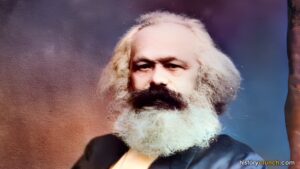
Karl Marx was a German philosopher, economist, and political theorist best known for his works ‘The Communist Manifesto’ and ‘Das Kapital’, which laid the foundation for modern socialism and communism. This article details the life and si9gnificance of Karl Marx.
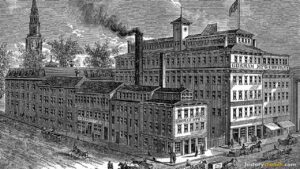
Industrialization in the United States during the Industrial Revolution transformed the nation from an agrarian economy to an industrial powerhouse, marked by the rapid growth of factories, technological advancements, and urbanization.

During the Industrial Revolution, the rise of the factory system dramatically shifted production from the decentralized, artisan-focused cottage industry to centralized factories using mechanized processes, significantly increasing output and efficiency.