The Fifteenth Amendment of the United States Constitution is one of the most significant events in American history from the 19th century. It is especially important in relation to the history of slavery in the United States and the events of the American Civil War. This is because the Fifteenth Amendment protected the right to vote for people especially in relation to former slaves. It was ratified on February 3rd, 1870, just two years after the Fourteenth Amendment, which had dealt with citizenship rights and equal protection under the law for former slaves. In fact, the Fifteenth Amendment was significant in relation to the Thirteenth Amendment and the Fourteenth Amendment of the American Constitution. Together, the three amendments are often referred to as the ‘Reconstruction Amendments’ since they dealt with issues resulting from the end of the American Civil War and the period of Reconstruction in the United States.
PASSAGE OF THE FIFTEENTH AMENDMENT
Slavery in the United States existed from the period of Colonial America in the early 17th century until the events of the American Civil War, which lasted from 1861 until 1865. Following the end of the Civil War the practise of slavery and rights for former slaves became an issue. As such, on December 18th in 1865, the Thirteenth Amendment of the United States Constitution was adopted. The Thirteenth Amendment formally abolished slavery in the United States. However, following the ban on slavery, there were still many issues facing former slaves. As such, legislators again visited the issue with the Fourteenth Amendment.
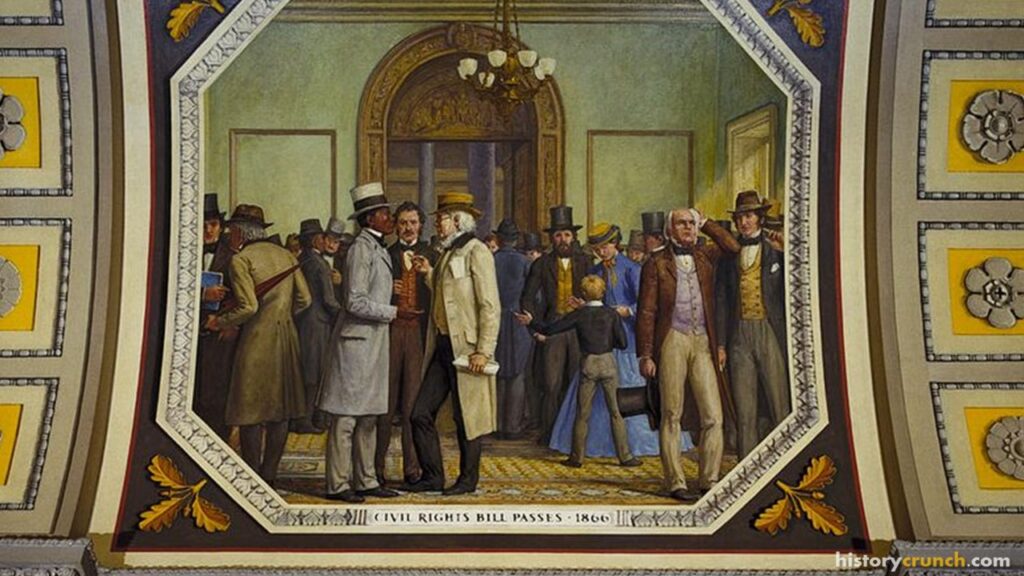
Many in the Southern states did not want to extend voting rights to the freed slaves. However, many in the Northern states feared that the Southern states would gain a political advantage in the House of Representatives. This is because representation in the House of Representatives is based upon population. As such, with freed slaves now counting towards the population, it meant an increase in political power for the South and the Democratic Party, which was most popular political party in the former slave states. As such, the Republican Party believed it necessary to promote rights for former slaves in order to help the Republican influence in the South. This situation eventually led to the passage of the Civil Rights Act of 1866. While, the Fourteenth Amendment and Civil Rights Act of 1866 attempted to deal with this issue, many Republicans still felt it necessary to ban any limitations on voting rights. As such, the Fifteenth Amendment dealt with the issue of voting rights for former slaves.
After the events of the Civil War, the issue of voting rights was a controversial topic. Many different groups across the United States wanted to deny voting rights to certain people. For instance, it was popular opinion at the time to deny voting rights to foreign-born citizens (immigrants). As well, some wanted to deny rights to former supporters of the Confederacy, while others wanted to deny former slaves. As a sort of compromise, an amendment was proposed that would prevent people from being denied their voting rights based on ‘race, color, or previous condition of servitude’. As such, this essentially applied to former slaves and a large and growing population of African Americans.
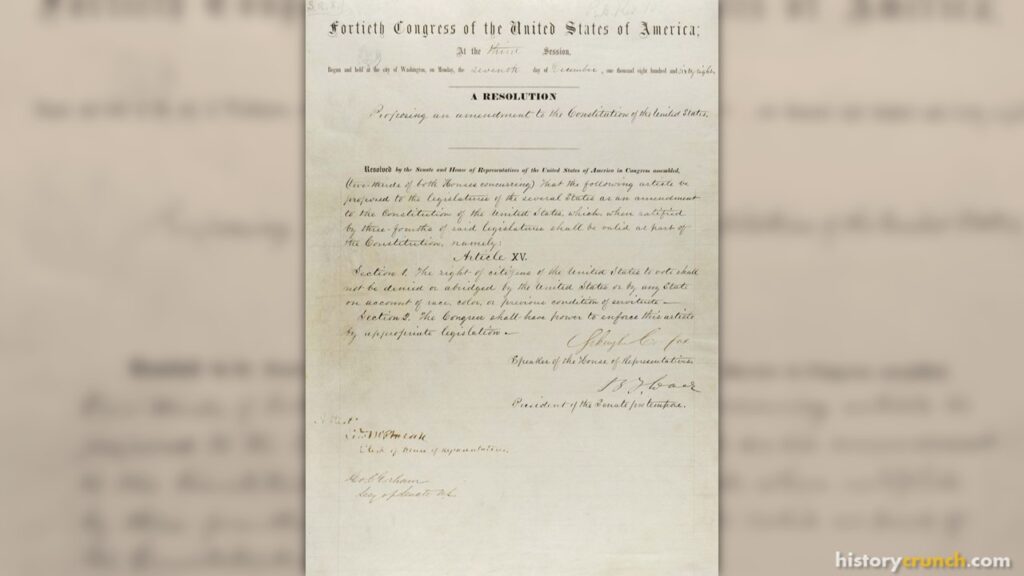
The proposed amendment was approved by the House on February 25th in 1869, and passed with a majority of 144 to 44 votes. In the House of Representatives it had mostly Republican support and no Democratic votes. The amendment passed the Senate just one day later on February 26th with a majority of 39 to 13. After its approval by the Senate, the amendment was sent to the states for ratification. More specifically, for the amendment to be pass it had to be ratified by at least three-fourths of the states. The Fifteenth Amendment of the United States Constitution was eventually made official on February 3rd, 1870 following its ratification by Iowa.
TEXT OF THE FIFTEENTH AMENDMENT
- Section 1 – The right of citizens of the United States to vote shall not be denied or abridged by the United States or by any State on account of race, color, or previous condition of servitude.
- Section 2 – The Congress shall have power to enforce this article by appropriate legislation.
IMPACTS OF THE FIFTEENTH AMENDMENT
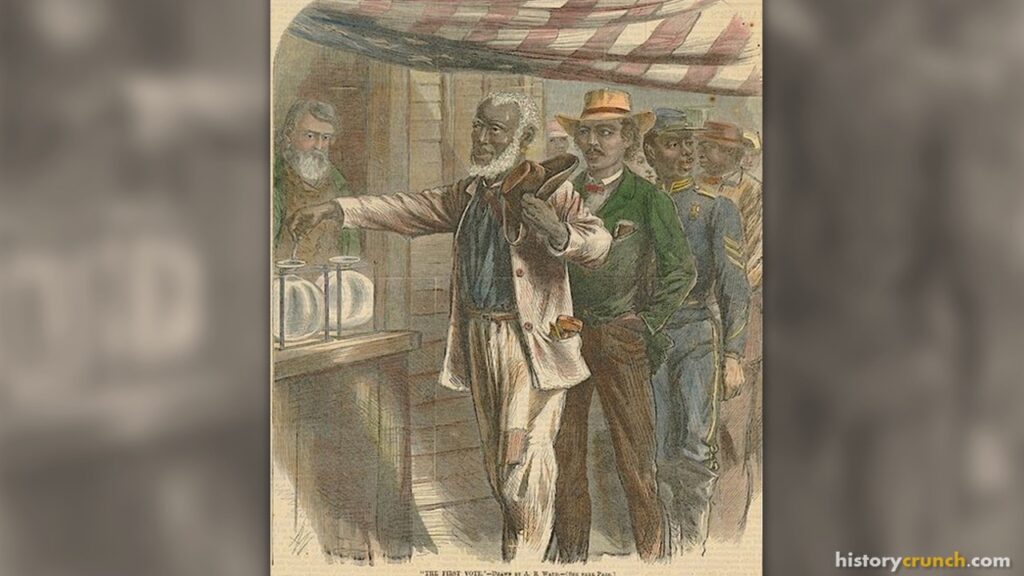
The Fifteenth Amendment was the last of the three ‘Reconstruction Amendments’ and finalized the lingering tensions of the earlier American Civil War. Since the end of the Civil War in 1865, the issue of voting rights for African Americans was a hotly debated topic. As such, when the Fifteenth Amendment was passed in 1870 it was a widely celebrated piece of legislation, especially in black communities throughout the United States. The Fifteenth Amendment was a pivotal moment in American history as it extended the voting rights to millions of more people.
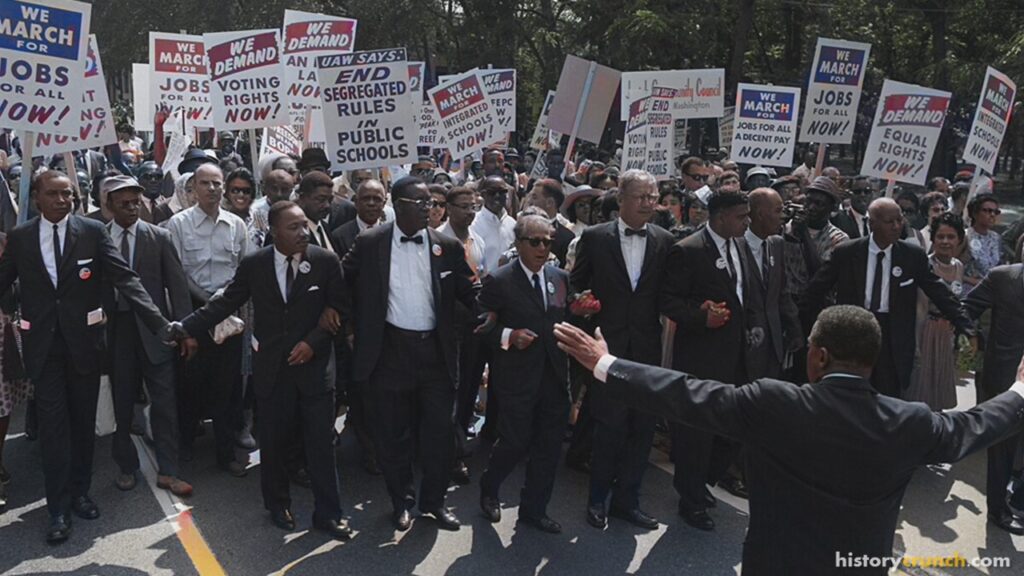
With that said, the ability of African American people to vote was not necessarily the same in all parts of the country. For instance, some people criticized the Fifteenth Amendment because they believed it did not go far enough. More specifically, some states used different methods to try to prevent African Americans from voting in elections. Two such examples of these methods include: poll tax and literacy tests. A poll tax was a tax that each citizen had to pay. Some states, especially in the South, prevented people from voting if they had not paid the poll tax. As such, this prevented low-income people from voting, which included a large percentage of people in black communities. The second method, literacy tests, was a government exam to test a person’s reading capability. This often had the effect of preventing people from voting who lacked an adequate education. Again, this often impacted mostly poor Americans, which included many in the black community. African Americans also struggled to cast their votes due to intimidation from the Ku Klux Klan and other white supremacist organizations. In fact, the methods used to prevent African Americans from voting became a significant part of the Jim Crow Laws throughout the Southern states. This issue continued well into the 1960s and the Civil Rights Movement.