The Great Depression in Australia was one of the most difficult periods in the country’s history. It was a time of widespread economic hardship that affected millions of Australians across all parts of the country and led to significant changes in Australian politics, society, and economic policy. The Great Depression was a worldwide economic recession that began in the United States with the stock market crash of October 1929 and quickly spread to countries around the world, including Australia. In Australia, the effects of the Depression were particularly severe, with the country experiencing some of the highest unemployment rates in the world during the early 1930s. As a result, the Great Depression left a lasting mark on Australian society and shaped the country’s approach to economic policy and social welfare for decades to come.
What was the Great Depression?
In general, the Great Depression was a worldwide economic recession that began in the United States in 1929 and spread rapidly to other parts of the world. A recession is a term that refers to a general economic downturn resulting in high levels of unemployment and a significant reduction in consumer spending and industrial production. In Australia, the Depression arrived in the early 1930s and had a devastating impact on the country’s economy. Unemployment in Australia rose to approximately 29% at the height of the Depression in 1932, making it one of the worst affected countries in the world. Industrial production fell sharply, wages were cut, and thousands of businesses were forced to close. As well, the collapse of global commodity prices caused enormous hardship for Australian farmers and rural communities, who were heavily dependent on the export of wool, wheat, and other agricultural products.
Australia Before the Great Depression
In order to understand the impact of the Great Depression on Australia, it is important to first consider the state of the Australian economy in the years before the crisis began. Like many countries during the 1920s, Australia experienced a period of relative economic prosperity following World War I. The Australian economy was heavily dependent on the export of primary commodities such as wool, wheat, and metals, and global demand for these products was strong during much of the 1920s. As well, Australia had borrowed heavily from British banks during the 1920s to finance infrastructure projects such as roads, railways, and public buildings. This borrowing helped to fuel economic growth but also left Australia heavily in debt and vulnerable to changes in global financial conditions.
However, there were signs of economic weakness in Australia even before the Depression began. For example, agricultural prices had been falling during the late 1920s, which put pressure on farming communities. As well, Australia’s manufacturing sector was relatively small and underdeveloped compared to other industrialized nations, which limited the country’s ability to absorb economic shocks. In general, the Australian economy of the late 1920s was prosperous on the surface but built on a fragile foundation that proved unable to withstand the global economic crisis that began in 1929.
Causes of the Great Depression in Australia
The Great Depression in Australia was caused by a combination of international and domestic factors. The first and most significant cause was the stock market crash of October 1929 in the United States, which triggered a worldwide collapse in economic confidence and led to a sharp reduction in international trade and investment. As a result, global demand for Australian exports fell dramatically, and the prices that Australian farmers and producers received for their goods collapsed. For example, the price of wool, which was one of Australia’s most important exports, fell by more than 50% between 1929 and 1932.
The second major cause was the collapse of international lending. During the 1920s, Australia had borrowed heavily from British banks to finance its development programs. When the global financial crisis began in 1929, British banks reduced their lending to Australia and demanded repayment of existing loans. As a result, Australia found itself unable to borrow the money it needed to finance its government spending and service its existing debts. This created an immediate financial crisis for both the federal and state governments of Australia.
The third cause was the collapse of global commodity prices. Australia’s economy was heavily dependent on the export of primary commodities such as wool, wheat, and metals. When global demand for these products fell sharply in the early 1930s, Australian farmers and producers were left with large quantities of goods that they could not sell at profitable prices. As a result, thousands of farmers were unable to repay their debts and were forced off their land.
Unemployment and Poverty in Australia
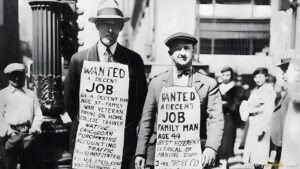
The most immediate and visible impact of the Great Depression in Australia was the dramatic rise in unemployment. At the height of the Depression in 1932, approximately 29% of Australian workers were unemployed, meaning that nearly one in three workers had no job. This was one of the highest unemployment rates in the world at the time and represented an enormous amount of human suffering. For many Australians, unemployment meant relying on government relief payments or charity organizations to feed their families and pay their bills.
The experience of unemployment during the Depression was particularly harsh in Australia because the country lacked a comprehensive social welfare system at the time. Relief payments provided by the government were very low and were often paid in the form of food vouchers rather than cash, which many people found humiliating. As well, to receive relief payments, unemployed workers were often required to perform manual labor on public works projects such as road building and land clearing. These work relief programs, known as “sustenance” or “susso” by Australians, provided some income for unemployed workers but were widely criticized for their poor conditions and low rates of pay.
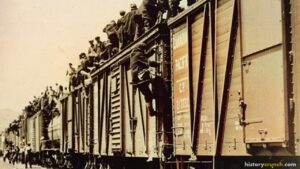
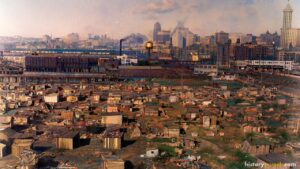
Many unemployed Australians, particularly young men, left their homes and traveled the country in search of work. These men, often referred to as “swagmen” or “swaggies,” carried their belongings on their backs and moved from town to town looking for casual work on farms or in other industries. The sight of these traveling workers became one of the defining images of the Depression era in Australia. As well, many families were forced out of their homes when they could no longer afford to pay rent, and makeshift camps of temporary shelters appeared on the outskirts of Australian cities, similar to the Hoovervilles that appeared in the United States during the same period.
Political Response to the Great Depression in Australia
The Great Depression had a significant impact on Australian politics and led to major debates about how the government should respond to the economic crisis. When the Depression began, Australia was led by Prime Minister James Scullin of the Australian Labor Party, who had only just won the federal election in October of 1929, just days before the stock market crash. Scullin’s government faced an almost impossible situation, as it inherited an economy that was rapidly deteriorating and had very limited financial resources to deal with the crisis.
The central debate in Australian politics during the Depression was between those who believed the government should cut spending and balance the budget, and those who believed the government should increase spending to stimulate the economy and support unemployed workers. In general, the financial establishment in Australia, including the banks and the British creditors to whom Australia owed money, argued strongly for austerity measures and spending cuts. On the other side, many within the Labor Party argued for a more expansionary approach that would involve increasing government spending and providing more support for ordinary Australians.
This debate was eventually resolved through the Premiers’ Plan of 1931, which was an agreement between the federal and state governments of Australia to reduce government spending, cut wages and salaries, and reduce interest rates on government debts. The Premiers’ Plan was essentially an austerity program that placed the burden of economic adjustment on ordinary Australians through wage cuts and reduced government services. While the plan helped to stabilize Australia’s finances, it caused significant hardship for many Australians and was deeply controversial within the Labor Party.
As a result of these internal divisions, the Scullin Labor government lost the federal election of 1931 in a landslide defeat to the United Australia Party, led by Joseph Lyons. Lyons went on to lead Australia through the remainder of the Depression years and into the late 1930s.
Jack Lang and New South Wales
One of the most dramatic political episodes of the Great Depression in Australia was the conflict between the federal government and the government of New South Wales, led by Premier Jack Lang. Jack Lang was a Labor politician who rejected the austerity approach of the Premiers’ Plan and argued that Australia should refuse to pay interest on its overseas debts until the economic crisis had passed. He believed that the money saved from debt repayments should instead be used to provide relief for unemployed Australians.
Lang’s approach put him in direct conflict with both the federal government and the British creditors to whom Australia owed money. In 1932, the federal government under Prime Minister Scullin’s successor, Joseph Lyons, passed legislation that allowed the federal government to take control of New South Wales’ finances and prevent Lang from defaulting on the state’s debts. Shortly afterward, the Governor of New South Wales, Sir Philip Game, dismissed Jack Lang from office, which was one of the most controversial uses of vice-regal power in Australian history. In all, the Lang affair highlighted the deep divisions within Australian society and politics over how to respond to the economic crisis of the Depression.
Significance of the Great Depression in Australia
In all, the Great Depression was one of the most significant events in Australian history. It caused enormous economic suffering for millions of Australians and led to major changes in the way the government approached economic policy and social welfare. For example, the experience of the Depression demonstrated that Australia needed a more comprehensive social safety net to protect its citizens during times of economic hardship. As a result, the years following the Depression saw the introduction of several important social programs in Australia, including unemployment benefits and other forms of social security.
As well, the Great Depression had a lasting impact on Australian politics. It created deep divisions within the Australian Labor Party and contributed to the rise of new political forces in Australian politics. In fact, many of the debates about the role of government in the economy that emerged during the Depression continued to shape Australian political life for decades afterward.
Finally, the Great Depression in Australia came to an end with the outbreak of World War II in 1939. As in other countries, the massive government spending required by the war effort effectively ended unemployment and brought the economic crisis to a close. In all, the Great Depression left a deep and lasting impression on the Australian people and shaped the country’s political, economic, and social development for generations to come.