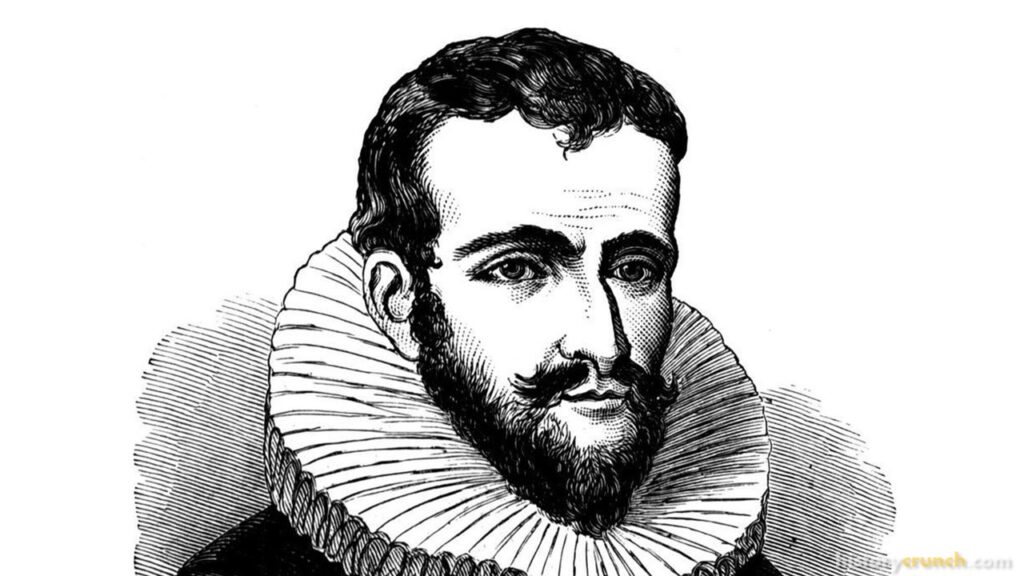
Henry Hudson was an English explorer and navigator whose voyages in the early 17th century impacted European understanding of the Arctic and North America. He is best known for his attempts to find a northern sea route to Asia from Europe and for the discovery and exploration of the Hudson River, Hudson Strait, and Hudson Bay. He was a significant explorer during the time of the Age of Exploration.
HENRY HUDSON – EARLY LIFE
Henry Hudson was born in England in the 16th century. The exact date is unknown but is thought to be around 1565. Regardless, by the early 1600s, Hudson had developed a reputation as a skilled navigator at a time when European nations were looking to find a shorter sea route to Asia. In fact, Asia was an important source of goods for Europeans and represented a massive economic opportunity. As such, European Monarchs sought to find a shorter route than the long and dangerous route around Africa.
In general, the Northwest Passage was a proposed sea route through the Arctic Ocean, along the northern coast of North America, connecting the Atlantic and Pacific Oceans. For centuries, European explorers searched for this passage as a shortcut to Asia, believing it would provide a faster, more direct trade route. However, difficult ice conditions and extreme weather made it nearly impossible to navigate until modern times. There was also a proposed Northeast Passage that could reach China by sailing north of Russia. This passage faced the same difficulties of the Northwest Passage and ultimately proved unviable as a route. Regardless, the promise of a Northwest or Northeast Passage played a significant role in Henry Hudson’s voyages.
HENRY HUDSON – VOYAGES IN THE AGE OF EXPLORATION
As stated above, Henry Hudson was an important figure in the time of the Age of Exploration. In fact, Hudson’s early voyages, sponsored by English companies, focused on finding a Northeast Passage over Russia to reach China. On his first voyage in 1607, he reached as far as the Svalbard Archipelago in the Arctic Ocean. More specifically, Hudson’s expedition was prevented from advancing further due to ice that blocked their progress. As stated previously, ice was a common problem encountered by European explorers in the Arctic. For example, Hudson’s second voyage in 1608 also failed to find a passable route, again turned back by ice. Although these voyages were ultimately unsuccessful, they were still significant because they added to Europe’s understanding of Arctic geography and sea conditions.
In 1609, Hudson was employed by the Dutch East India Company, and was sent to find a safe, north westerly passage to China for trade. The vessels set sail and the route that he chose to take went around the Arctic Circle. They took this route because they thought that the ice caps would melt during the summer, ensuring a relatively safe passage. Unfortunately, the planned route was not possible because ice blocked the route off, so they had to reroute and decided to take a westerly passage through North America. This route was much further south.
As a result of the reroute, Hudson was able to explore the area surrounding New York, including famous bodies of water that now bear his name. For example, Hudson was able to explore what became known as the Hudson River, as well as areas surrounding it such as the Hudson Bay. Thanks to the exploration that Henry Hudson commanded, Dutch colonization was able to take place in the greater New York region. In fact, his journey directly led to the establishment of New Netherland, including the founding of New Amsterdam (later New York City). As well, the Hudson Bay Company continued Hudson’s work by exploring the Hudson Bay watershed. The company also undertook very successful fur trade across North America. In fact, the Hudson’s Bay Company went on to have a long history in the development of Canada as a nation-state.
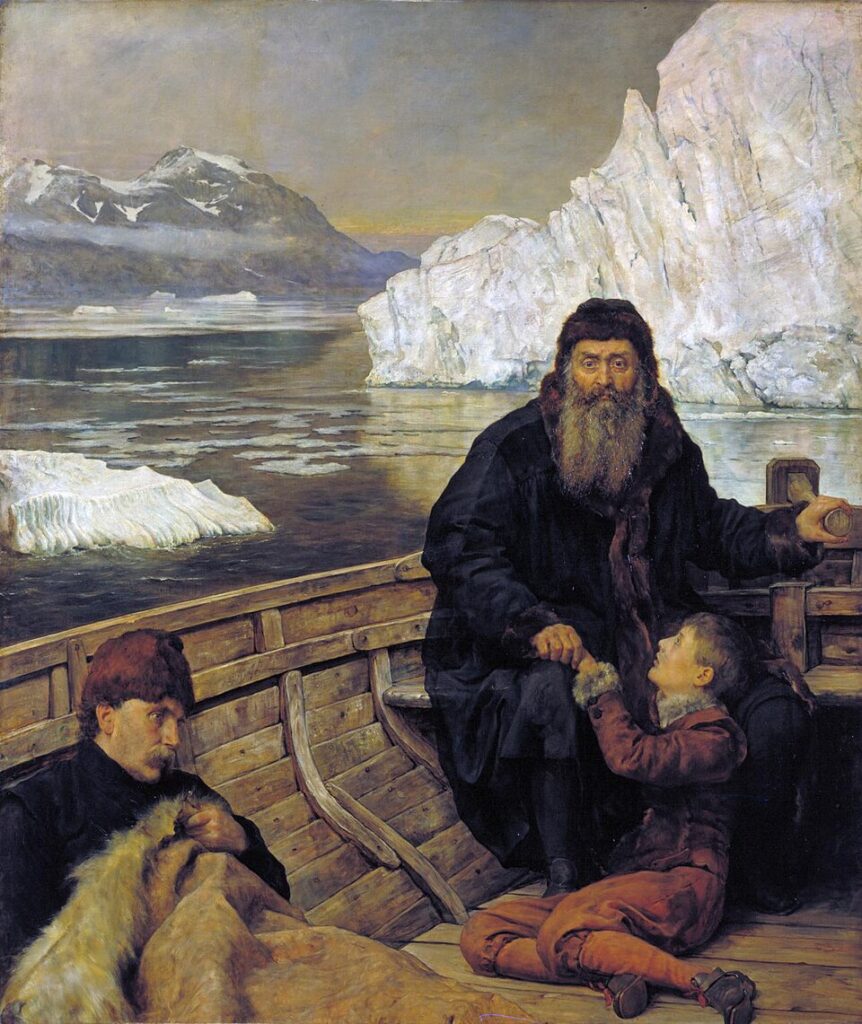
In 1610 Hudson got backing for another voyage from the British East India Company. His new ship, the Discovery, set sail in Spring of 1610 and went in search of the Northwest Passage. First, he sailed his crew into what would be names as Hudson’s Bay. The ship got stuck in ice and had to over winter in the James Bay area of the Hudson’s Bay. The crew were not happy about this, and it led to tense situations onboard the ship. In fact, when the ice eventually melted in 1611, Henry Hudson again wanted to set sail to try and discover the Northwest Passage. However, again the crew were upset as they wanted to sail back home. As supplies ran low and tensions grew, his crew mutinied in June of 1611. They set Hudson, his son, and a few loyal crew members adrift in a small boat, which was never seen again. As such, Henry Hudson was reported dead in 1611.
HENRY HUDSON – SIGNIFICANCE
As mentioned before, Henry Hudson was a highly significant person in the Age of Exploration. For instance, Hudson’s detailed exploration of the Arctic and northeastern North America expanded European maps and understanding of previously unknown regions. In fact, he made significant contributions to the understanding of regions, such as: Hudson River and Hudson Bay. Furthermore, his 1609 voyage under the Dutch flag directly inspired the establishment of Dutch colonies in North America, particularly in the Hudson River Valley.
As well, Henry Hudson’s discoveries opened new opportunities for fur trading, exploration, and other economic possibilities. More specifically, the Hudson’s Bay Company, later founded in 1670, became one of the oldest and most powerful trading companies in the world.