The Inca Empire is an important topic in relation to several other areas of history, including the Age of Exploration, the conquest of the Americas by European powers, and the overall story of indigenous civilizations in the New World. The Inca civilization arose from the highlands of modern-day Peru in the early 13th century and eventually expanded to cover an enormous territory stretching from modern-day Ecuador in the north to northern Chile in the south, and from the Pacific coast in the west to the Amazon River basin in the east. At its height the empire contained a diverse population of millions of people from many different groups and backgrounds.
Early History of the Inca
The Inca people originated in the highlands of what is today Peru, in the region around the city of Cusco. According to Inca tradition, their civilization was founded by a figure named Manco Capac, who was said to have been the son of the sun god Inti. Manco Capac and his followers are said to have emerged from Lake Titicaca, one of the highest lakes in the world, and traveled to the valley of Cusco where they established their first settlement. While historians view this founding story as mythological rather than historical, it reflects the deep religious beliefs that shaped Inca identity and helped justify the authority of their rulers.
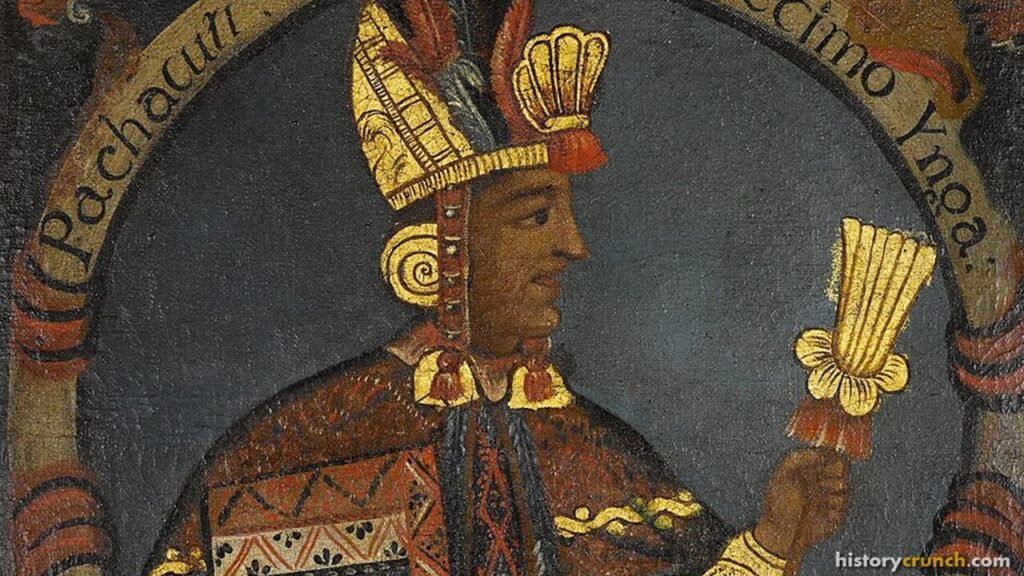
The early Inca were a relatively small group who settled in the Cusco Valley sometime around the 13th century. At this time the region was home to many other competing groups and societies, and the early Inca had to fight and negotiate their way to survival. For much of their early history the Inca were not particularly powerful compared to their neighbors. However, this began to change in the early 15th century under a ruler named Pachacuti, who is considered by historians to be the most important figure in the history of the Inca Empire. Pachacuti came to power around 1438 and launched a dramatic program of military conquest and expansion that transformed the Inca from a small regional power into the dominant civilization of South America. Under Pachacuti and his successors, the empire expanded rapidly in all directions, absorbing hundreds of different peoples and groups into a single, centrally governed state. The Inca referred to their empire as Tawantinsuyu, which translates roughly to “the four regions together,” reflecting the way the empire was organized into four large territories radiating outward from the capital city of Cusco.
How Did the Inca Empire Expand?
The Inca expanded their empire through a combination of military conquest and diplomacy. When the Inca encountered a neighboring society, they would often first offer that group the opportunity to join the empire peacefully, offering gifts and the promise of protection in return for loyalty and tribute. If a group refused, the Inca would use military force to bring them under control. This combination of persuasion and force proved highly effective, and the Inca were able to absorb a wide variety of different peoples and cultures into their empire relatively quickly.
One of the key tools the Inca used to maintain control over their vast territory was an extraordinary road system. The Inca road network stretched for thousands of miles across the Andes and along the Pacific coast, connecting the most distant parts of the empire to the capital at Cusco. These roads allowed the Inca military to move quickly to any part of the empire where trouble arose, and they also allowed goods and information to travel rapidly across the empire. Specially trained runners called chasquis were stationed along the roads at regular intervals and could relay messages from one end of the empire to the other in a matter of days. This system of roads and communication was one of the most sophisticated in the ancient world and was essential to holding the empire together.
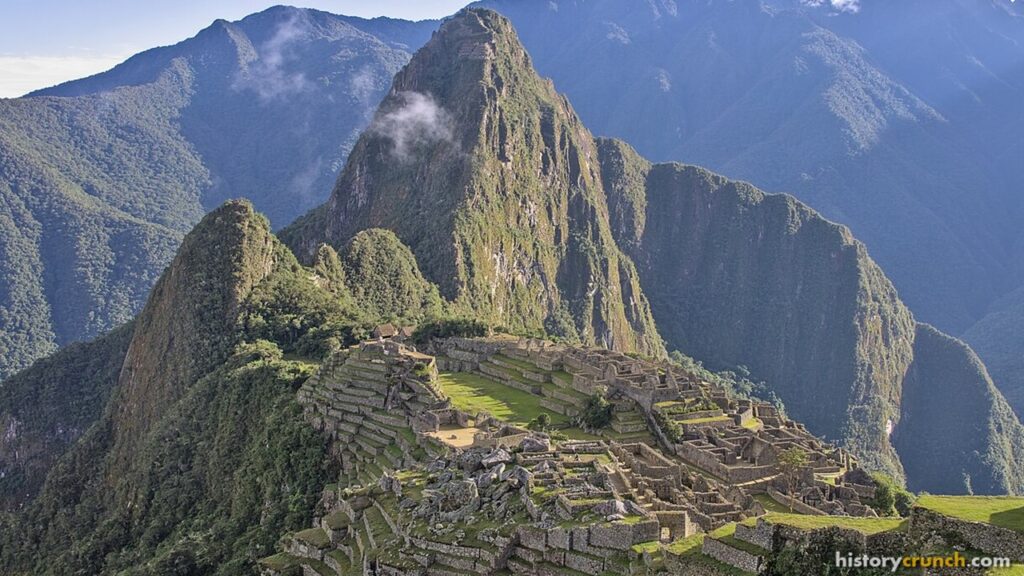
The Inca also used a system of forced labor called mit’a to build and maintain their roads, temples, and cities, and to support the needs of the state. Under the mit’a system, all citizens of the empire were required to contribute a certain amount of labor to the state each year. This labor was used to construct the massive building projects for which the Inca are famous, including the city of Machu Picchu, which was built high in the Andes Mountains and remains one of the most remarkable architectural achievements in history.
Inca Government
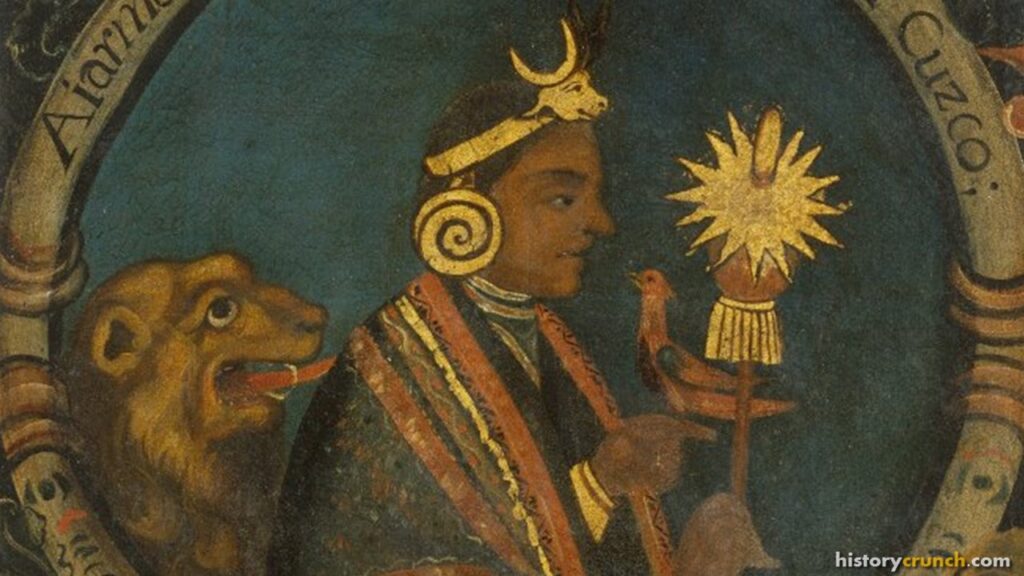
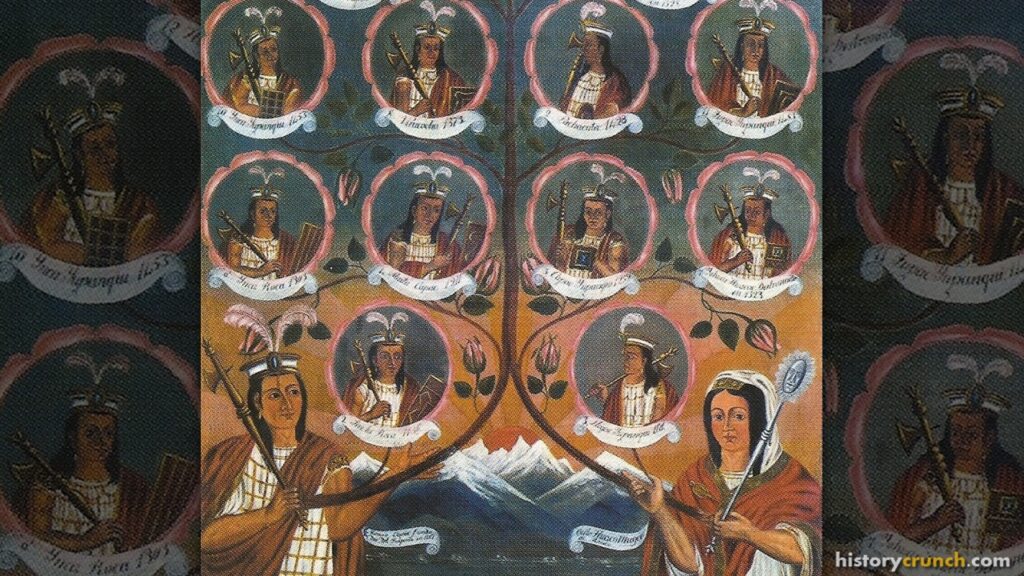
The Inca Empire was governed by a single ruler known as the Sapa Inca, which translates to “the only Inca” or “the unique Inca.” The Sapa Inca was considered a divine figure, believed to be a direct descendant of Inti, the sun god, and the most important deity in the Inca religion. This divine status gave the Sapa Inca absolute authority over every aspect of the empire, including its military, economy, religion, and administration. The Sapa Inca’s word was law, and his authority was considered sacred and unquestionable.
Below the Sapa Inca, the empire was governed by a large and complex bureaucracy. The four main regions of the empire, called suyus, were each administered by a governor who reported directly to the Sapa Inca. Beneath the governors were layers of officials responsible for managing smaller and smaller units of the population, down to the level of individual communities. This highly organized administrative structure allowed the Inca to govern an enormous and diverse empire with remarkable efficiency. The Inca also used a unique record-keeping system called the quipu, which consisted of knotted strings of different colors and lengths. The quipu was used to record information about population counts, tribute payments, and other administrative details, and it served as a replacement for a written language, which the Inca did not develop.
Inca Economy
The Inca economy was based on a system of redistribution rather than trade in the way that most other ancient civilizations operated. The Inca state collected goods and labor from all of its citizens through the mit’a system and through a tribute system in which conquered peoples provided goods to Cusco. These goods were then stored in a vast network of storehouses called qollqas that were located throughout the empire. The goods stored in these facilities included food, clothing, weapons, and other items that the state needed to function. From these storehouses the Inca distributed goods to workers, soldiers, and the elderly or sick who could not provide for themselves.
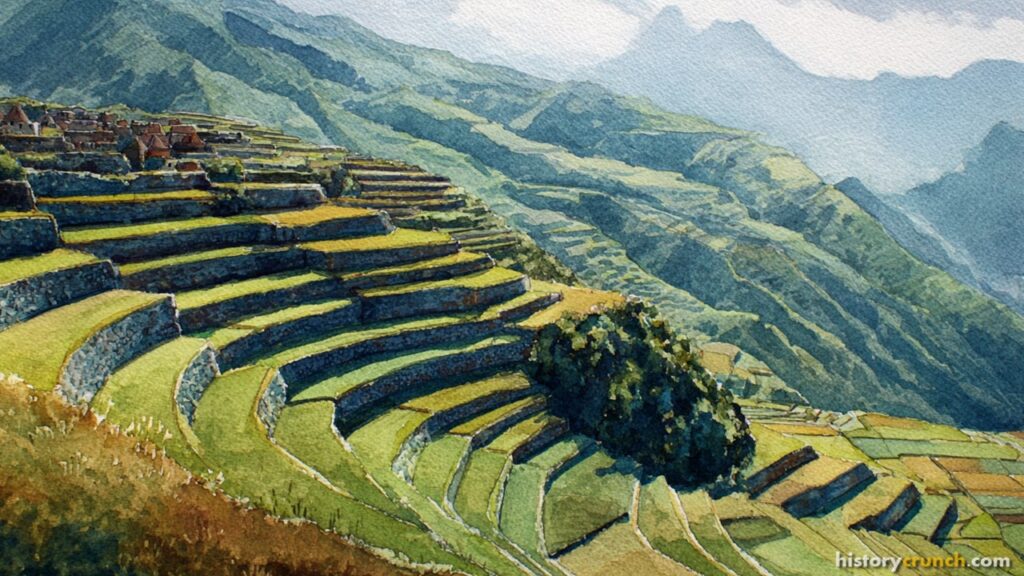
Agriculture was the foundation of the Inca economy and the primary way in which the empire fed its large population. The Inca were remarkable farmers who developed innovative techniques for growing food in the challenging environment of the Andes Mountains. Most notably, they built extensive systems of terraces, called andenes, on the steep slopes of the Andes. These terraces created flat growing areas on hillsides that would otherwise have been impossible to farm and allowed the Inca to grow crops at very high altitudes. The most important crops in the Inca diet were potatoes and maize, both of which the Inca grew in a wide variety of different types. The Inca were also skilled herders and kept large numbers of llamas and alpacas, which provided wool for clothing, meat for food, and served as pack animals for transporting goods across the rugged Andean terrain.
Inca Society
Inca society was organized into a strict hierarchy with the Sapa Inca and his royal family at the very top. Below the royal family were the Inca nobility, who held the most important positions in government, religion, and the military. The nobility were a privileged class who enjoyed many benefits that were not available to ordinary citizens, including fine clothing, better food, and access to education. The Inca nobility were sometimes referred to as “big ears” by the Spanish, because they wore large ear spools as a sign of their high status.
Below the nobility was the vast majority of the population, made up of ordinary farmers and workers who formed the backbone of the Inca economy. These people were organized into communities called ayllus, which were groups of related families who lived and worked together and shared responsibility for meeting the demands of the mit’a system. The ayllu was the fundamental unit of Inca society and served as the main social support network for ordinary Inca people. At the bottom of Inca society were servants and captives taken in war, who performed the most difficult labor in the empire.
Inca Culture
An important aspect of the Inca Empire was the rich culture that the Inca people developed through their art, architecture, religion, and traditions. Inca art was closely tied to religion and to the power of the state, and it was expressed through a wide variety of objects and structures. The Inca were particularly well known for their metalwork, especially in gold and silver, which they used to create elaborate objects for religious ceremonies and to decorate their temples and palaces. The Inca also produced fine textiles, which were considered one of the most valuable commodities in the empire. Inca textiles were woven from the wool of llamas and alpacas and were decorated with complex geometric patterns that carried religious and social significance.
The most famous examples of Inca architecture are the massive stone buildings and temples that the Inca constructed across their empire. The Inca were extraordinary builders who developed techniques for cutting and fitting stones together so precisely that no mortar was needed to hold them in place. Their buildings were strong enough to withstand the earthquakes that regularly strike the Andean region. The most famous example of Inca architecture is Machu Picchu, a city built high in the Andes Mountains that was likely used as a royal retreat for the Sapa Inca. Machu Picchu was abandoned after the Spanish conquest and was not known to the outside world until it was brought to international attention in 1911. Today it is one of the most visited archaeological sites in the world.
Inca Religion
Religion was central to every aspect of life in the Inca Empire. The Inca were a polytheistic society, meaning they worshipped many different gods, each of whom represented different forces of nature and aspects of human life. The most important god in the Inca religion was Inti, the sun god, who was believed to be the divine ancestor of the Sapa Inca and the source of all life and warmth. The Inca built elaborate temples dedicated to Inti across their empire, the most important of which was the Coricancha, or Temple of the Sun, located in the capital city of Cusco. The walls of the Coricancha were reportedly covered in gold, reflecting the Inca belief that gold was the sweat of the sun.
Other important gods in the Inca religion included Pachamama, the earth goddess who was believed to control the fertility of the soil, and Viracocha, a creator god who was believed to have made the world and all living things. The Inca also practiced ancestor worship, believing that the spirits of their dead rulers remained present and powerful after death. The bodies of deceased Sapa Incas were mummified and kept in the Coricancha, where they were treated as though they were still alive, being brought food and consulted on important decisions.
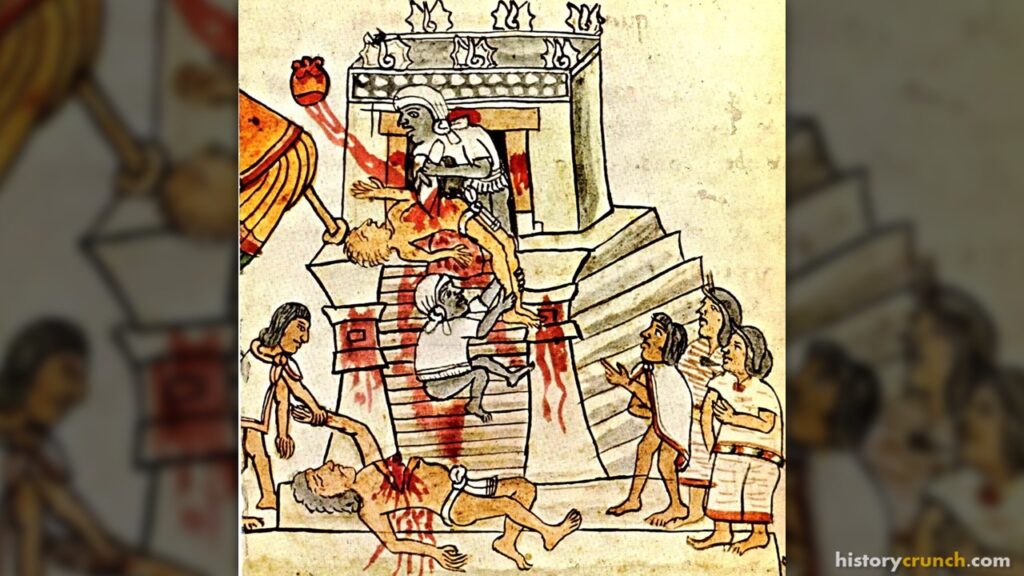
Like the Aztec, the Inca also practiced human sacrifice, though it was much less common than in Aztec society. The most significant form of Inca human sacrifice was a ritual called capacocha, in which children were sacrificed during important events such as the death of a Sapa Inca or a major natural disaster. These sacrifices were considered a great honor for the families of the children involved, as the children were believed to become divine messengers who would carry prayers directly to the gods.
Spanish Conquest of the Inca Empire
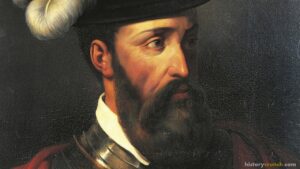
The Spanish conquest of the Inca Empire is one of the most significant and dramatic events in the history of the Americas. In 1532, Francisco Pizarro arrived in the territory of the Inca Empire with just 168 Spanish soldiers, an extraordinarily small force to use against one of the largest empires in the world. However, Pizarro was aided by several important factors that made the conquest possible despite the enormous odds against him.
The first and perhaps most important factor was the devastating impact of European diseases on the Inca people. In the years before Pizarro arrived, diseases such as smallpox had spread ahead of the Spanish through trade and contact with other indigenous groups and had swept through the Inca Empire, killing enormous numbers of people. Among those who died was the Sapa Inca Huayna Capac, whose death without a clear successor triggered a bloody civil war between two of his sons, Atahualpa and Huascar. By the time Pizarro arrived in 1532, the Inca Empire was weakened by disease and deeply divided by this civil war. Atahualpa had just defeated his brother Huascar and was in the process of consolidating his control over the empire when the Spanish arrived.
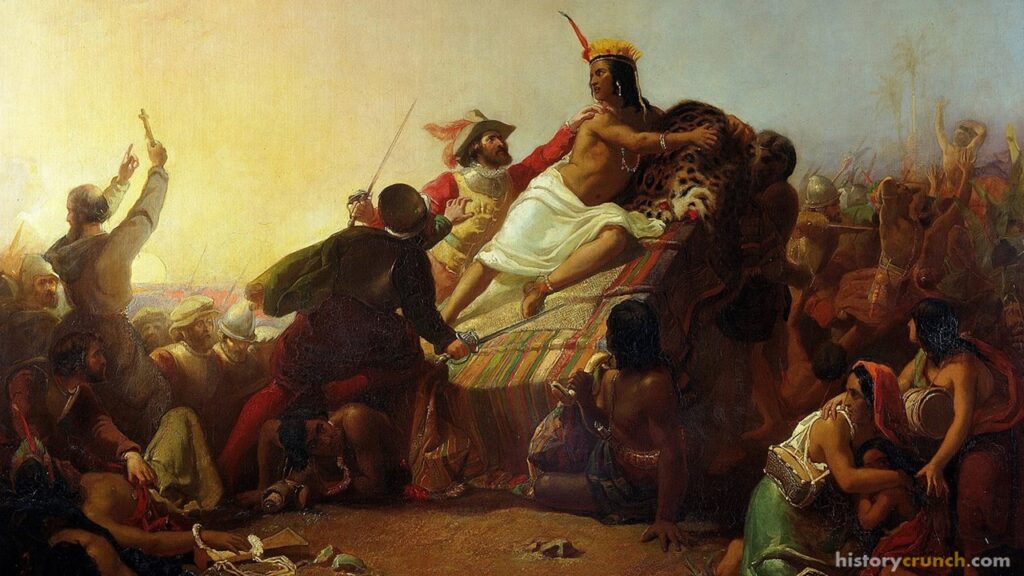
Pizarro and his men first made contact with Atahualpa at the city of Cajamarca. Atahualpa arrived at the meeting with over 6,000 followers, most of whom were unarmed. A Spanish friar approached Atahualpa and presented him with a bible, urging him to accept Christianity and the authority of the Spanish king. When Atahualpa refused and threw the bible to the ground, the friar used this as a signal for the Spanish to attack. The Spanish launched a devastating assault on the unarmed Inca followers, using firearms, steel weapons, and cavalry to cut down over 2,000 people. Atahualpa himself was captured alive. The sudden use of firearms and horses, both of which were completely unknown to the Inca, caused enormous shock and confusion among Atahualpa’s followers and allowed the vastly outnumbered Spanish to dominate the situation entirely.
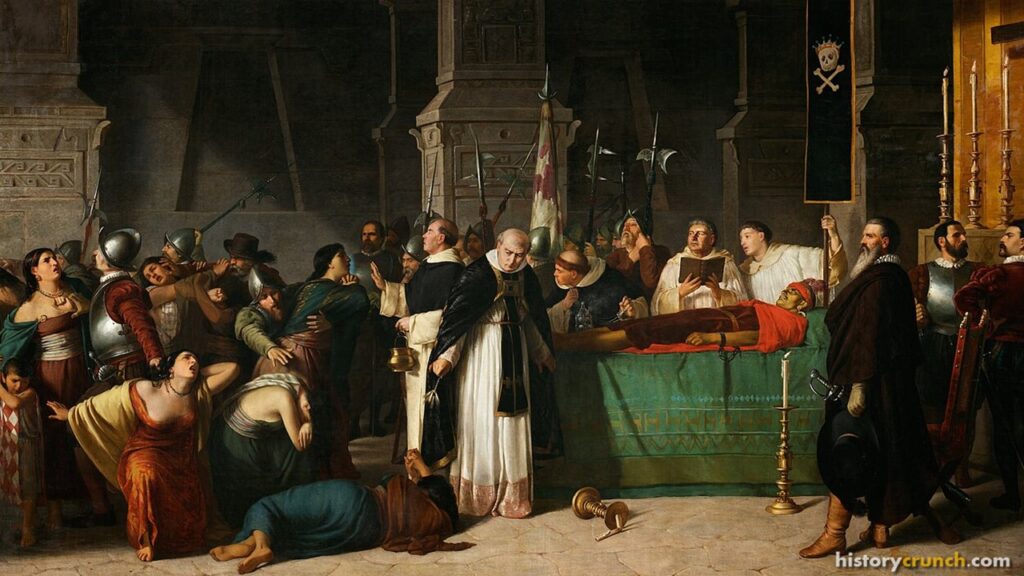
In captivity, Atahualpa offered Pizarro an enormous ransom in exchange for his freedom, promising to fill a large room once with gold and twice with silver. The Inca people collected this treasure from across the empire and delivered it to the Spanish. Despite receiving the ransom, Pizarro chose not to release Atahualpa. Instead, Atahualpa was baptized as a Christian and then executed by strangulation in 1533. With the death of Atahualpa, the Inca Empire lost its ability to mount an effective resistance against the Spanish. Although pockets of Inca resistance continued for several more decades, the empire effectively collapsed following Atahualpa’s death. Pizarro went on to found the new capital city of Lima in 1535, which remains the capital of Peru today. The conquest of the Inca Empire was one of the most improbable military victories in recorded history, and its impact on the indigenous peoples of South America was catastrophic and long-lasting.