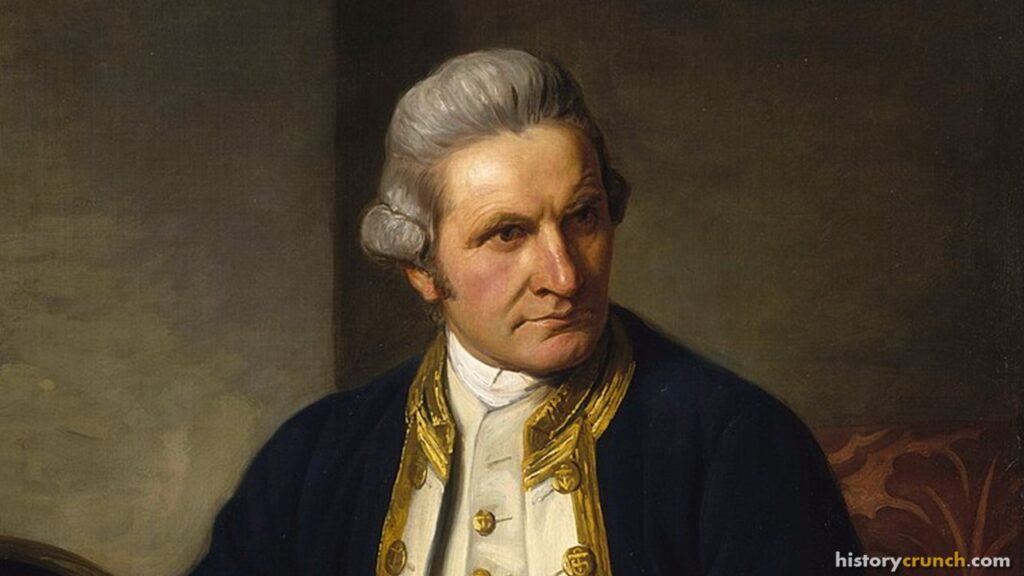
James Cook was a British naval officer, navigator, and explorer who became one of the most important maritime figures of the 18th century. He led three major voyages across the Pacific Ocean between 1768 and 1779 and was a prominent figure in the Age of Exploration. Furthermore, he is known for mapping large parts of the Pacific, completing the first recorded circumnavigation of New Zealand, charting the eastern coast of Australia for Britain and reaching the Hawaiian Islands. As such, historians consider him to be an important explorer for Britain in the later stages of the Age of Exploration.
JAMES COOK – EARLY LIFE
James Cook was born into a modest family on November 7th, 1728 in Marton, Yorkshire, England. As a teenager, Cook was first apprenticed to a shopkeeper, but eventually shifted to a different path. For instance, In 1746, he was accepted as a sea apprentice by John Walker, who was involved in the east coast coal trade. This gave James Cook practical experience in sailing, navigation, and the demanding routine of life at sea.
JAMES COOK – RISE TO PROMINENCE
In 1755, Cook volunteered for the Royal Navy during the Seven Years’ War, was a global conflict primarily between Britain and France. Over the next several years, he developed a strong reputation for surveying and mapping, especially from 1763 to 1766 when he surveyed the coast of Newfoundland. Cook’s surveying work was especially important for his career. Accurate coastal charts were essential for naval warfare and safe navigation, and Cook proved that he could combine practical seamanship with careful scientific observation. Therefore, by the 1760s he had already built a reputation as a skilled navigator and mapmaker, which made him a strong choice for major exploration in the Pacific.
JAMES COOK – VOYAGES IN THE AGE OF EXPLORATION
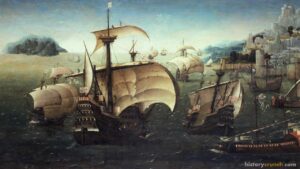
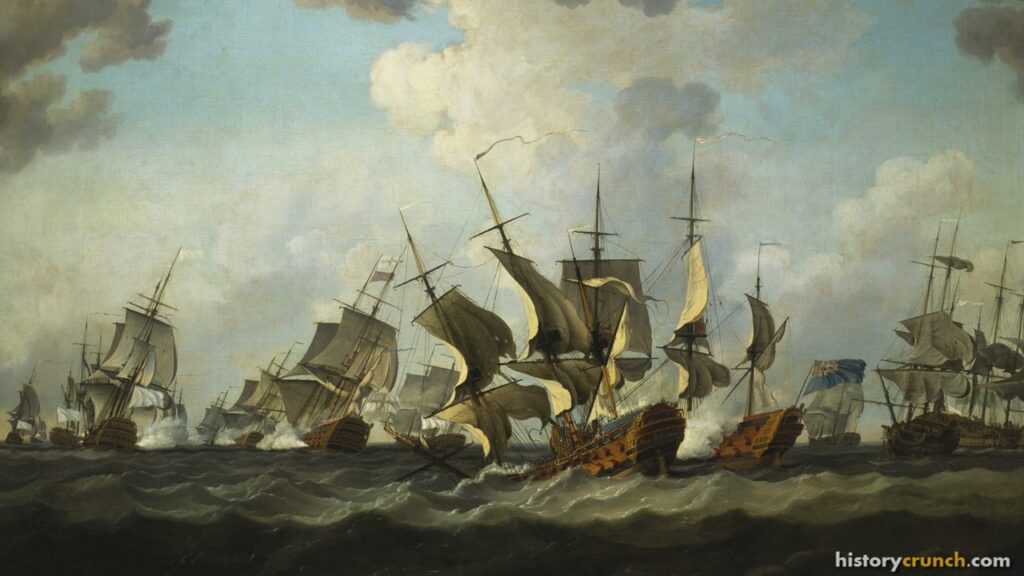
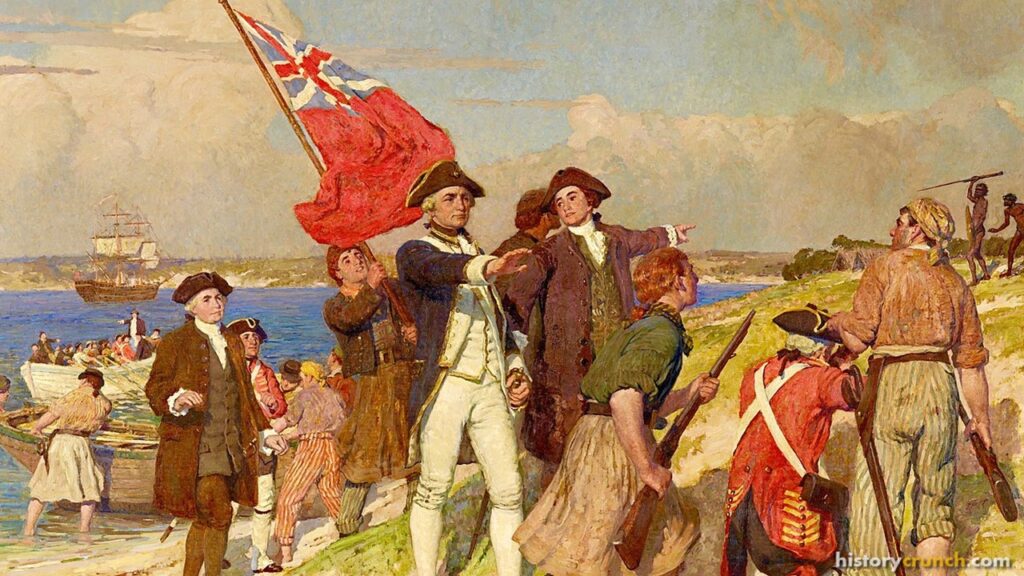
As stated above, James Cook was a prominent explorer in the Age of Exploration, especially in its later stages. His first Pacific voyage began on May 27th, 1768 aboard the HMS Endeavour. During this first voyage, Cook circumnavigated New Zealand and demonstrated that it consisted of two main islands rather than being part of a larger southern continent. He also sailed along the eastern coast of Australia in 1770 and mapped it for Britain. This was a specific turning point in Pacific history because Cook’s charting of that coastline gave Britain important new geographic knowledge that later influenced colonization. The first voyage also included naturalists and observers who described the plants and animals that they encountered in great detail. In fact, James Cook’s first voyage was not only an exploration journey. It was also part of a larger 18th century effort to advance navigation, science and empire building.
Cook’s second voyage began in July of 1772. This expedition was mainly connected to the search for the supposed southern continent often called ‘Terra Australis’. Cook sailed with HMS Resolution, while Tobias Furneaux commanded HMS Adventure. During this journey, Cook crossed the Antarctic Circle in January of 1773, becoming the first navigator known to have done so. Although Cook did not find a great inhabited southern continent, the second voyage was still extremely important. More specifically, it helped show that no large fertile southern land existed in the temperate latitudes where many Europeans had expected to find it. This resulted in a major correction to European geographic thinking and strengthened Cook’s reputation as one of the leading navigators of his age.
Cook’s third voyage began in 1776. This expedition had several goals, but one of the most important was the search for a Northwest Passage linking the Pacific and Atlantic Oceans through the far north of North America. During this voyage, Cook sailed with HMS Resolution, while HMS Discovery accompanied the expedition. On this voyage, Cook reached the Hawaiian Islands in January of 1778, making him the first recorded European to visit the Hawaiian Island. He then continued northward and explored parts of the northwest coast of North America and Alaska while searching for a northern passage. He did not find the route he wanted, but the voyage still produced valuable charts and observations. For instance, his work added to European understanding of the North Pacific and its coastlines.
JAMES COOK – DEATH
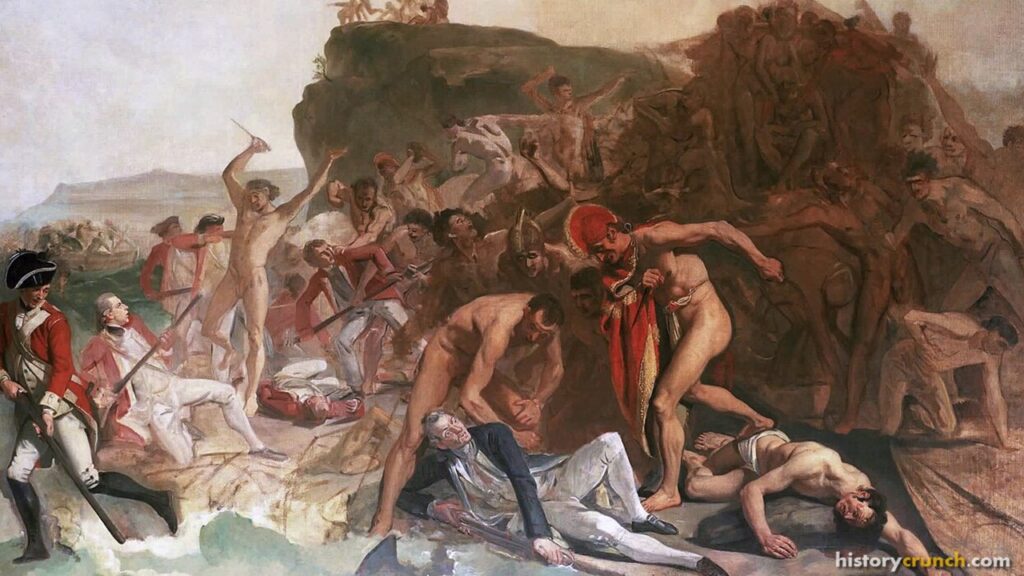
After the northern phase of the third voyage voyage, Cook returned to Hawaii in January of 1779 and anchored at Kealakekua Bay. The HMS Resolution needed repairs, so they were forced to stay in the region. However, relations between Cook’s men and Hawaiians became more strained, especially after a series of thefts and confrontations. Cook went ashore during the crisis and was attacked and killed. In fact, he died on February 14th, 1779 at Kealakekua Bay in Hawaii.
JAMES COOK – SIGNIFICANCE
James Cook’s voyages during the Age of Exploration had a major impact on the history of exploration. For instance, his maps improved European understanding of several regions, including: New Zealand, Australia, and the North Pacific. As well, his expeditions brought back important scientific and geographic knowledge. At the same time, James Cook’s voyages also helped expand British involvement in the Pacific and contributed to long-term changes for Indigenous peoples in the regions he visited. Therefore, James Cook is remembered not only as a highly skilled navigator, but also as a central figure in the larger history of exploration.