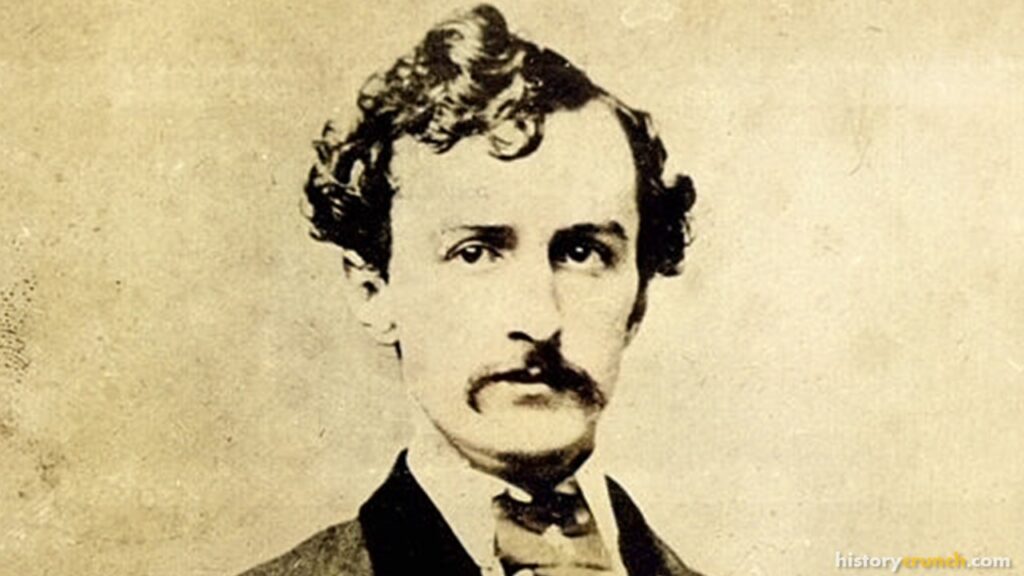
John Wilkes Booth is remembered for his assassination of United States President Abraham Lincoln on April 14th in 1865. Beyond this, John Wilkes Booth was a relatively well-known actor at the time and participated in many stage shows. However, his assassination of Abraham Lincoln was a very significant event and relates heavily with the timeframe of the American Civil War.
JOHN WILKES BOOTH’S EARLY LIFE
John Wilkes Booth was born on May 10th, 1838 near Bel Air, Maryland. His father was a famous English actor named Junius Brutus Booth, who had moved to the United States in 1821. John was actually the ninth of ten children. After spending his youth in various boarding schools, it became obvious to those who know John that his career path was in acting like his father. In fact, two of his older brothers had also become well-known actors, so the family had gained some recognition within the acting community. After his first performance at the age of 17, Booth was asked to travel the country as part of a Shakespearean acting company. During this time, not only did his acting career progress, but his political involvement became a larger portion of his life as well.
JOHN WILKES BOOTH’S POLITICAL VIEWS
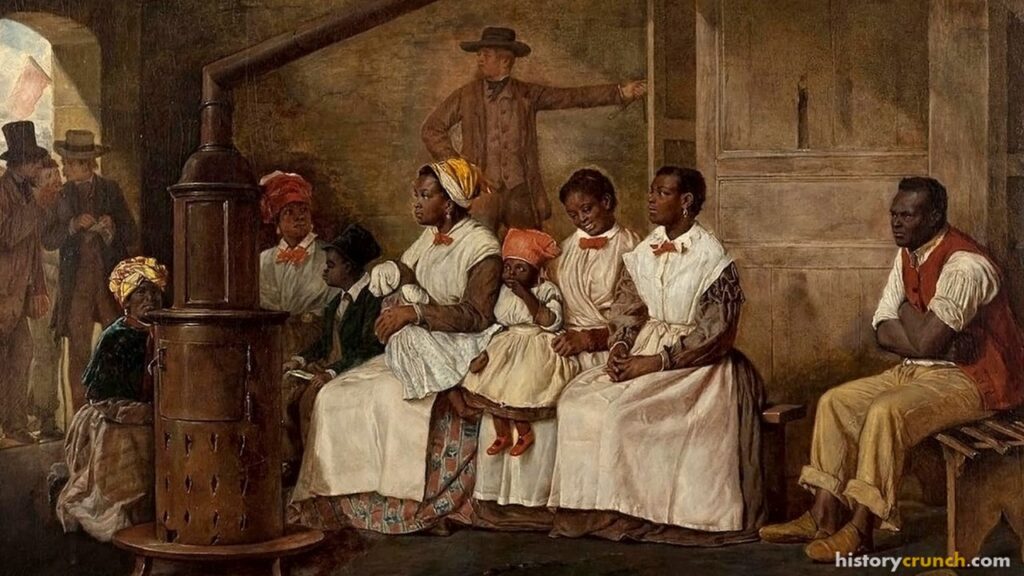
In the 1850s Booth became a member of the Know-Nothing Party, which aimed to limit immigration into the United States. Booth was also an avid supporter of slavery, participating in the execution of John Brown in the famous event at Harpers Ferry, and even acted as a spy for the Confederate Army during the Civil War. As such, he hated the American Abolitionist Movement and any attempts to end the practise of slavery in the United States. Furthermore, throughout the 1860s, and the timeframe of the Civil War, Booth regularly spoke out against Abraham Lincoln and the role of the Union. In fact, Booth expressed a great deal of anger during Lincoln’s campaign for re-election in 1864.
Although known for his successful assassination of President Abraham Lincoln, Booth originally failed in his first attempt to kidnap President Lincoln. It was in 1865 following Lincoln’s successful election to a second term as President of the United States. With the goal of capturing the President, bringing him to the Confederate capital of Richmond and demanding for peace or a release of captured Confederates, Booth enlisted six southern sympathizers to make this goal a reality. Unfortunately for Booth, Lincoln did not appear where the group had anticipated him to be, and the plan never came to be. The failed attempt frustrated and angered John Wilkes Booth, to the point where he wanted more than a standard kidnapping. As such, he began planning for the assassination of Lincoln.
ASSASSINATION OF ABRAHAM LINCOLN
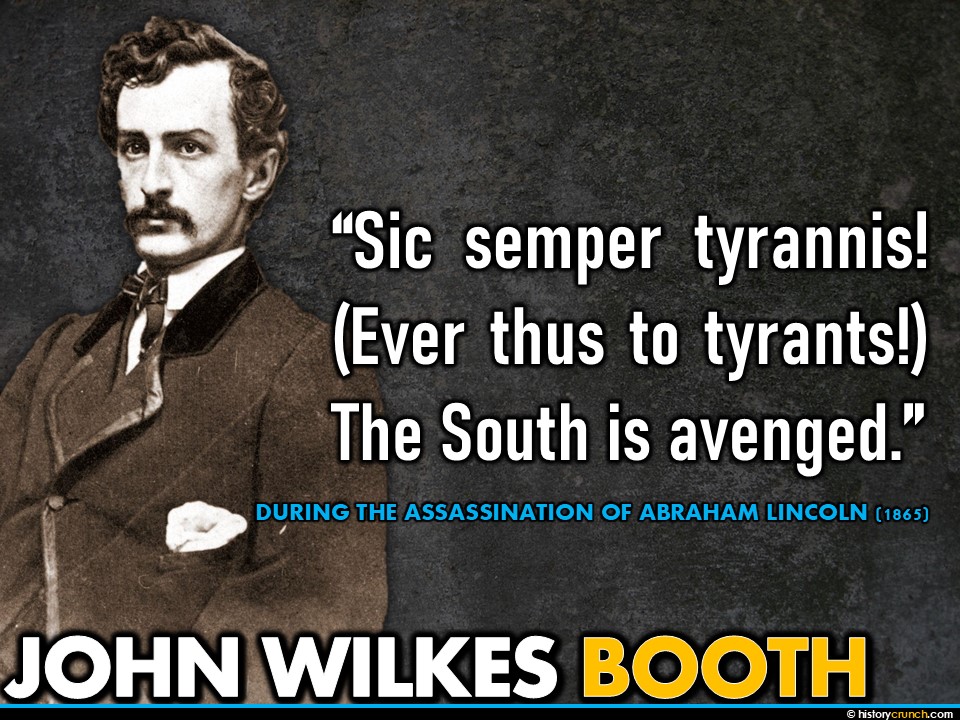
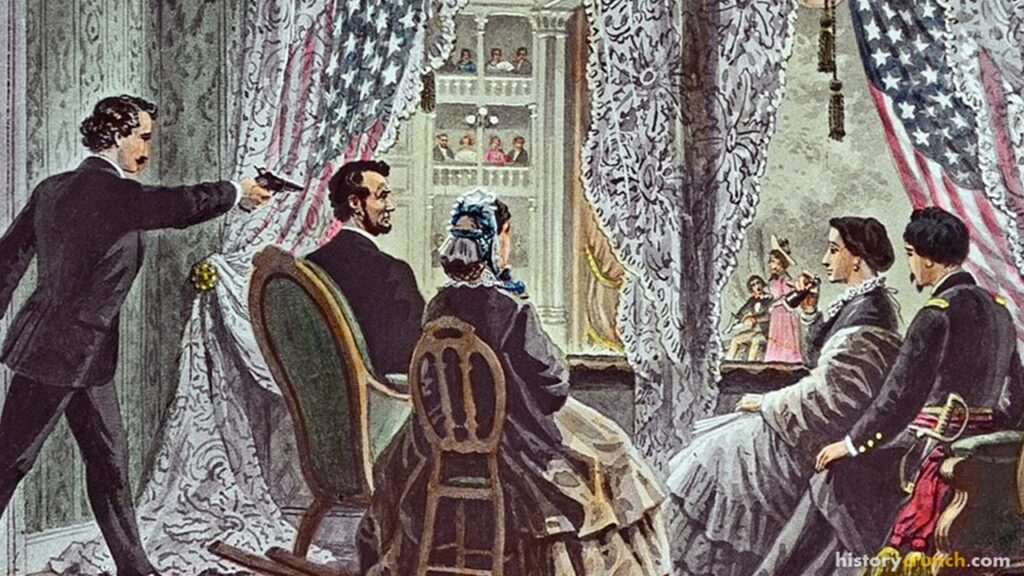
Abraham Lincoln was assassinated by John Wilkes Booth on the evening of April 14th in 1865, just over a month following his second inaugural address. At the time, Lincoln was attending a play called ‘Our American Cousin’ at Ford’s Theatre in Washington D.C. Booth approached Lincoln while he was watching the play in his theatre box and shot the president in the head. He shot the president with a ‘Philadelphia Derringer’, which was a small styled handgun. Booth stabbed another person in the box and ran from the theatre and escaped from the theater box by jumping. He quickly leapt onto the stage where he yelled “Sic semper tyrannis!” (“Thus ever to tyrants!”, which is the Virginia state moto), all while breaking his leg in the fall. Lincoln did not die right away from the gunshot, and remained alive, although in a coma, until early the next morning. As such, Lincoln’s death is officially dated as April 15th, 1865. His Vice President, Andrew Johnson, was sworn in as the next President of the United States.
John Wilkes Booth assassinated Lincoln as part of a larger plot by loyalists to the Confederacy. Two other assassins, Lewis Powell and David Herold, were supposed to assassinate Vice President Johnson and Secretary of State Willian H. Seward at their homes. The assassins were hoping to start a revolt by the Confederacy, and viewed Lincoln, Johnson and Seward as responsible for the Civil War. Regardless, the plot did not work as only Lincoln was assassinated. Secretary of State Seward was wounded but survived, and no attempt was ever made against Johnson, because the assassin decided against carrying it out.
JOHN WILKES BOOTH’S CAPTURE & DEATH
As stated above, John Wilkes Booth escaped from Ford’s Theatre following his assassination of Lincoln. In fact, he went on the run from authorities and evaded capture for the next two weeks. He was eventually found hiding on a farm in Virginia where he died in a shootout on April 26th. He was buried in a family cemetery plot in Baltimore.
Lincoln’s body initially lay in state at the White House and then the Capitol building before it was transported to Springfield, Illinois. The trip to Illinois took three weeks aboard a train called the ‘Lincoln Special’. It took a route from Washington D.C. to Springfield that allowed it to pass through many towns and cities, so that people could pay their respects. Ultimately, Lincoln was buried at Oak Ridge Cemetery in a large tomb referred to as the ‘Lincoln Tomb’. His wife, Mary Todd, and three of his sons were also buried at the site. He was the first American President to be assassinated while in office.