The Mexican-American War was a military conflict fought between the United States and Mexico from April of 1846 to February of 1848. It grew out of the annexation of Texas by the United States in 1845 and a dispute over where the border between Texas and Mexico lay. The war resulted in a decisive American victory and the signing of the Treaty of Guadalupe Hidalgo on February 2nd, 1848, under which Mexico ceded approximately 525,000 square miles of territory to the United States. This land included the present-day states of California, Nevada, Utah, Arizona, New Mexico, and parts of Colorado, Wyoming, Kansas, and Oklahoma. The Mexican-American War was one of the most significant territorial acquisitions in American history, fulfilling the vision of Manifest Destiny and giving the United States a coastline stretching to the Pacific Ocean. At the same time, the question of whether slavery would be permitted in the newly acquired territories reignited one of the most dangerous political conflicts in American history and helped set the country on the path to the Civil War.
What Was Westward Expansion?
Westward Expansion was the process by which the United States grew from its original boundaries along the eastern seaboard to eventually stretch from the Atlantic Ocean to the Pacific Ocean. This expansion, which took place primarily during the 18th and 19th centuries, was driven by the belief that the United States had a natural right and even a duty to expand across the North American continent. This belief was captured in the concept of Manifest Destiny, a term popularized in the 1840s that held that it was the inevitable and God-given mission of the United States to expand westward and spread its democratic institutions across the continent. The Mexican-American War was the most important military expression of Manifest Destiny and one of the most significant events in the entire history of American westward expansion.
Mexican-American War – Background and Causes
The immediate origins of the Mexican-American War lay in the long and complicated relationship between the United States and Mexico over the territory of Texas. Texas had been part of Mexico since Mexican independence from Spain in 1821, but in the 1820s and 1830s large numbers of American settlers had moved into the region under the terms of Mexican land grants. By 1836, these settlers, who far outnumbered the Mexican population in Texas, had rebelled against Mexican rule and declared the independent Republic of Texas following their victory at the Battle of San Jacinto. Mexico refused to recognize Texan independence and continued to regard the territory as a rebellious province.
Texas applied to join the United States shortly after declaring independence, but the American Congress was deeply divided over annexation, primarily because Texas was a slaveholding territory and its admission as a state would upset the delicate political balance between slave and free states. The issue was finally resolved in 1845 when President James K. Polk, a committed expansionist and firm believer in Manifest Destiny, pushed through the annexation of Texas as part of a joint resolution of Congress. Mexico immediately broke off diplomatic relations with the United States, viewing the annexation as illegal and an act of aggression.
A second flashpoint arose from a dispute over the location of Texas’s southern border. The United States claimed that the Rio Grande formed the border between Texas and Mexico. Mexico insisted that the border was the Nueces River, approximately 150 miles further north. This disputed strip of territory between the two rivers became the immediate cause of the war. President Polk sent American forces under General Zachary Taylor into the disputed zone in early 1846. On April 25th, 1846, Mexican cavalry attacked an American patrol in the disputed area, killing 11 soldiers and capturing 49 more. Polk used this skirmish to go to Congress, declaring that Mexico had invaded American territory and shed American blood on American soil. Congress declared war on May 13th, 1846.
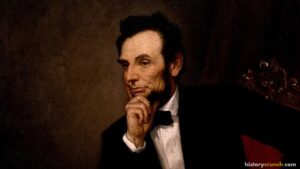
The declaration of war was not unanimous and the conflict was controversial from the beginning. Many Whig politicians, including a young congressman from Illinois named Abraham Lincoln, questioned whether the initial skirmish had actually taken place on American soil and argued that Polk had deliberately provoked the conflict to gain Mexican territory. Abolitionists in the North saw the war as an attempt by Southern slaveholders to expand slavery into new territories. These critics were a minority, however, and the war proceeded with the support of most Americans, particularly in the South and West.
Mexican-American War – Major Events
The Mexican-American War was fought across several theaters simultaneously, with American forces advancing into California and New Mexico in the west while a separate army under General Zachary Taylor fought its way southward through northern Mexico.
In the west, American forces under General Stephen Watts Kearny marched from Fort Leavenworth in Kansas to Santa Fe in New Mexico, capturing the city without significant resistance in August of 1846. Kearny then continued westward to California, where American settlers had already launched a rebellion against Mexican rule known as the Bear Flag Revolt. Combined American military and naval forces secured California by January of 1847. The western campaign was notable for the relatively small forces involved and the limited resistance the Americans encountered, as the population north of the Rio Grande was sparse and Mexican military presence was limited.
In northern Mexico, General Zachary Taylor crossed the Rio Grande into Mexican territory and captured the city of Monterrey after a hard-fought battle in September of 1846. Taylor continued south and defeated a much larger Mexican force under General Antonio Lopez de Santa Anna at the Battle of Buena Vista on February 22nd and 23rd, 1847. The victory at Buena Vista made Taylor a national hero in the United States and launched his successful campaign for the presidency in 1848.
Despite these victories, Mexico refused to negotiate peace on terms acceptable to the United States. President Polk responded by authorizing a second major offensive. General Winfield Scott landed an American army near Veracruz on the Gulf Coast of Mexico in March of 1847 and began marching inland toward Mexico City. Scott’s campaign was one of the most impressive of the war. His forces defeated Mexican armies at the battles of Cerro Gordo in April and Churubusco in August, advancing steadily toward the Mexican capital. The climactic engagement of the entire war came at the Battle of Chapultepec on September 13th, 1847, when American forces stormed the hilltop Chapultepec Castle, which served as Mexico’s national military academy. Among those who died defending the castle were a group of young military cadets, known as the Ninos Heroes or Boy Heroes, who became celebrated martyrs in Mexican historical memory. American forces occupied Mexico City the following day, effectively ending organized Mexican military resistance.
Mexican-American War – The Treaty of Guadalupe Hidalgo
With Mexico City in American hands, negotiations for a peace treaty began. The American negotiator was Nicholas Trist, the chief clerk of the State Department, who had accompanied Scott’s army to Mexico. Trist negotiated the Treaty of Guadalupe Hidalgo, which was signed on February 2nd, 1848, in the village of Guadalupe Hidalgo near Mexico City.
Under the terms of the treaty, Mexico recognized the Rio Grande as the border between Texas and Mexico, formally abandoning its claim to the disputed territory. Mexico also ceded to the United States approximately 525,000 square miles of territory, including present-day California, Nevada, Utah, Arizona, New Mexico, and parts of several other states. In exchange, the United States agreed to pay Mexico $15 million and to assume approximately $3.25 million in debts that Mexico owed to American citizens. The treaty also guaranteed that Mexicans living in the ceded territories could either return to Mexico or remain and become American citizens with full civil rights. In practice, these protections were frequently not honored, and many Mexican Americans lost their land and rights in the decades following the war.
The United States Senate ratified the treaty on March 10th, 1848, by a vote of 38 to 14. The territorial acquisition was the largest by the United States since the Louisiana Purchase of 1803 and was further extended by the Gadsden Purchase of 1853, which added additional territory in southern Arizona and New Mexico.
Mexican-American War – The Wilmot Proviso and Slavery
Even as American forces were still fighting in Mexico, the question of what to do with the territories that would be acquired from the war was creating intense political conflict at home. On August 8th, 1846, Congressman David Wilmot of Pennsylvania introduced an amendment to an appropriations bill that would have banned slavery from any territory acquired from Mexico. The Wilmot Proviso, as it became known, passed the House of Representatives but was repeatedly blocked in the Senate by Southern senators who refused to accept any restriction on slavery’s expansion into new territories.
The Wilmot Proviso did not become law, but its introduction dramatically escalated the conflict between Northern and Southern states over slavery’s expansion. The question of whether slavery would be permitted in the territories acquired from Mexico could not be easily resolved. It led directly to the Compromise of 1850, which attempted to settle the issue through a complex set of arrangements, and to the Kansas-Nebraska Act of 1854, which reopened the question again. The cycle of crisis and failed compromise that began with the Mexican-American War contributed directly to the collapse of the existing political order and the outbreak of the Civil War in 1861.
Mexican-American War – Significance
The significance of the Mexican-American War in the history of the United States is considerable. Most immediately, the war was a decisive military victory that gave the United States a vast new empire of territory stretching to the Pacific Ocean. The discovery of gold in California just nine days before the signing of the Treaty of Guadalupe Hidalgo transformed the significance of the acquisition almost immediately, triggering the California Gold Rush of 1849 and accelerating the settlement and development of the American West far more rapidly than anyone had anticipated.
The war fulfilled the vision of Manifest Destiny in its most literal sense, completing the continental expansion of the United States from the Atlantic to the Pacific. General Zachary Taylor and Winfield Scott both gained enormous military reputations from the conflict, with Taylor going on to win the presidency in 1848. Many of the officers who fought in Mexico on both sides, including Ulysses S. Grant, Robert E. Lee, and William Tecumseh Sherman, would go on to lead the great armies of the Civil War.
At the same time, the war was deeply controversial. Mexico lost approximately 55 percent of its pre-war territory, a loss that shaped Mexican attitudes toward the United States for generations. Many Americans, including Ulysses S. Grant, who served in the war as a young officer, later described it as one of the most unjust conflicts ever waged by a stronger nation against a weaker one. Furthermore, by acquiring vast new territories whose status regarding slavery was unresolved, the Mexican-American War directly contributed to the sectional crisis that produced the Civil War. As stated above, it was in many respects the war that made the Civil War inevitable. As such, the Mexican-American War stands as one of the most consequential and morally complex events in the history of American westward expansion.