Militarism was one of the main causes of World War I, which began in July of 1914, following the assassination of Austrian Archduke Franz Ferdinand. In fact, historians consider it to be one of four main long-term causes of the war, along with: alliance systems, imperialism and nationalism. Militarism was a particularly important cause of World War I due to several key factors. For instance, it caused nations to build up their armies and led to increased tensions between the European powers. This was especially prevalent in the arms race and naval race that occurred between the European nations before the start of World War I.
WHAT IS MILITARISM?
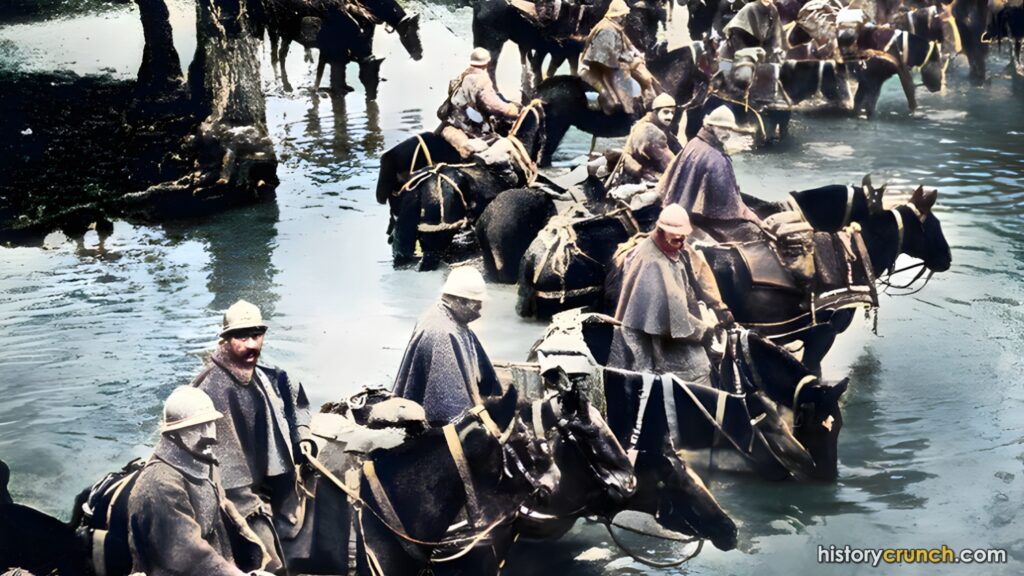
Militarism can best be understood as the buildup or expansion of the ability of a country’s military to wage war. This could be carried out by recruiting more soldiers for service or by building more weapons and vehicle for use in the army. In the decades before World War I many European countries began to practice militarism and worked to expand and strengthen their military forces. For example, there was an intense arms race and naval race between several European nations in the buildup to World War I. Specifically, France and Germany were heavily involved in an arms race in which each country doubled their armies between 1870 and 1914. As well, there was a competitive naval race between Britain and Germany that centered around the construction of new naval ships.

ARMS RACE BEFORE WORLD WAR I
An arms race is when two or more countries compete to establish the larger and more capable armies. France and Germany were heavily involved in an arms race in which each country doubled their armies between 1870 and 1914. Both nations had a history of war against each other and their rivalry caused them to expand their military forces. For example, the Franco-Prussian War had occurred just decades earlier from 1870 until 1871. More specifically, Prussia (the largest Germanic Kingdom before the unification of Germany) defeated France in the Franco-Prussian War. As part of its defeat, France gave up a section of its land called Alsace-Lorraine, which bordered with Germany. Germany’s control over Alsace-Lorraine was a major source of frustration for France and led to heightened tensions between Germany and France. In fact, France had a deep mistrust of Germany in the years before World War I.
This eventually led to Europe being carved up between two alliance systems – Triple Entente and the Triple Alliance. Britain, France and Russia were the member nations of the Triple Entente, while Germany, Austria-Hungary and Italy were the member nations of the Triple Alliance. The alliance systems alongside, France and Germany’s tensions caused each country to begin to build up their armies.
At the outbreak of fighting in 1914, France had approximately 4 million soldiers while Germany had over 4.5 million. This was significant because most other European countries did not have nearly as many soldiers at the ready to fight. The arms race showed the distrust between the nations of Europe and when war did break out in 1914 it allowed the countries to go to war more easily.
NAVAL RACE BEFORE WORLD WAR I
The naval race of World War I was an important competition between Britain and Germany for naval supremacy. Each nation raced to build more ships and capabilities, which led to an extreme increase in tensions between them. As such, historians consider the naval race between these two major European nations to be a main cause of World War I.
At the time, Britain had the largest navy in the world. Britain’s naval power was threatening to other European nations and caused many to build up their own naval forces. Germany viewed the British navy as a threat and sought to develop its own navy to match. Mostly Germany needed a strong navy to challenge British ships in the North Sea, which was located to the north of Germany and to the east of Britain. The North Sea was Germany’s only coastal access but was difficult for Germany since the North Sea was connected to Britain and the British navy dominated the area.
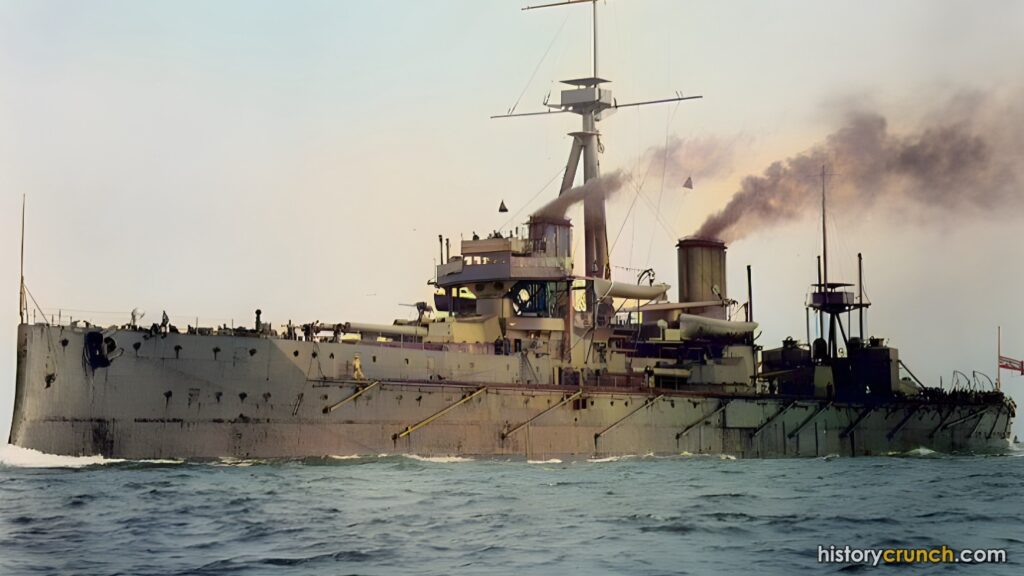
One of the key areas that this naval race between Britain and Germany can best be seen is in the construction of new battleships referred to as ‘dreadnoughts’.
The dreadnought was a class of battleship that existed in the timeframe of World War I. However, the first dreadnought was the HMS Dreadnought from the British Royal Navy. The name is meant to refer to a sense of ‘fearlessness’. It was first launched in 1906, and completely changed the history of naval warfare at the time.
HOW DID MILITARISM CAUSE WORLD WAR I?
Militarism in Europe had a major impact on the start of World War I. Historians have identified several ways in which militarism led to the start of the war. First, militarism showed the rivalry that existed between the nation of Europe in the years for the outbreak of World War I. When the nations of Europe competed in the arms race and naval race it led to increased tensions. These tensions ultimately led to the start of World War I because it created an underlying feeling of distrust. Also, militarism created the large forces that easily allowed the European nations to go to war in 1914. If they had not built such large armies then the war may not have been so easy to begin and so devastating. For instance, following the assassination of the Austrian Archduke Franz Ferdinand, which was the event that sparked World War I, the nations of Europe were able to go to war more easily due to their large armies.