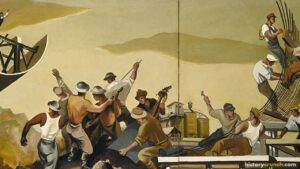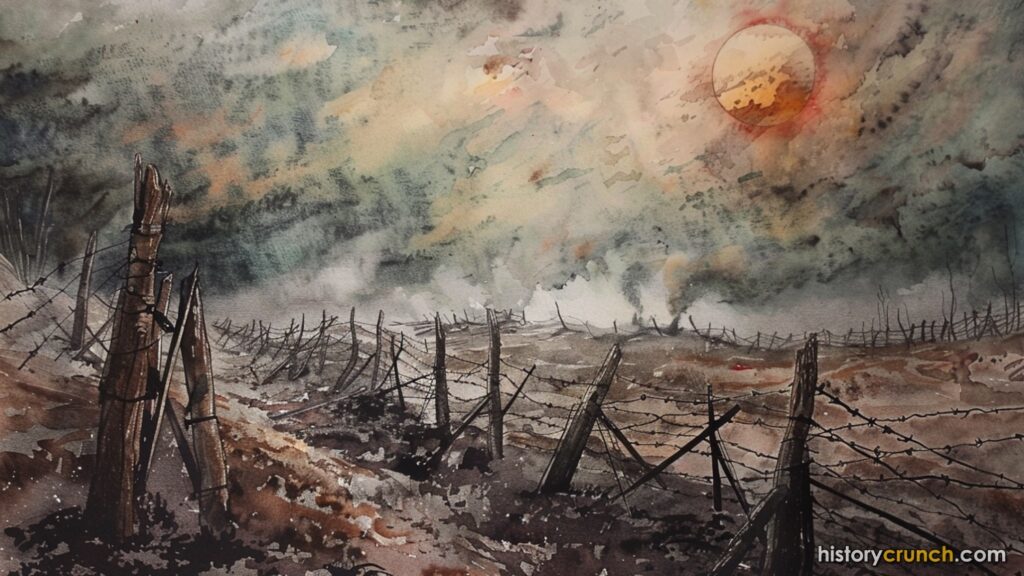
‘No Man’s Land’ in World War I was the stretch of land between the two opposing frontline trenches. ‘No Man’s Land’ was named because it symbolized the likelihood of advancing soldiers dying in this region. This is because it was likely the most dangerous place for the soldiers of World War I. Furthermore, the destroyed landscape of ‘No Man’s Land’ has become characteristic of World War I as a whole. For instance, the mud of World War I has become a key component of World War I and its historical significance.
WHY WAS NO MAN’S LAND SO DANGEROUS?
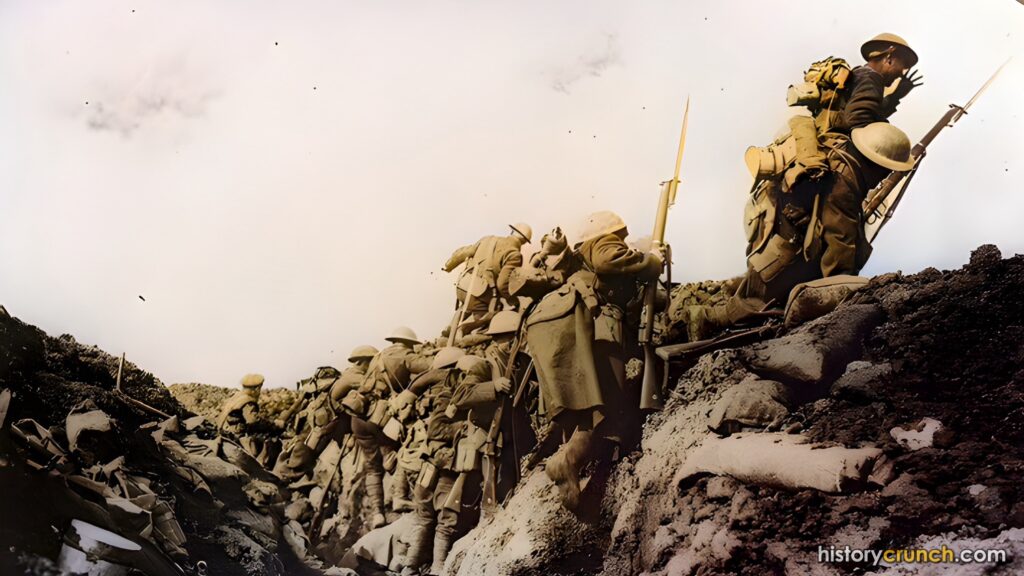
Trench warfare was a strategy that heavily favoured the defenders and helped lead to the massive death tolls caused during World War I. ‘No Man’s Land’ was a major contributor to the death tolls of World War I since it created conditions that made it difficult and dangerous for soldiers to cross. For instance, ‘No Man’s Land’ was the stretch of land that World War I soldiers were tasked with crossing when they were ordered ‘over the top’. When soldiers were ordered ‘over the top’ they climbed out of their own frontline trench and crossed ‘No Man’s Land’ towards the enemies frontline trench. Along the way, the soldiers faced heavy opposition and numerous different types of dangers. For instance, soldiers attempting to cross ‘No Man’s Land’ were met with barbed wire, mines, artillery fire, enemy machine gun fire and the mud of Northern France.
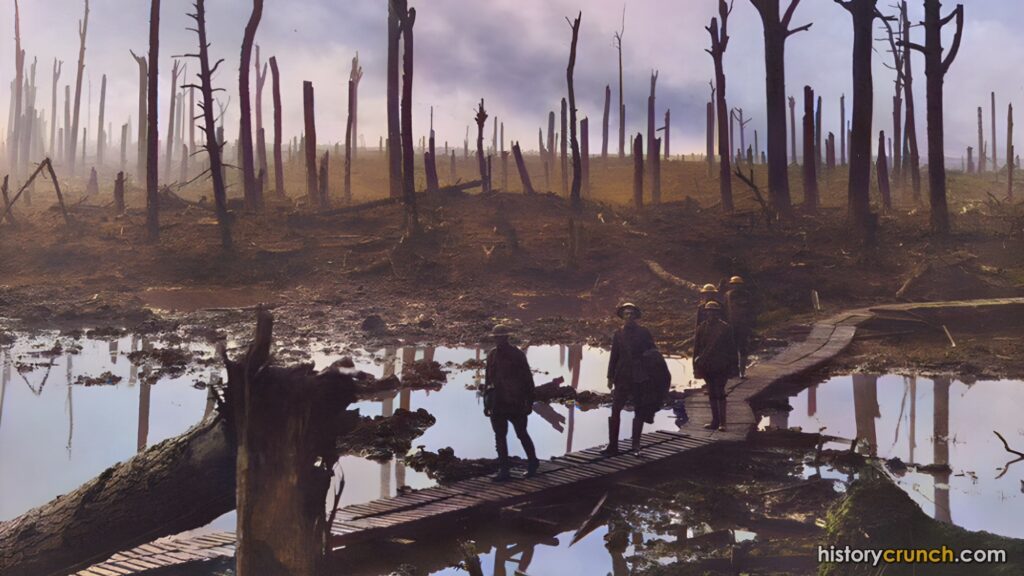
The mud of ‘No Man’s Land’ made crossing the stretch of land almost impossible at times. Artillery bombardments had torn up the land and destroyed all trees, grass and vegetation. Rain turned the dead landscape into a thick layer of mud that was sometimes up to the knees of the soldiers and sometimes deep enough that soldiers could become stuck and drown. Soldiers trying to cross ‘No Man’s Land’ struggled to avoid enemy fire, machine guns and other weapons while dealing with the deep mud. The muddy conditions were not just present in ‘No Man’s Land’ and made life in the trenches difficult as well. As such, ‘No Man’s Land’ was a key feature of soldier life in World War I and is especially related to life in the trenches.

WHAT DID NO MAN’S LAND IN WORLD WAR I LOOK LIKE?
As stated above, No Man’s Land in World War I was a dangerous and devastating place for soldiers to experience. For example, it was a barren and devastated landscape characterized by shell craters, barbed wire entanglements, and the remnants of destroyed buildings and trees. The terrain was often muddy and waterlogged due to the constant shelling and trench warfare, making movement difficult and treacherous.
No Man’s Land was also characterized by other hazards such as unexploded munitions and enemy traps, and it was subjected to constant sniper fire from both sides. Soldiers who ventured into No Man’s Land risked being caught in the crossfire or falling victim to hidden dangers.
The conditions in No Man’s Land were grim and contributed to the psychological toll of the war on soldiers who had to endure the constant threat of death and the harsh realities of trench warfare.
MAIN PARTS OF THE WORLD WAR I TRENCHES – INFOGRAPHIC