Russia before the Russian Revolution of 1917, was a vast and diverse empire, spanning from Eastern Europe to Siberia and East Asia. Daily life at the time was difficult for many Russian peasants who struggled to survive under the rule of the autocracy of the Romanov dynasty. This article explores life in Russia before the Russian Revolution of 1917, including the experiences of different social groups and the factors that ultimately led to the outbreak of the revolution in 1917.
Social Structure in Russia Before the Russian Revolution
Russia’s social structure before the revolution was marked by profound inequalities. At the top of the hierarchy were the aristocracy and the monarchy, including the Romanov dynasty that had ruled for centuries. Nobles owned vast estates and enjoyed privileges, while the majority of the population, consisting of peasants and urban workers, faced various forms of oppression and limited opportunities.
Serfdom, a feudal system that bound peasants to the land, existed in Russia until the mid-19th century. While Tsar Alexander II’s Emancipation Edict in 1861 formally freed the serfs, the reality was more complex. For instance, peasants often received insufficient land, remained burdened by debt, and continued to face harsh working conditions. More specifically, life in rural areas was characterized by poverty, subsistence agriculture, and a deep connection to tradition.
The late 19th and early 20th centuries witnessed rapid urbanization and industrialization, especially in cities like Saint Petersburg and Moscow. The influx of rural migrants into cities resulted in crowded living conditions and difficult working conditions in factories. Urban workers, including women and children, endured long hours and faced poor wages, contributing to social discontent.

Government in Russia Before the Russian Revolution
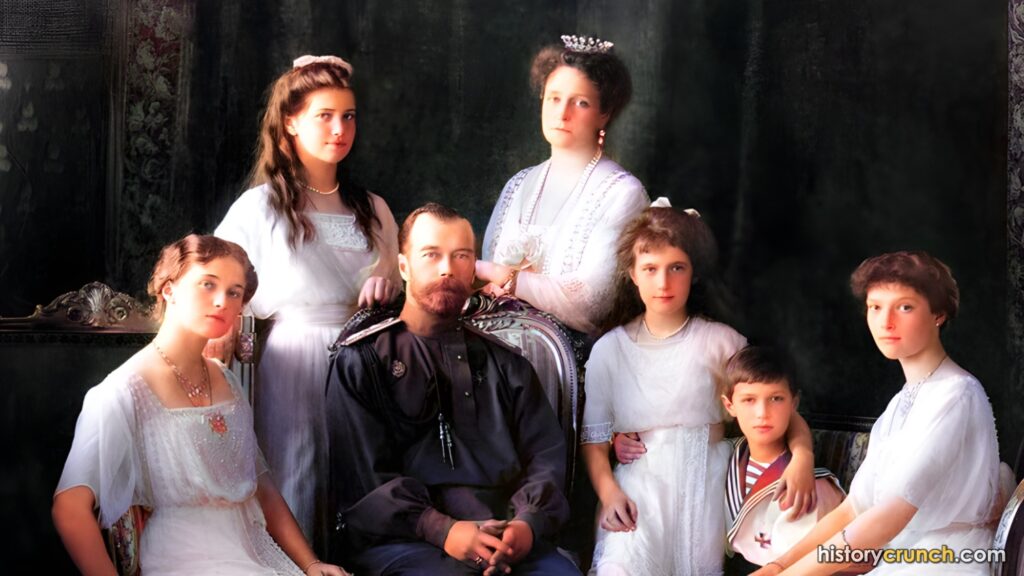
The Romanov dynasty was the ruling dynasty that held the throne of Russia from 1613 to 1917. The Romanovs played a crucial role in shaping Russia’s political, social, and cultural landscape in the centuries before the outbreak of the Russian Revolution. The first Romanov tsar was Michael I, and his rule marked the beginning of a dynasty that would endure for over three centuries. In fact, the Romanovs governed Russia until the events of the Russian Revolution.
A ‘tsar’ (also sometimes spelled ‘csar’, ‘czar’ or ‘tzar’) is the title used to refer to the rulers of Russia between the 16th Century and the Russian Revolution in 1917. A Tsar is similar in function to an absolute monarch or emperor. At the time of the Russian Revolution in 1917, Russia was ruled by Tsar Nicholas II. For instance, the autocratic system of Russia essentially centralized power in the hands of the tsar.
The autocratic rule of the Romanovs limited political freedoms and led to an atmosphere of censorship. Dissent (uprising against the government) was often met with harsh repression, leading to a climate of fear and mistrust. Political movements advocating for constitutional reforms and democracy faced considerable challenges, with the monarchy maintaining a tight grip on power. As such, life for most Russians was difficult in the years before the outbreak of the Russian Revolution, and they had little or no opportunity to bring about change.
Ethnic and Religious Diversity in Russia Before the Russian Revolution
Russia was a multi-ethnic and multi-religious empire. Different ethnic groups, such as Ukrainians, Belarusians, and Central Asians, coexisted within the empire. Religious diversity included Orthodox Christians, Muslims, Jews, and various minority groups. The empire’s diversity contributed to both a rich cultural makeup and tensions arising from nationalist aspirations.
Economy and War in Russia Before the Russian Revolution
Russia’s involvement in World War I further strained an already fragile economy. As stated above, Russia in the 19th century was based heavily on subsistence agriculture. As such, many Russian peasants struggled to provide beyond their own survival. This limited the ability of the Russian economy. As well, Russia was less industrialized than other European nations at the time, which further limited the efficiency and productivity of the Russian economy.
World War I strained the Russian economy and led to food shortages, inflation, and economic hardships. The burden fell heavily on the urban and rural poor, contributing to a sense of anger and frustration among the peasant class that ultimately helped lead to many Russians supporting revolutionary ideas.

Revolutionary Ideals in Russia Before the Russian Revolution
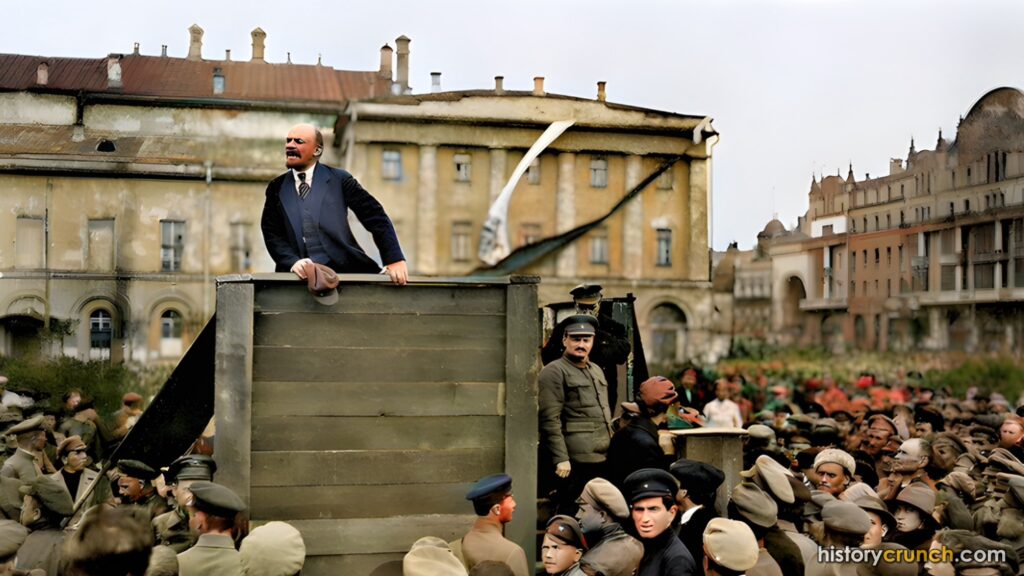
Revolutionary ideals gained traction in the years leading up to the revolution, due to a combination of factors, such as: economic hardship, political repression and the devastating effects of World War I. Marxist and socialist ideas became popular with struggling and angry Russians of the working-class. For instance, the Bolsheviks, led by Vladimir Lenin, emerged as a significant force in Russia in the years before the revolution. In fact, the Bolsheviks argued for the overthrow of the monarchy and the establishment of a socialist state.