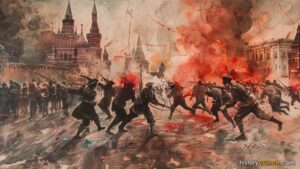
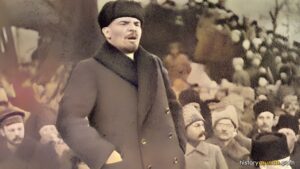
The Russian Civil War (1918-1922) was a complex and brutal conflict that unfolded in the aftermath of the October Revolution of 1917, as various groups battled for control over the future of Russia. Historians consider it to be a major point of significance in the overall Russian Revolution of 1917. The civil war was marked by ideological, political, and social struggles between the Bolshevik (Red) forces, led by Vladimir Lenin, and the anti-Bolshevik (White) forces. The conflict also saw the involvement of foreign powers, adding an international dimension to the struggle. This article explores the causes, major events, and significance of the Russian Civil War.
Causes of the Russian Civil War
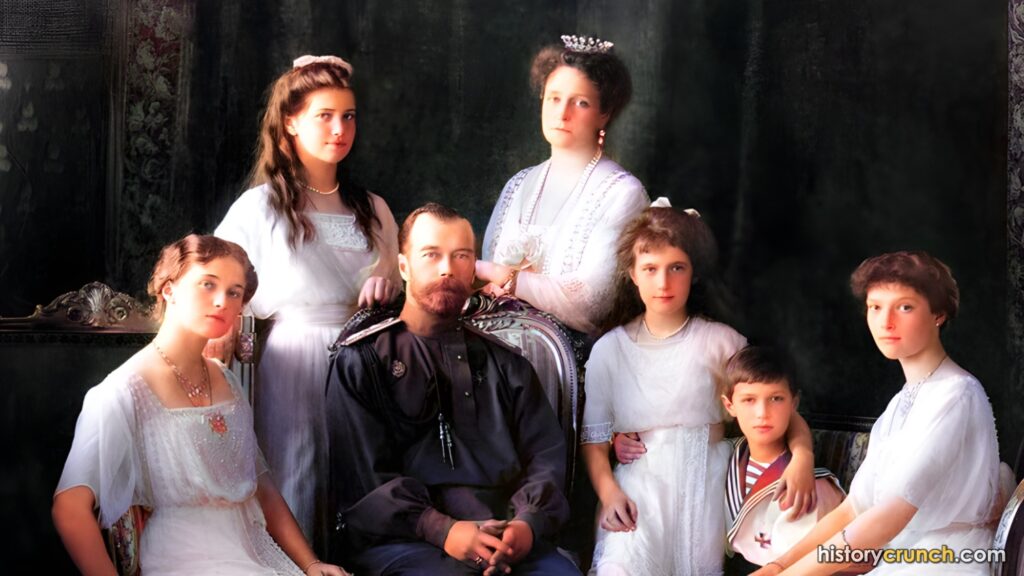
The Russian Civil war emerged following the violence and upheaval of the February Revolution and October Revolution in 1917. Both of these made up the major events of the Russian Revolution and ultimately resulted in the end of the tsarist system in Russia. For example, Tsar Nicholas II famously abdicated his throne as the Emperor of Russia following the events of the February Revolution in 1917. When combined with the events of the October Revolution of 1917, this set the stage for the rise to power and prominence of the Bolsheviks.
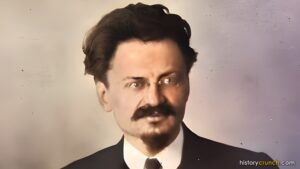
The Bolsheviks, under the leadership of Vladimir Lenin and Leon Trotsky, represented the socialist and communist forces of Russia following the events of the Russian Revolution in 1917. They aimed to establish and strengthen the new Soviet state, implementing socialist policies and transforming Russia into a communist society based on Marxist principles.

The anti-Bolshevik forces were a widespread coalition of groups united by their opposition to Bolshevik rule. This coalition included pro-monarchists, conservatives, liberals, socialist revolutionaries, and nationalist factions. The White forces sought to restore the pre-revolutionary order or establish alternative forms of governance. For instance, some people in Russia remained loyal to the rule of the Romanov dynasty and Tsar Nicholas II and fought to restore his power as the leader of Russia.
As such, the fall of Tsar Nicholas II created a period of political instability that ultimately resulted in the Russian Civil War.
Alongside the internal struggles of the Russian Civil War, several foreign powers also intervened for various reasons. Western nations, including the United Kingdom, France, and the United States, sought to protect their economic interests and prevent the spread of communism. They provided support to the White forces. In fact, the fear of the spread of communism was relatively widespread throughout western Europe and North America in the years and decades following the Russian Revolution.
Key Phases and Battles of the Russian Civil War
Initial Phase (1918-1919): The conflict began with the Reds strengthening their power and facing opposition from the Whites, who established several fronts across the vast expanse of Russia. Notable battles during this phase included the battles for Kiev and the establishment of the White government in Siberia under Admiral Alexander Kolchak. The Red Army, under the leadership of Leon Trotsky, was formed in early 1918 to defend the Bolshevik government. The White Army, comprising diverse and often fractious factions, formed in response to the perceived threat of Bolshevism.
Foreign Intervention (1918-1920): Foreign powers provided support to the White forces. The Allied intervention aimed to secure war materiel sent to Russia during World War I and prevent the spread of communism. The intervention, however, was generally ineffective and did not decisively tip the balance in favor of the White armies. The fear of the spread of communism was common throughout much of western Europe and North America following the events of the Russian Revolution in 1917. In fact, a fear of communism became a dominating factor throughout much of the 20th century.
Red Army Advances (1919-1920): The Red Army, under the leadership of Trotsky, gradually gained the upper hand. The Reds successfully repelled the White forces in various regions, including the defeat of Admiral Kolchak in Siberia and General Denikin in southern Russia.
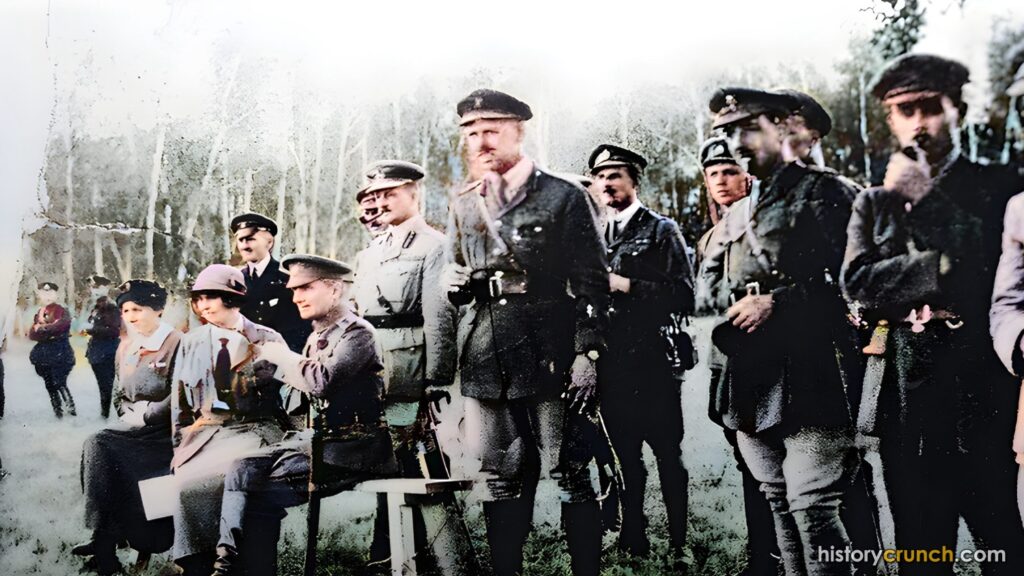
Polish-Soviet War (1919-1921): The Russian Civil War extended into the Polish-Soviet War, where the Red Army clashed with Polish forces seeking to establish an independent Poland. The war ended with the Treaty of Riga in 1921, securing Soviet recognition of an independent Poland.
Final Phase and Conclusion (1920-1922): The Red Army continued to advance, overcoming the remaining White resistance. The war concluded with the defeat of the last major White force under General Wrangel in Crimea in 1920 and the formal end of the hostilities in 1922.
Consequences and Outcomes of the Russian Civil War
The Russian Civil War resulted in immense suffering, with millions of casualties and widespread famine. With that said, the war ultimately solidified Bolshevik control, leading to the establishment of the Soviet Union in 1922. For example, in 1922, the Russian Soviet Federative Socialist Republic (RSFSR) officially became the core of the Union of Soviet Socialist Republics (USSR), marking the establishment of the world’s first socialist state. The Bolsheviks’ ideology, inspired by Marxist principles, aimed at creating a classless society with the means of production owned by the proletariat (working-class).
Also, the conflict had a lasting impact on Russian society, contributing to the development of a centralized and authoritarian state. The civil war also played a role in shaping Soviet foreign policy and relationships with the international community.