Symptoms of the Bubonic Plague: A Detailed Summary

Symptoms of the Bubonic Plague
Yersinia pestis at 200x magnification. It was responsible for the outbreak of the bubonic plague and the events of the Black Death.
There were several significant symptoms of the Bubonic Plague, which caused the events of the Black Death in the Middle Ages. This article details the main symptoms of the Bubonic Plague.

Table of Contents

Symptoms of the bubonic plague included influenza like systems, including: sudden fever, chills, and headaches. However, these symptoms were generally followed by painful, swollen lymph nodes in the groin, armpit, or neck. Other symptoms could include fatigue, muscle aches, and sometimes vomiting or blackened skin.

WHAT WAS THE BLACK DEATH?

The Black Death is one of the most important events in Western history and is the most famous pandemic in all of human history.  A pandemic is the term used to describe the spread of an infectious disease over a wide area including the entire planet.  The Black Death occurred during the 14th century and ravaged human populations throughout Asia and Europe as it spread along trade routes and through trading ports.  Throughout history it has also been referred to as the ‘Great Mortality’ and ‘Great Pestilence’.

The Black Death is the term that historians use to describe the spread of the bubonic plague.  It is believed that the plague first began in Central Asia and spread to Europe through vast trade routes such as the Silk Road.  Historians studying the spread of the plague discovered that the disease was spread by fleas that are commonly found on rodents such as rats and mice.

Silk Road Map
Silk Road Map by History Crunch

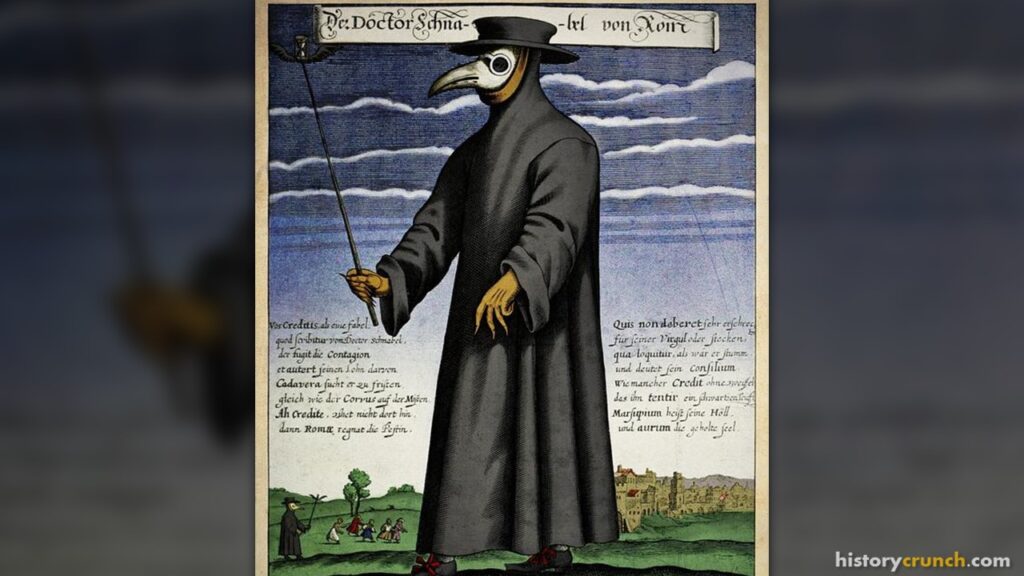
The lack of medical understanding during the time is evidenced by the remedies or cures that people believed would work.  For instance, some believed that the plague was spread by “bad air” and thought that they could cleanse the air with the burning of incense.  This belief led to doctors of the period wearing strange outfits with masks that looked like the beak of a bird.  Believing that the plague was spread through the air, the doctors would fill the nose area of the mask with incense in order to overpower the “bad air”.  However, it also served to mask the smell of death, which was a common reality due to the large number of dead.
Where and How Did the Plague Spread
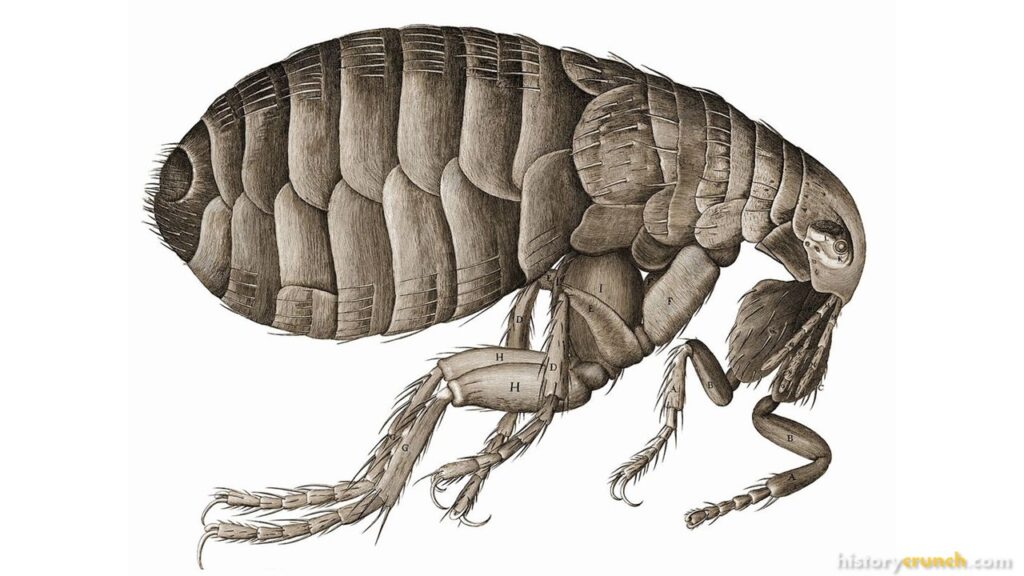
The bubonic plague was spread when infected fleas from rodents bit human beings.

SYMPTOMS OF THE BUBONIC PLAGUE

In reality, the bubonic plague was spread when infected fleas from rodents bit human beings and the disease entered their bodies.  As stated earlier, the plague had several main symptoms.  The primary symptom was the black lumps that grew in the infected person’s armpits and groin.  This was caused when the bacteria of the disease inflamed lymph nodes in the body.  The lumps would become large and after a period of time would often ooze pus and blood.  Another common symptom of the plague was gangrene fingers and toes.  This meant that the disease killed the area around the fingers and toes and effectively caused them to die.  As the disease took hold, several other symptoms were common including: fever, cramps, seizures, vomiting, extreme pain and difficulty breathing.  Often, those that were infected died soon after in just a matter of days.
Black Death Doctor
A plague doctor wore very characteristic clothes during outbreaks of the plague. (1656)
Facebook
X
Reddit
Pinterest
LinkedIn

We strive to produce educational content that is accurate, engaging and appropriate for all learners. If you notice any issues with our content, please contact us and let us know!

AUTHOR INFORMATION
Picture of Elias Beck

Elias Beck

I'm a passionate history and geography teacher with over 15 years of experience working with students in the middle and high school years. I have an Education Degree with a focus in World History. I have been writing articles for History Crunch since 2015 and love the challenge of creating historical content for young learners!
Causes of the Black Death
Middle Ages

Causes of the Black Death: A Detailed Summary

The main causes of the Black Death centered on poor hygiene, overcrowded cities, and limited medical knowledge at the time. The plague traveled along major trade routes, especially the Silk Road and merchant ships, allowing it to spread rapidly across Asia, the Middle East, and Europe. This article details the main causes of the Black Death.

Habsburg Dynasty: A Detailed Summary

The Habsburg Dynasty was one of the most powerful and long-lasting royal families in European history, ruling over vast territories from the Middle Ages to the 20th century. This article details the history and significance of the Habsburg Dynasty.

Crusader States Map
Maps

Crusader States Map

This Crusader States map was created by History Crunch to help students and teachers understand the geographic location of the Christian kingdoms established by European crusaders in the Holy Land following the First Crusade. It shows the four main Crusader States in the eastern Mediterranean region. Designed for students in grades 5 to 12.

Causes of the Renaissance
Middle Ages

Causes of the Renaissance: A Detailed Summary

There were several main causes of the Renaissance, including: increased interaction between different cultures, the rediscovery of ancient Greek and Roman texts, the emergence of humanism, different artistic and technological innovations, and the impacts of conflict and death.

Third Crusade
Crusades

Third Crusade: A Detailed Summary

The Third Crusade took place from 1189 until 1192 CE and was a major event in the history of the Crusades. This article details the major events and significance of the Third Crusade.

Great Schism: A Detailed Summary

The Great Schism of 1054 CE was the formal split between the Roman Catholic Church and the Eastern Orthodox Church, one of the most significant events in the history of Christianity and the Middle Ages. This article details the history and significance of the Great Schism.