Where did the Aztec Come From?: A Detailed Summary

Where did the Aztec Come From
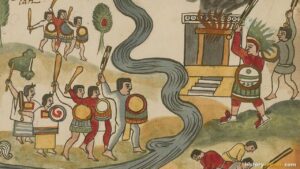
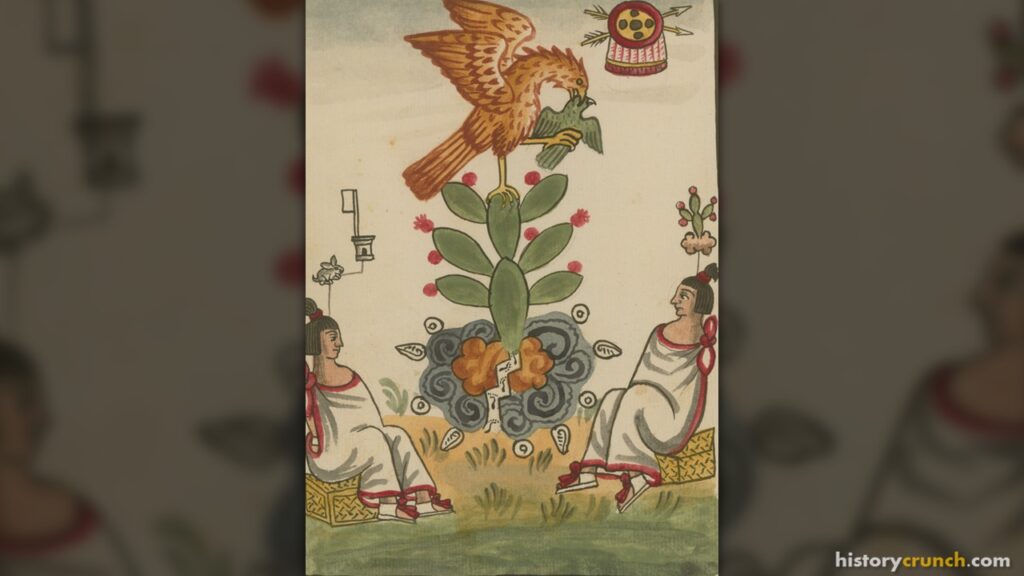
'Founding of Tenochtitlan' Illustration from the Tovar Codex.
Historians have long studied the Aztec Empire to understand - Where did the Aztec come from? This article details the early history of the Aztec and the 'Long Migration'.

Table of Contents

Where did the Aztec come from? Historians have studied this question by examining the early history and mythology of the Aztec people. The Aztecs were a pre-Columbian society based in modern-day Mexico.  Understanding their history is important to many other topics and people, including: Age of ExplorationHernan Cortés, and more.  The Aztec civilization was one of the biggest in the New World, and the story of their collapse is an important event in the world history.

WHO WERE THE AZTECS?

The Aztecs, who referred to themselves as the Mexica, extended throughout much of central Mexico and existed from the 14th century until the 16th century when they were conquered by Spanish conquistadors led by Hernan Cortés.  However, to understand the Aztec Empire, its first important to understand their early history and how they came to be.  The capital city of the Aztec Empire was Tenochtitlan and was first established in 1325 in the Valley of Mexico.  Before establishing the city, the Aztec people are said to have come from the desert areas of northwest Mexico, such as the Sonora Desert.
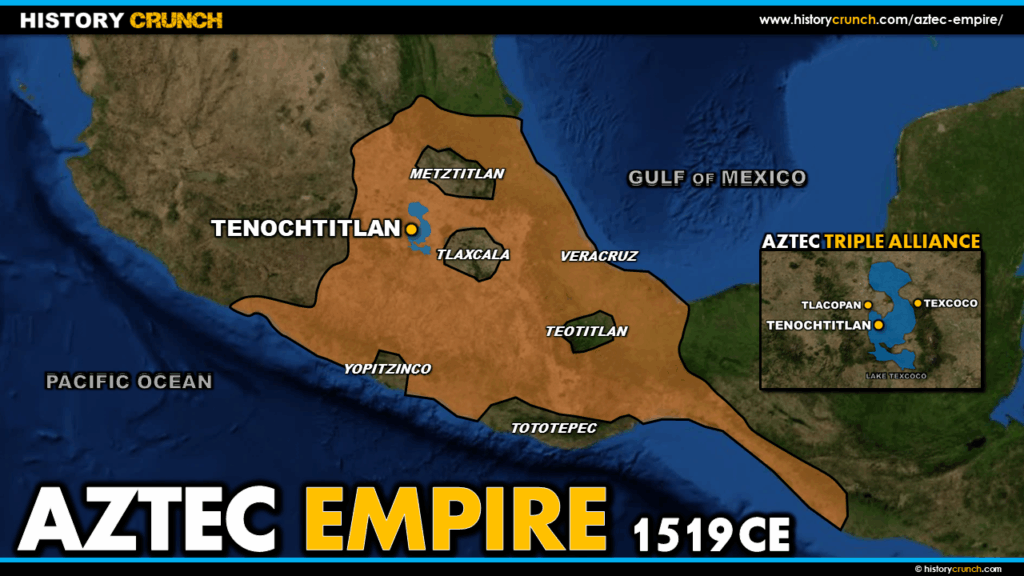
Map of the Aztec Empire and Aztec Triple Alliance
Map of the Aztec Empire and Aztec Triple Alliance by History Crunch

WHERE DID THE AZTEC COME FROM?

The time period before the Aztec established the city of Tenochtitlan is referred to as the ‘Long Migration’.  During this time, Aztec history talks of the Aztec people leaving their homeland in the desert, called Aztlan, and migrating south over a period of two centuries.  They didn’t settle again until reaching central Mexico and Lake Texcoco in the Valley of Mexico.  This period of migration is an important aspect of Aztec history and highlights their religious beliefs.  For example, in searching for a new homeland, the Aztecs waited until they came across a specific sign that was said to have been instructed to them by the god Huitzilopochtli.  The sign they searched for was an eagle on a cactus holding a rattlesnake.  They supposedly came across this sign after two centuries of migration when they arrived on the swampy shores of Lake Texcoco in the Valley Mexico.  Officially, the city was founded on July 20th, 1325 on the western shores of the lake and was named for their chief Tenoch.  Tenochtitlan means ‘the city of Tenoch’.

At the time the Valley of Mexico was populated by many different powerful civilizations, including: Chalco, Tepanec, Tlacopan, Culhuacan, and Chichimec. Several of these civilizations were also on the shores of Lake Texcoco, including the Culhuacan which were on the south shore.  As such, when the Aztec people arrived in the Valley of Mexico they had to contend with the other civilizations.  In fact, the Aztecs clashed with several of these groups and were briefly expelled and forced to relocate to a different location on the lake.  Regardless, Tenochtitlan prospered quickly as a city.
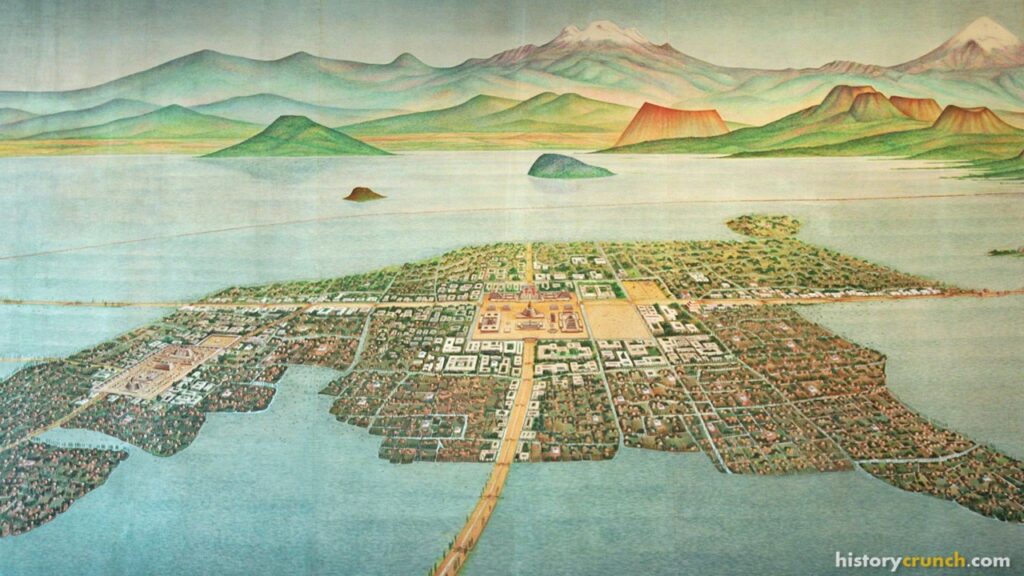
Aztec Empire
Artistic representation of the Aztec Empire and the capital city of Tenochtitlan.
Facebook
X
Reddit
Pinterest
LinkedIn

We strive to produce educational content that is accurate, engaging and appropriate for all learners. If you notice any issues with our content, please contact us and let us know!

AUTHOR INFORMATION
Picture of Elias Beck

Elias Beck

I'm a passionate history and geography teacher with over 15 years of experience working with students in the middle and high school years. I have an Education Degree with a focus in World History. I have been writing articles for History Crunch since 2015 and love the challenge of creating historical content for young learners!
Aztec Codices
Aztec Empire

Aztec Codices: A Detailed Summary

Aztec codices were an important part of the Aztec Empire since they displayed much of what we now known about Aztec culture. Historians continue to study these Aztec codices to better understand the daily lives of the Aztec people.

Quetzalcoatl
Aztec Empire

Quetzalcoatl (Aztec God): A Detailed Summary

Quetzalcoatl was one of the most significant Aztec gods. Often depicted as a serpent with bright feathers, Quetzalcoatl, was an important god throughout Mesoamerican history and societies and was not just related to the Aztecs.

Aztec Education and Schools
Aztec Empire

Aztec Education and Schools: A Detailed Summary

Aztec Education and Schools were an important aspect of the daily life for the Aztec people. Aztec education focused on traditional roles for boys and girls, while also teaching important religious and cultural norms.

Itzcoatl
Aztec Empire

Itzcoatl (Aztec Emperor): A Detailed Biography

Itzcoatl was the fourth Aztec Emperor, which was referred to as the huey tlatoani (Great Speaker). This article details the history and significance of Itzcoatl in relation to the Aztec Empire.

Flower Wars in the Aztec Empire
Aztec Empire

Flower Wars in the Aztec Empire: A Detailed Summary

The Flower Wars in the Aztec Empire were organized and ritualized battles in which members of the Triple Alliance including Aztecs faced off against rival city-states. This article details the history and significance of the Aztec Flower Wars.

Hernan Cortes
Aztec Empire

Hernan Cortes: A Detailed Biography

Hernán Cortés was a Spanish conquistador and explorer who travelled to the New World in the early 16th century. This article details the history and significance of Hernán Cortés, especially in relation to the history of the Aztec Empire.