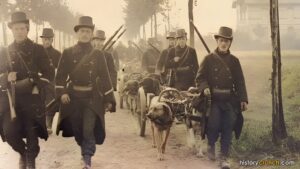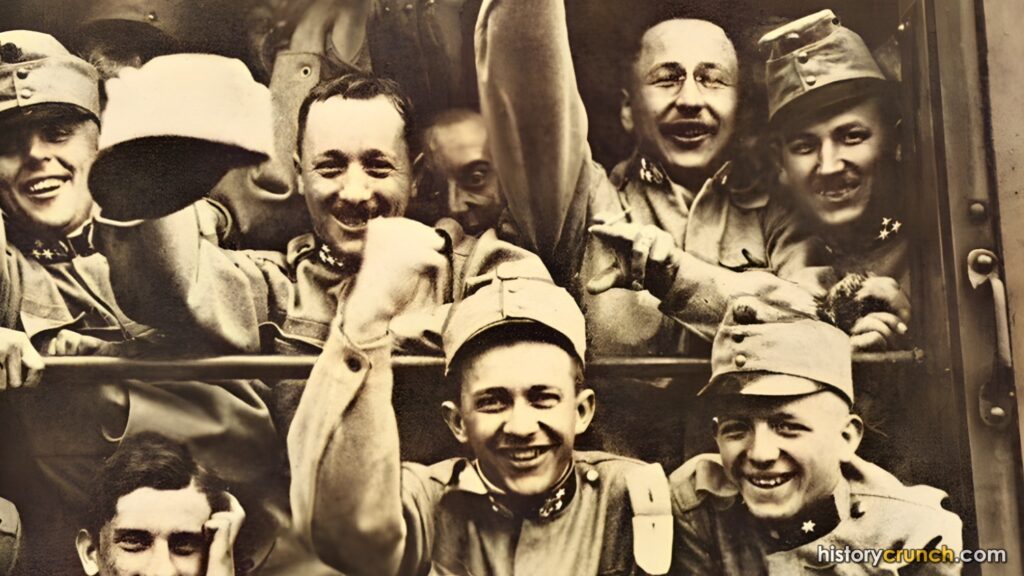
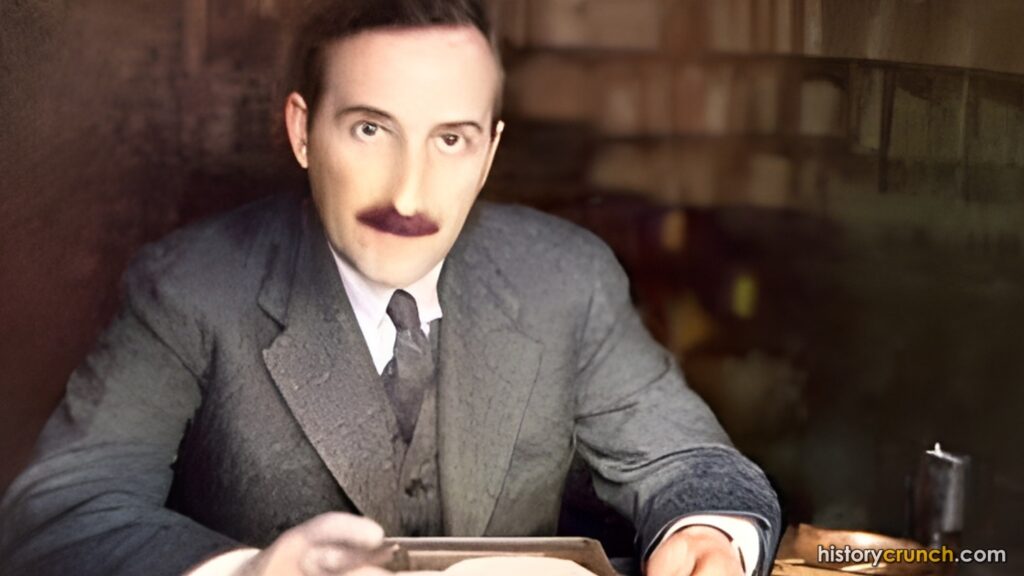
World War I is notable for the early excitement that existed among the soldiers who were heading off to war. When World War I broke out in 1914, many European cities and towns celebrated the newly declared war and many young men clamored for their opportunity to fight in the battles of the Great War. For example, Austrian writer Stefan Zweig famously described the scene in Vienna, Austria at the announcement of World War I. He wrote:
“In every station placards had been put up announcing general mobilization. The trains were filled with fresh recruits, banners were flying, music sounded, and in Vienna I found the entire city in a tumult… There were parades in the street, flags, ribbons, and music burst forth everywhere, young recruits were marching triumphantly, their faces lighting up at the cheering…“
Stefan Zweig
For many, this excitement for war was similar to a celebration or a festival. The towns were decorated with colorful flags and the soldiers mobilized in the central streets as they made their way to the trains that would take them to the front lines of the war.
WHY WERE SOME SOLDIERS EXCITED TO GO TO WORLD WAR I?
One of the first main reasons for the excitement of the war was that many in Europe had a romantic feeling towards war. In the years before war was declared in 1914, Europe had enjoyed a prolonged period of piece in its otherwise violent past. The Napoleonic Wars had ended in the early 19th century and the only other wars that had occurred in the century that followed were smaller, regional conflicts. Therefore, for the young European men of the time they only knew of war what they had learned in school, read in books or heard from others. To many of them war seemed to be glorious and romantic. They read stories about soldiers bravely marching into battle and dying heroically on the battlefields for their countries. For many of these young soldiers, they viewed the Great War as their opportunity to play a role in the “glory of war” and follow in the path of earlier soldiers in earlier European conflicts. To them, war seemed adventurous and a show of bravery that many claimed they “did not want to miss”.
Also, a strong sense of nationalism was an important reason that many of the young men in 1914 were excited for war. They had been taught in school to be ready to answer the call of war for their country at any time and to be ready to serve and die for their country if necessary. As such, patriotism and a sense of nationalistic pride drove many to join the armed forces. Recruitment posters pressured young men to join the war effort and to join their fellow citizens into the trenches of World War I. All of this put a great deal of pressure on young men and many joined out of a sense of national duty and responsibility.
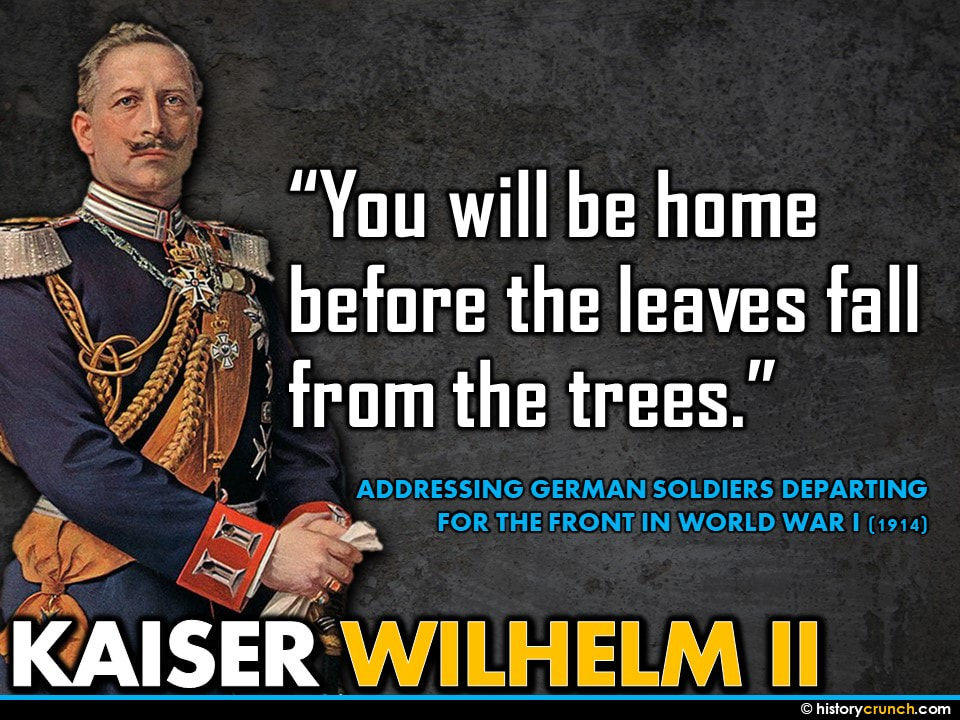
As well, it was widely believed at the time that the war would be over relatively quickly. Since the fighting began in the summer of 1914, many pronounced that the war would surely be over by December of that year. So for many of the young men, they believed that they were heading off to a short adventure and to represent their country.
WHAT CAUSED SOLDIERS TO LOSE THEIR EXCITEMENT FOR WORLD WAR I?
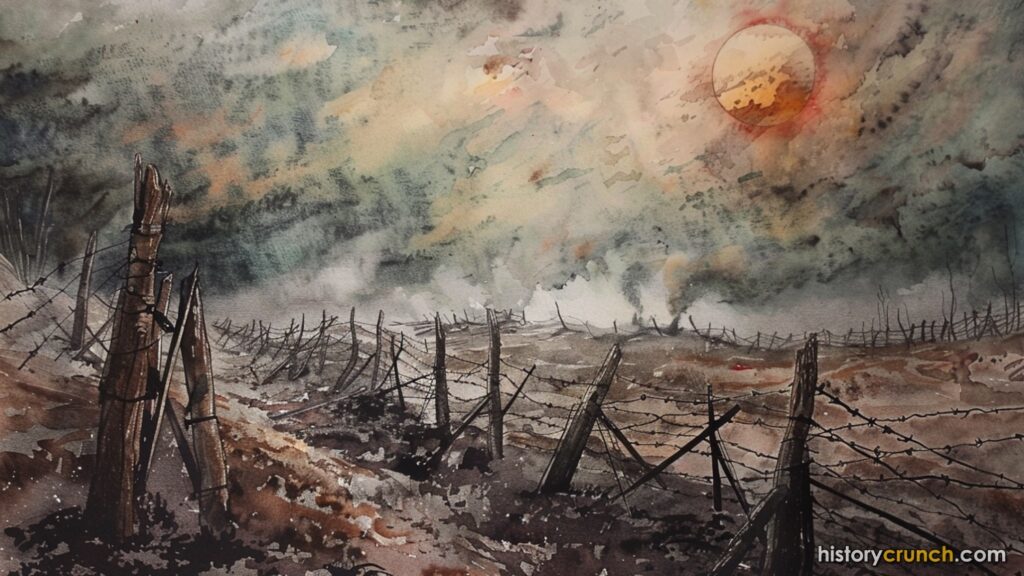
As the war progressed and a stalemate in the trenches of Northern France caused the conflict to extend into 1915, the excitement that many had for the war began to change. The realities of trench warfare were brutal and life in the trenches was miserable and the image of war no longer had a romantic or exciting feeling.