The Industrial Revolution began in Britain in the 1700s and had a profound impact on the world. One of the main impacts it had was how it changed life for working-class people. First, the workers were exposed to horrendous working conditions in the factories and mines that emerged in the early years of the revolution. These factories and mines were dangerous and unforgiving places to work in. The working conditions that working-class people faced were known to include: long hours of work (12-16 hour shifts), low wages that barely covered the cost of living, dangerous and dirty conditions and workplaces with little or no worker rights. The next issue that working people had to face was the equally horrible living conditions in industrial towns and cities. The living conditions in the cities and towns were miserable and characterized by: overcrowding, poor sanitation, spread of diseases, and pollution. As well, workers were paid low wages that barely allowed them to afford the cost of living associated with their rent and food.
LIVING CONDITIONS IN INDUSTRIAL TOWNS – OVERCROWDING
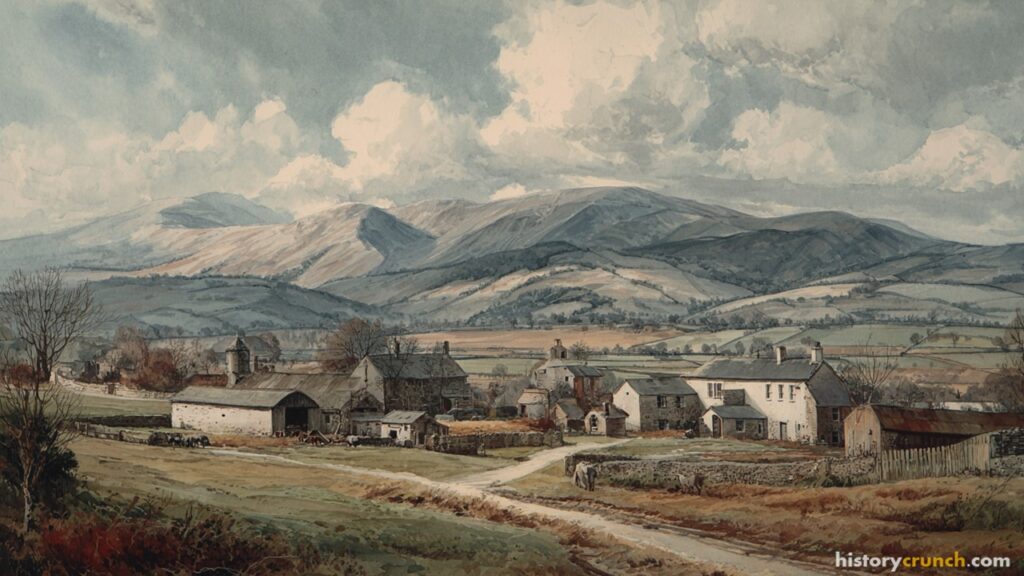
The Industrial Revolution began in Britain in the 18th century due in part to an increase in food production, which was the key outcome of the British Agricultural Revolution. As such, the Agricultural Revolution is considered to have begun in the 17th century and continued throughout the centuries that followed, alongside the Industrial Revolution. Through different measures, such as the Enclosure Movement, many farmers and their families were forced from their land and moved to more populated centers in search of work. As a result, industrial cities and towns grew dramatically due to the migration of farmers and their families who were looking for work in the newly developed factories and mines. For example, in 1750 nearly 80% of the population in Britain lived on farms, but by 1850 that number was cut to just 50%. Along with the mass migration of people, Britain also experienced a rather large population boom in the early years of the Industrial Revolution. The increased food production of the Agricultural Revolution led to this increase, and allowed British families to expand. For example, in 1700 the total population of Britain was around 5.5 million people, but it soon expanded. Just 100 years later the population had increased to over 9 million and by 1840 it was nearly 16 million. Due to the increased population and the poverty of most working-class families, it was common for large families to live in relatively small rooms. This population increase combined with the mass migration of people greatly impacted the living conditions for people in industrial Britain.
LIVING CONDITIONS IN INDUSTRIAL TOWNS – POOR SANITATION
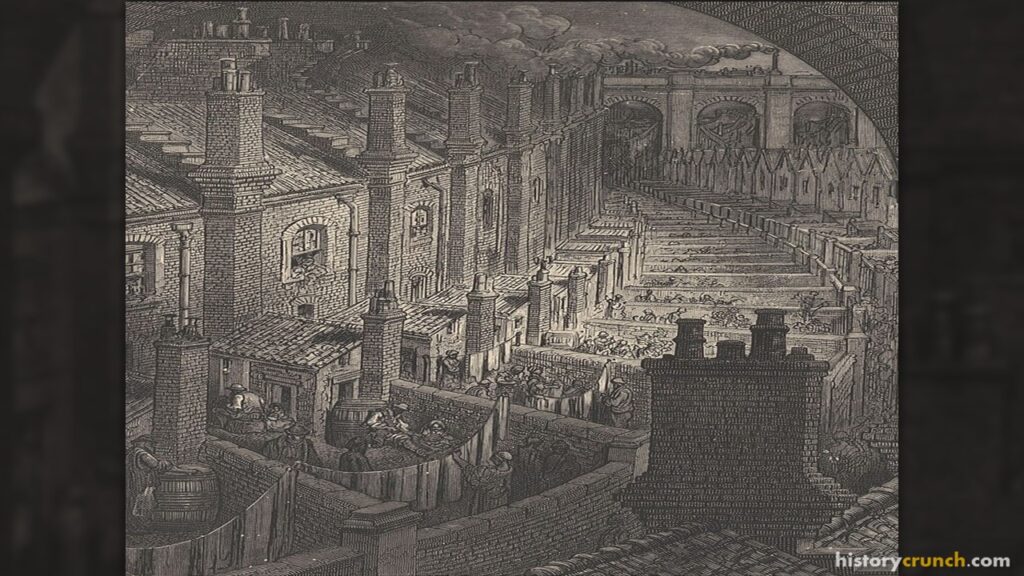
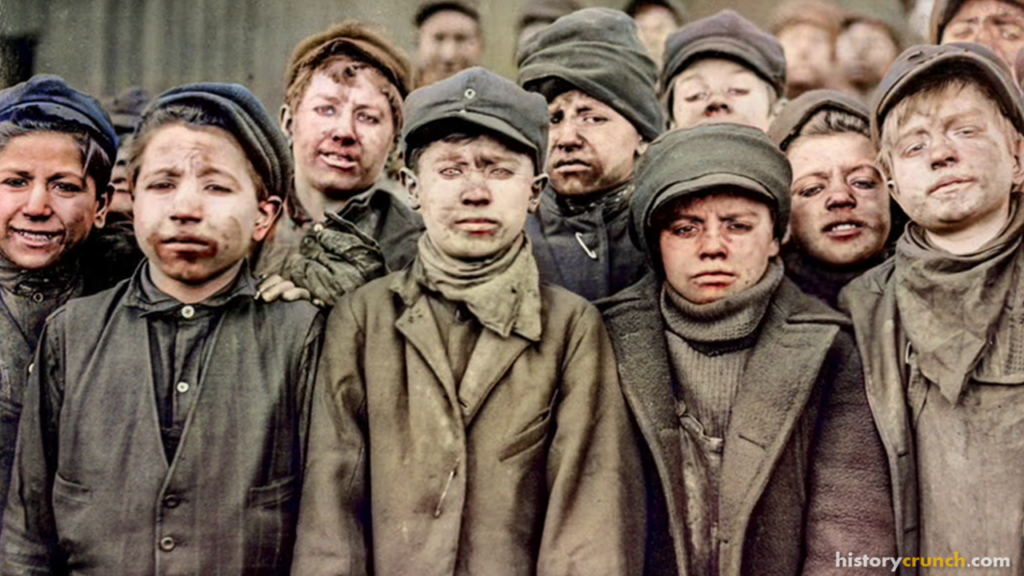
A common feature of industrial cities and towns was the construction of inexpensive and poorly built row housing, intended for working-class people. Wealthy factory owners and entrepreneurs constructed the homes for their workers but also used the homes as a means of making more profit. The homes were often referred to as back-to-back terraces because they were literally built side-by-side and connected to one another. The only part of the home that was not connected to another was the front. The homes were made with the cheapest materials available and lacked basic features such as windows and proper ventilation. As well, most of the homes were built without running water or sanitation. As a result, many people were unable to properly bathe and thus suffered from very poor hygiene.
LIVING CONDITIONS IN INDUSTRIAL TOWNS – SPREAD OF DISEASES
The lack of sanitation during the Industrial Revolution also led to the spread of diseases. Since most homes did not have running water or sanitation, people resorted to dumping their filth and waste into the street. This made the streets of industrial towns incredibly dirty places to live but also allowed communicable disease to spread easily from one individual to another. Pits were sometimes established in communities to accommodate the building waste, and property owners would sometimes pay to remove the filth. However, often, much of the filth was emptied into the local rivers, making them horribly polluted.
LIVING CONDITIONS IN INDUSTRIAL TOWNS – POLLUTION
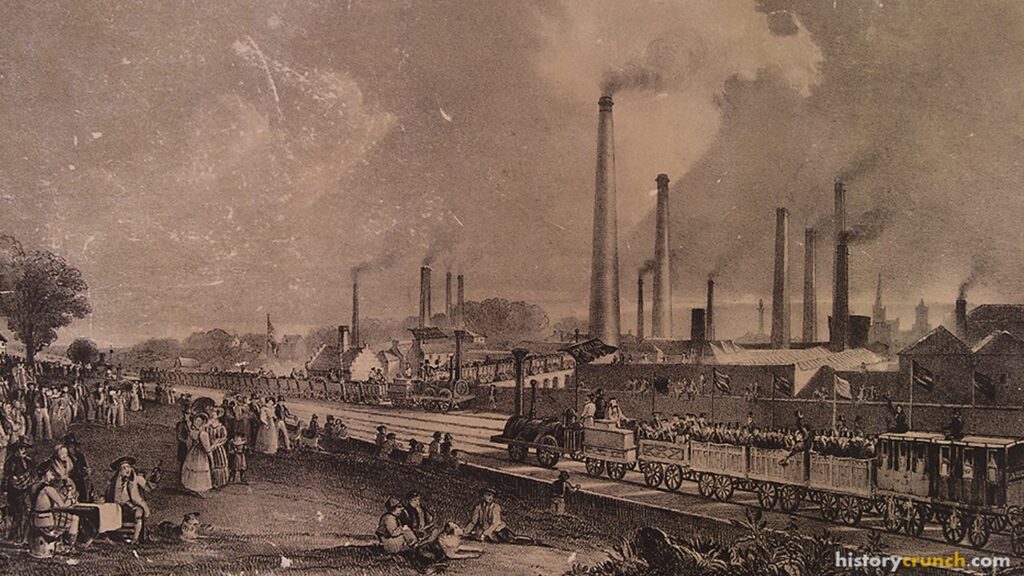
Pollution was one of the most recognizable aspects of industrial cities and towns. Not only were the streets and waterways heavily polluted with human waste and garbage, but the air was also heavily polluted. Throughout the 18th and 19th centuries, wealthy businessmen established countless factories and mines throughout Britain. These factories produced large amounts of air pollution from the burning of coal. Coal was easily the most used fuel during the Industrial Revolution, since it was needed to power the newly developed steam engines. However, coal is also known as a heavy air pollutant since when it is burned it sends small particles into the air. As a result, the numerous factories in the city centers caused the air quality to be horrible and gave industrial cities and towns a characteristic ‘smog’ that seemed to hover over them.
LIVING CONDITIONS IN INDUSTRIAL TOWNS – SUMMARY
In conclusion, life in the towns and cities of the Industrial Revolution was difficult for working-class people. They were often forced to live in cramped conditions that lacked basic sanitation and running water. As a result, this led to the easy spread of diseases among the people and worsened the pollution that was already a large problem in the city. The people had little ability to solve these problems as they paid so little that they struggled to even afford their current lifestyles.