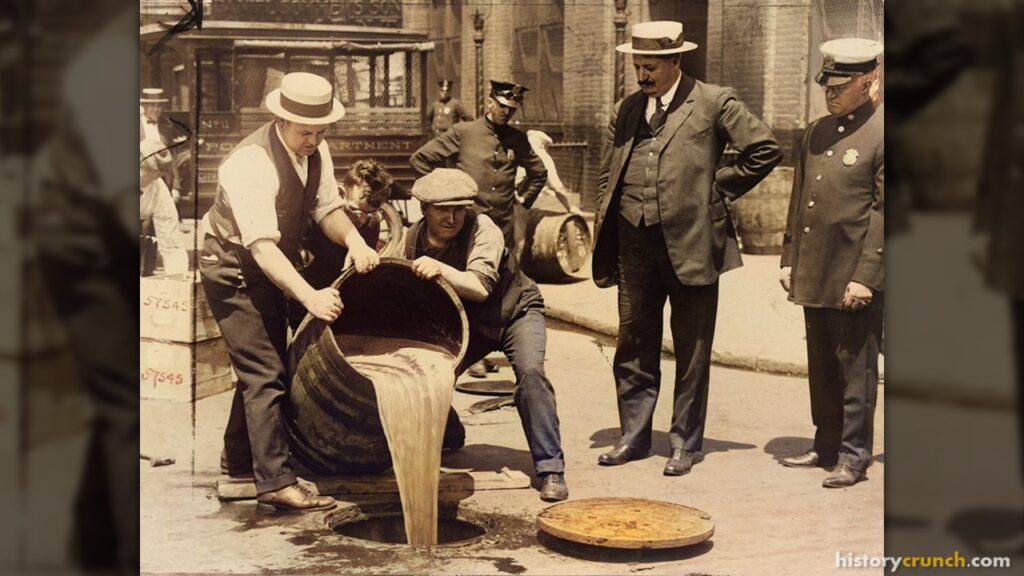
Prohibition in the United States was a period in the early 20th century when the United States enforced a nationwide ban on the production, importation, transportation, and sale of alcoholic beverages. It was enacted through the 18th Amendment and enforced by the Volstead Act and lasted from 1920 until 1933. Prohibition in the United States was a controversial time in American history since not all people agreed with its enforcement. As a historical event, Prohibition occurred throughout the timeframe of the Roaring Twenties and the early part of the Great Depression.
WHAT LED TO PROHIBITION IN THE UNITED STATES?
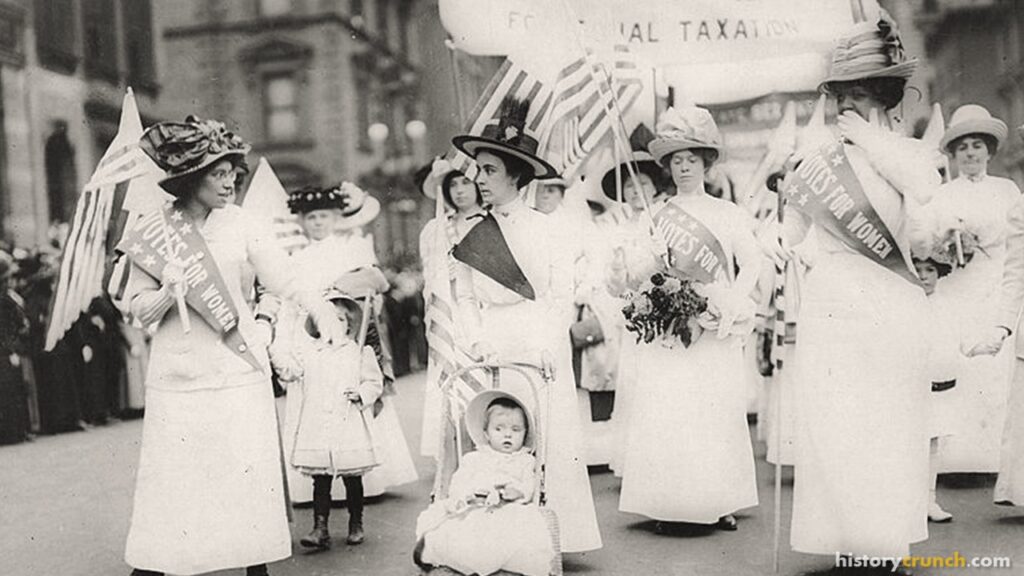
The idea of Prohibition emerged during the timeframe of the Progressive Era in the United States, which is considered to have occurred from 1896 to 1917. This was an important period in American history and characterized by a wave of social, political, and economic reforms. The Progressive Era in the United States also saw the rise of ‘moral reform’ movements, most notably the temperance movement, which advocated for the prohibition of alcohol. These movements were primarily driven by religious groups and social reformers who believed that alcohol was the root cause of many societal problems, including: crime, domestic violence, and poverty. Furthermore, organizations such as the Women’s Christian Temperance Union (WCTU) and the Anti-Saloon League (ASL) played important roles in advocating for the ban on alcohol.
18TH AMENDMENT AND THE VOLSTEAD ACT
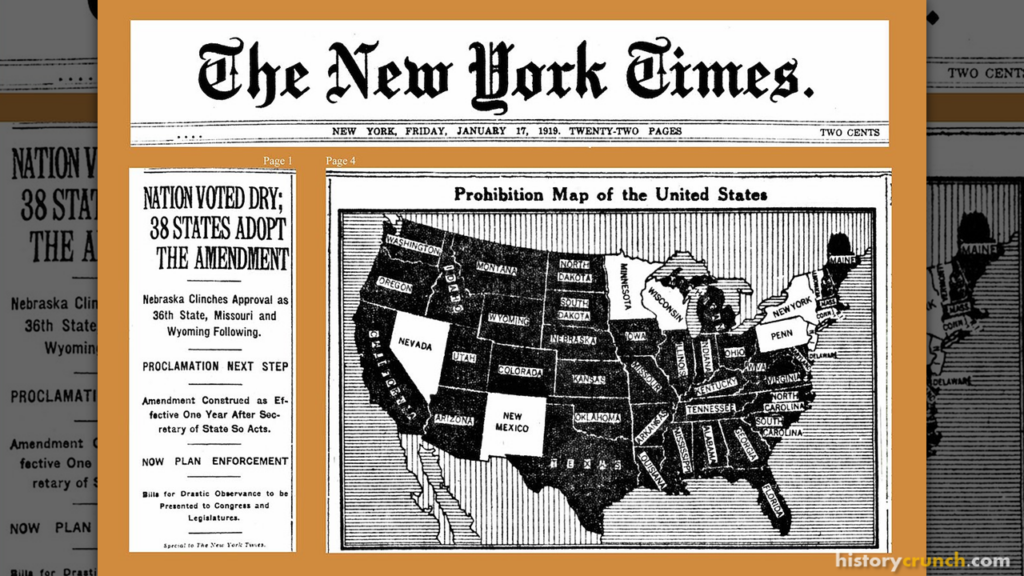
Prohibition in the United States was formally established with the ratification of the 18th Amendment to the United States Constitution on January 16th, 1919. The amendment prohibited the manufacture, sale, and transportation of ‘intoxicating liquors’.
To enforce this new law, Congress passed the Volstead Act (National Prohibition Act), which defined intoxicating liquor as any beverage containing more than 0.5% alcohol by volume. This included alcoholic drinks such as beer, wine, and spirits. As a result, the Volstead Act effectively banned all alcoholic beverages in the United States. The Volstead Act also outlined the enforcement mechanisms and penalties for violations. For instance, the Act gave the federal government, particularly the Treasury Department, the authority to enforce Prohibition. As well, it established penalties for the manufacture, sale, and transportation of alcoholic beverages, including fines and even imprisonment. Furthermore, it provided law enforcement agencies in the United States with powers to search properties and seize illegal alcohol. This included the ability to obtain search warrants and carry out raids on suspected illegal alcohol operations.
IMPACTS OF PROHIBITION IN THE UNITED STATES
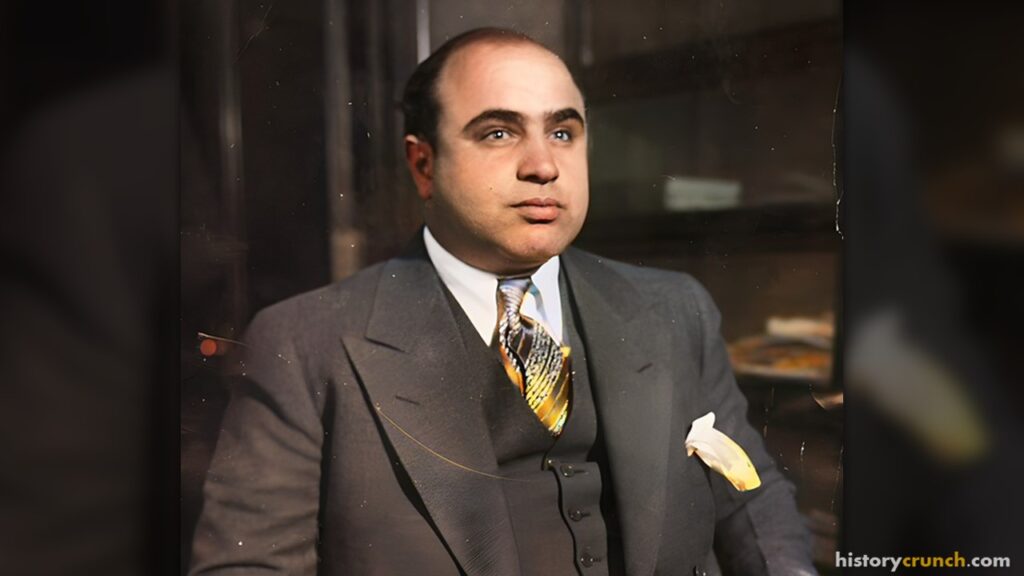
Prohibition in the United States led to several significant social, economic, political and cultural impacts. In terms of social impacts, many believed that banning alcohol would lead to a decrease in crime. However, the opposite occurred. The demand for alcohol remained high, leading to the rise of illegal speakeasies and bootlegging operations. Organized crime, such as notorious figures like Al Capone, found success as they took control of the lucrative black market for alcohol. This period saw a significant increase in violent crime and corruption, as law enforcement agencies struggled to keep up with the illegal sale and transportation of alcohol.
Economically, Prohibition had both positive and negative effects. On one hand, industries related to the production and sale of alcohol suffered greatly. Breweries, distilleries, and bars were forced to close, leading to significant job losses and a decline in related sectors such as agriculture and transportation. On the other hand, the illegal alcohol trade generated substantial revenue for those involved in bootlegging and speakeasies. Simply put, a speakeasy is a hidden or secretive bar from the Prohibition era.
Politically, Prohibition revealed the deep divisions within American society. The enforcement of Prohibition laws was inconsistent and often marked by corruption. Many Americans openly defied the law, viewing it as an infringement on their personal freedoms. This widespread noncompliance and the associated rise in organized crime undermined public trust in the government and the legal system.
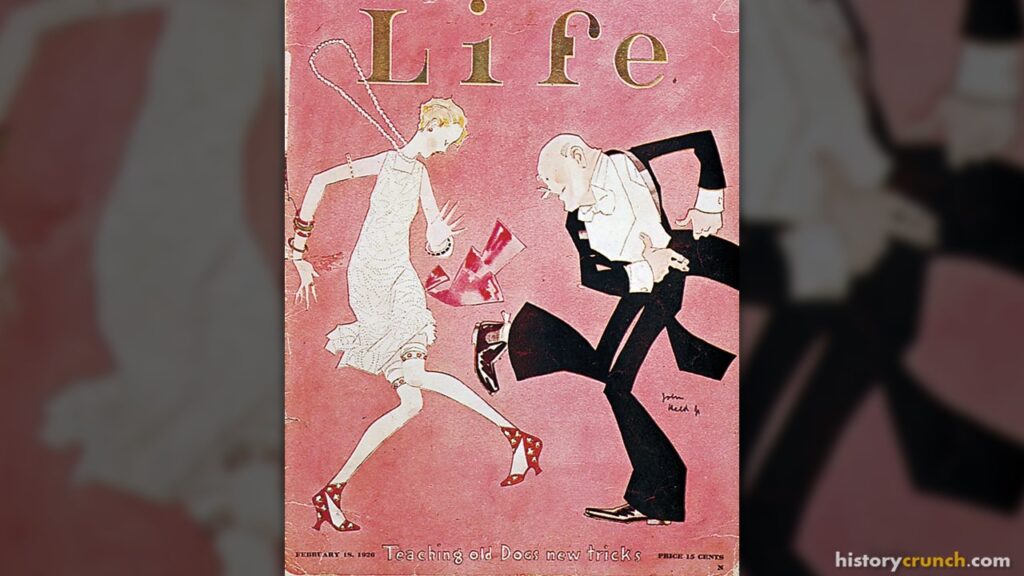
Culturally, Prohibition had a lasting influence on American society. The era gave rise to a unique underground culture centered around speakeasies and jazz music. The speakeasies became important social venues where people of different backgrounds mingled, contributing to the breaking down of social barriers. As stated above, jazz music was popular during this time, and became a significant feature of the Roaring Twenties.
END OF PROHIBITION IN THE UNITED STATES
The negative impacts of Prohibition eventually led to growing public anger and frustration with the law. In fact, by the late 1920s, many Americans were calling for its repeal. The Great Depression made the situation worse, as the government faced declining tax revenues and increased public demand for economic relief. Repealing Prohibition became a viable solution to these problems, promising to generate much-needed tax revenue and reduce government spending on enforcement.
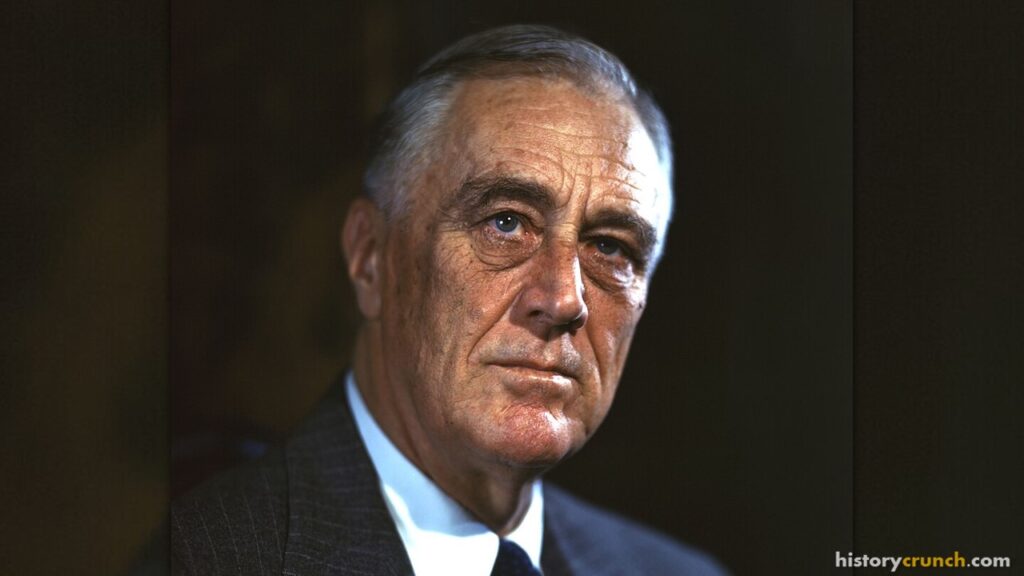
The movement to repeal Prohibition gained momentum with the election of Franklin D. Roosevelt in 1932. Roosevelt, who campaigned on a platform that included the repeal of Prohibition, helped increase public support for the cause. Finally, on December 5th, 1933, the 21st Amendment was ratified, officially ending Prohibition. This amendment repealed the 18th Amendment and granted individual states the authority to regulate the sale and distribution of alcohol. With that, the period of Prohibition in the United States was over.