Economics in the Great Depression played an important role in the lives of the people that lived through this incredible period of history. The Great Depression is one of the most significant events in all of world history and had a profound impact on the modern world. It began in October of 1929 with the Stock Market Crash and soon expanded as a worldwide economic recession. When discussing the Great Depression it is important to recognize the economic beliefs and systems that existed at the time.
ECONOMIC CONDITIONS BEFORE THE GREAT DEPRESSION
As stated above, the Great Depression began in 1929 and extended throughout the majority of the 1930s. The time period before the Great Depression is often referred to as the ‘Roaring Twenties’ in reference to the booming economy and cultural change that occurred at that time. Economically, the 1920s were a period of economic growth, which was experienced both in North America and in Western Europe. For example, some statistics show that the United States’ economy grew by over 40% during the decade of the 1920s. This was due in part to increased consumer sales and construction in these areas following the events of World War I. After the destruction of the First World War, societies in North America and Western Europe began to rebuild which caused a boom in construction and thus a boom in the overall economy. Sales of new automobiles and other consumer goods also helped create jobs and economic prosperity. This economic boom was marked by high levels of employment and strong consumer spending, especially in the United States. For instance, despite a short recession at the beginning of the 1920s, American unemployment generally stayed around 5%. These rates make the 1920s a period that had historically low unemployment. The economic boom of the 1920s led to innovations in many industries, such as: automobiles, aviation, and movies. As such, the Roaring Twenties was also a time of great cultural change and expression.
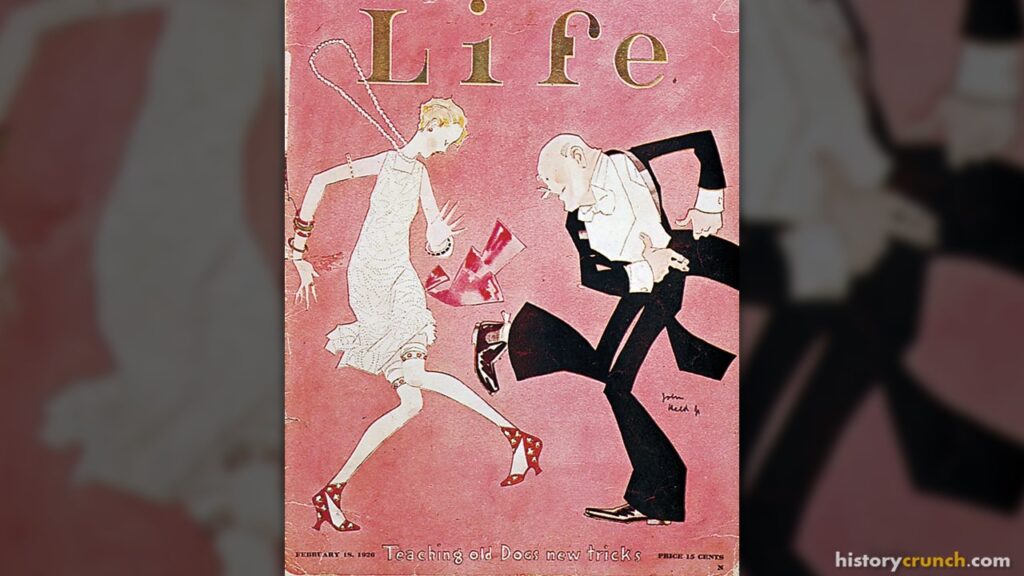
The economic boom and consumeristic nature of the 1920s was helped by the economic system of free market capitalism, which was prevalent throughout North America and Europe during the time. In general, capitalism is a right-wing economic system that favors as little government intervention in the economy as possible. In fact, the first form of capitalism is generally referred to as ‘laissez-faire capitalism’. Simply put, laissez-faire translates to “leave us alone” meaning that the government should remain out of the economy and instead allow individuals to freely carry out their own economic affairs. As such, in the 1920s, free market capitalism was still the dominant economic system in North American and European societies. The lack of government intervention in the economy allowed businesses to grow without government regulations or high taxes. For example, during the Roaring Twenties the United States stock market grew at an incredible rate.
In general, the term ‘stock market’ refers to the idea that people can buy portions (called shares) of companies. These investors spend their money to buy shares of a company in the hopes that they can sell the shares for more than they bought them for, thus making a profit of their original investment. There are different stock exchanges around the world, including the New York Stock Exchange (NYSX). In the 1920s, many people and businesses began to invest in the stock market. Since there was such high growth and prosperity in the economy at the time, many people believed that the overall stock market would continue to grow. In fact, it was common practice at the time to borrow most of the capital used to invest in the stock market. This practice was referred to as purchasing stocks on margin. Since many investors did not have the necessary money to buy the stocks they wanted, financial institutions allowed them, including individuals, to buy stocks on margin. This means that people were borrowing money to buy stocks. The rules of the time allowed people to borrow as much as 90% of the value of the stock, meaning the investor was purchasing shares in a company with only about 10% of their own money. The hope was that the stock market would continue to increase and when the investor sold their shares, they could pay back the money they borrowed while still making a profit for themselves. However, this practice created the conditions for a major economic collapse when the stock market crash of 1929 finally occurred. This is important because the collapse of the Stock Market in 1929 ended the economic prosperity of the Roaring Twenties and led to the events of the Great Depression. For example, after the crash, people were either forced to sell their stocks at a loss or continue holding on to a stock that had lost much of its value. As a result, many people went bankrupt from over-borrowing and being unable to pay back their debts. This was particularly hard on the banks as they were burdened with much of this debt, while also losing large amounts of money in the stock market crash themselves.
ECONOMIC CONDITIONS DURING THE GREAT DEPRESSION
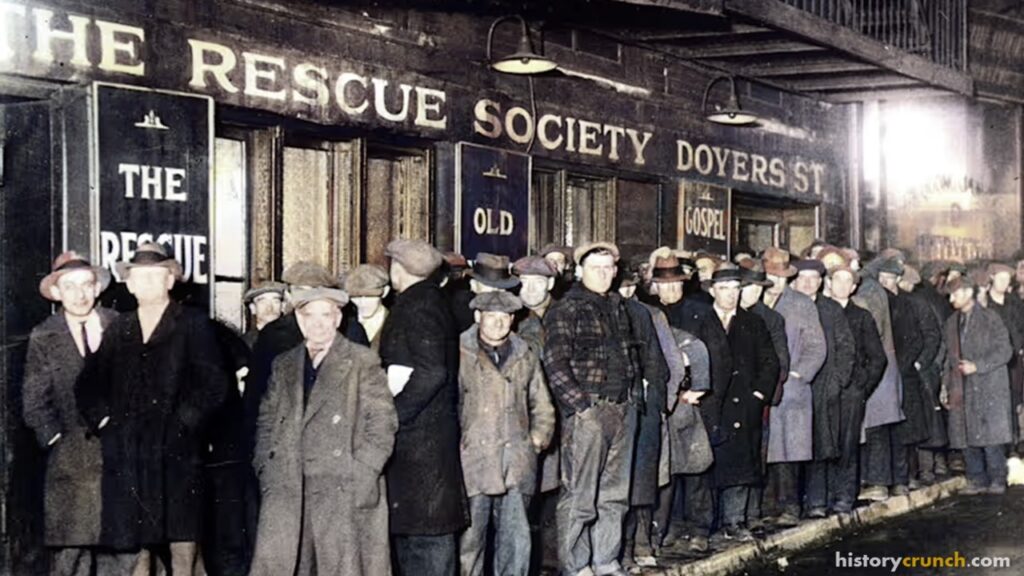
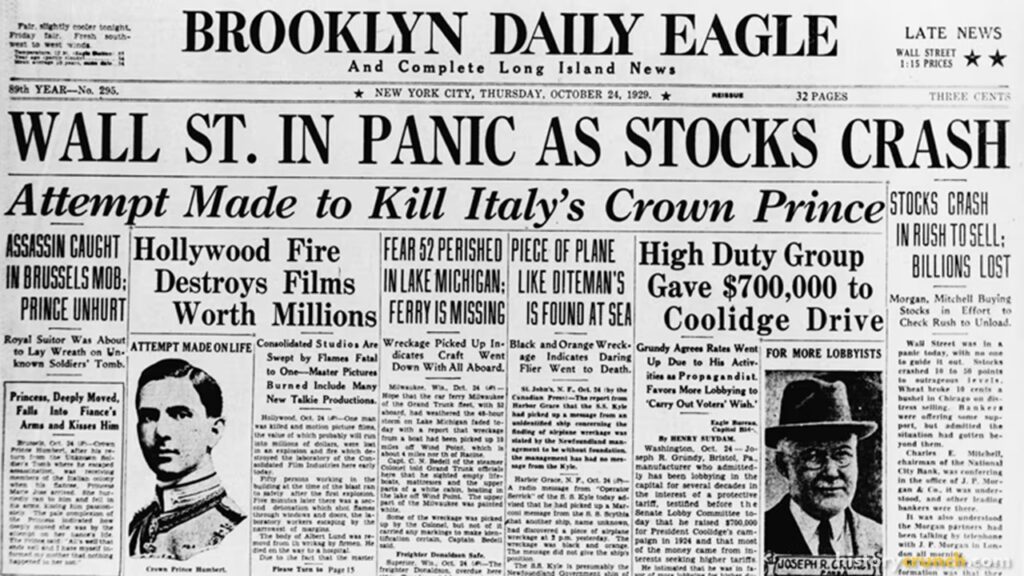
As stated above, the Great Depression was a time during the 1930s in which countries faced major economic issues. The crisis began in October of 1929 with the crash of the stock market in the United States. Beginning on October 24th, also known as ‘Black Thursday’, the New York Stock Exchange began to experience volatility and heavy trading which resulted in a large drop of the overall value of the market. Next, on October 29th, also known as ‘Black Tuesday’, the market took another significant drop and the panic of the stock market crash reached its peak. In total, the market had lost over $30 billion with nearly $14 billion being lost on October 29th, alone. The crash led to several other major economic issues that furthered the recession, including: loss of consumer spending, increase in overall unemployment, and bank runs and closures. The Great Depression in the United States had begun and Herbert Hoover had only been president for just under 8 months. Understanding Hoover’s approach to the economic crisis of the Great Depression is important because it displayed the major economic changes during the years of the overall recession.
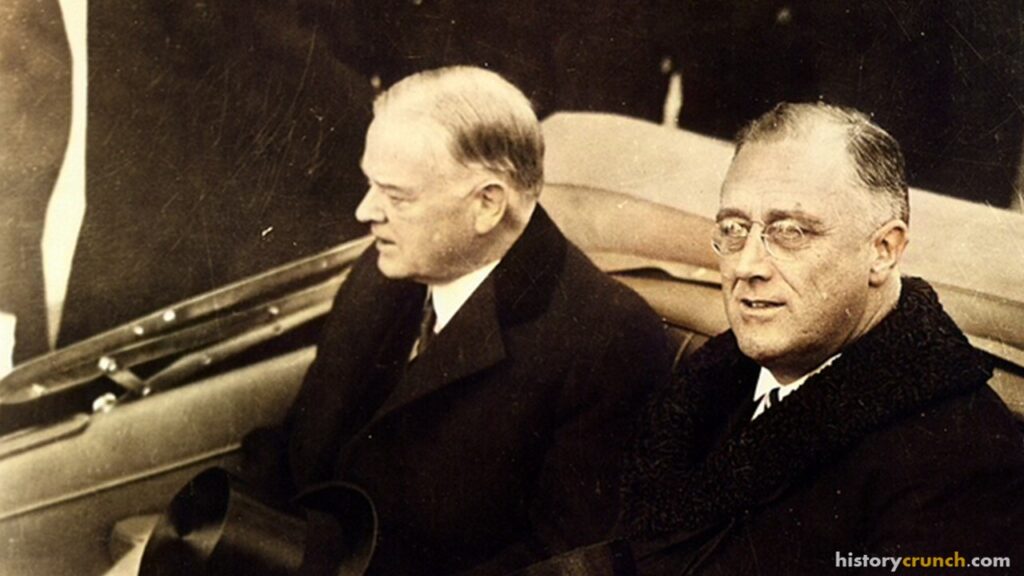
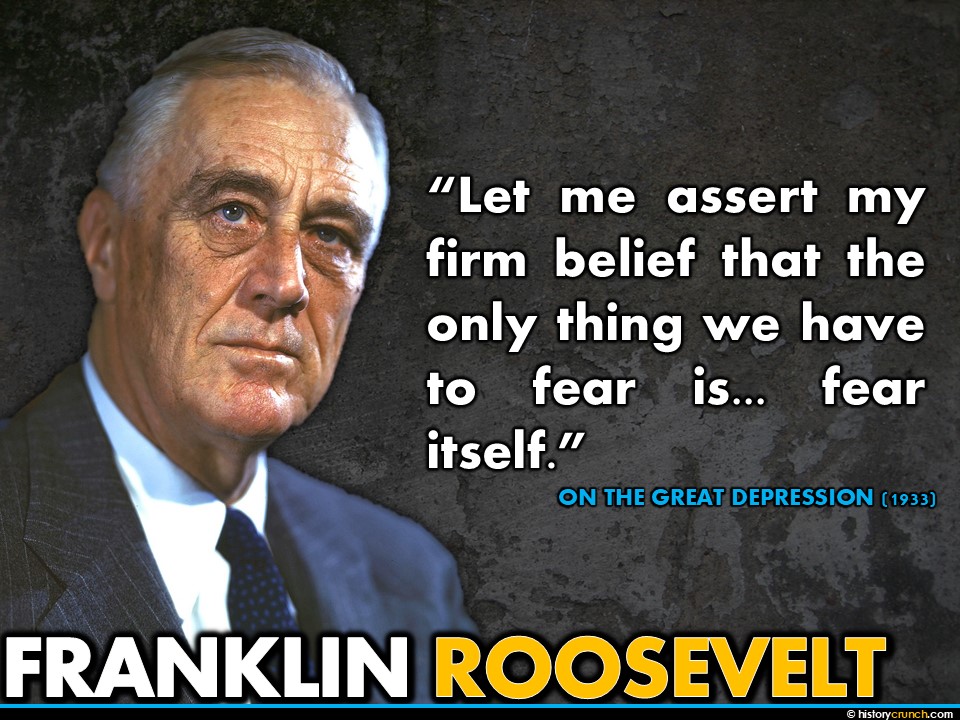
As the Great Depression unfolded Hoover held a general view of the economy based on self-reliance. This means that he believed it was the responsibility of individuals to take care of themselves and not rely on assistance from the government. As such, he did not agree that the government should intervene in the economy and referred to the economic hardship of the Great Depression as “a passing incident”. As a result of his presidency, many working-class people began to name aspects of their poverty after Hoover. For example, shanty-towns that were constructed on the edge of cities in the 1930s were often referred to as ‘Hoovervilles’. In the 1932 presidential election, Hoover faced off against Democratic candidate Franklin D. Roosevelt. Roosevelt offered a completely different view of the recession and ran on the platform of a ‘New Deal’ for the American people. With unemployment over 20% in 1932, Roosevelt blamed the worsening economic conditions on Hoover’s mishandling of the crisis. As a result, Roosevelt won the election in a landslide victory winning 472 electoral votes to Hoover’s 59. Roosevelt also dominated the popular vote with 23 million votes to Hoover’s 16 million. Roosevelt’s election is significant because he practiced a completely different economic practice than the earlier Herbert Hoover.
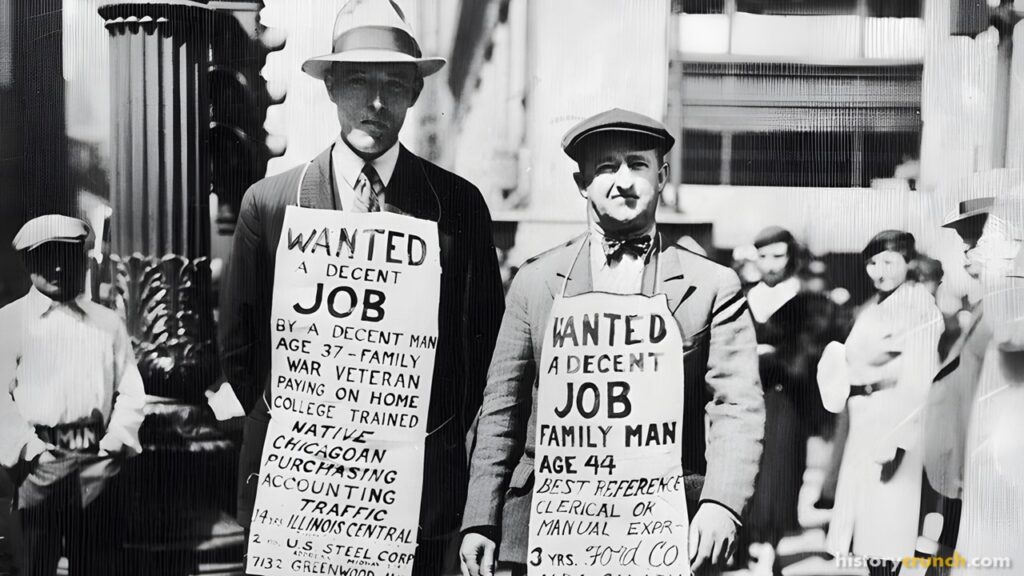
By the time he entered the White House, the Great Depression in the United States had reached desperate levels, with over 13 million people unemployed. As a result, Roosevelt had to make drastic changes. So, as part of his role, Roosevelt put a number of New Deal programs and reforms in place. The New Deal was a series of government initiatives and programs aimed at ending the economic devastation of the Great Depression. Many historians agree that the New Deal included two distinct stages. The First New Deal occurred from 1933, when Roosevelt took office, until 1934 and focused on issues related to banking. The Second New Deal occurred from 1935 until 1938 and focused on several important programs including the Social Security Act. In general, Roosevelt’s plan was for the federal government to spend money in an attempt to achieve three goals: economic recovery, job creation, and investment in public works projects
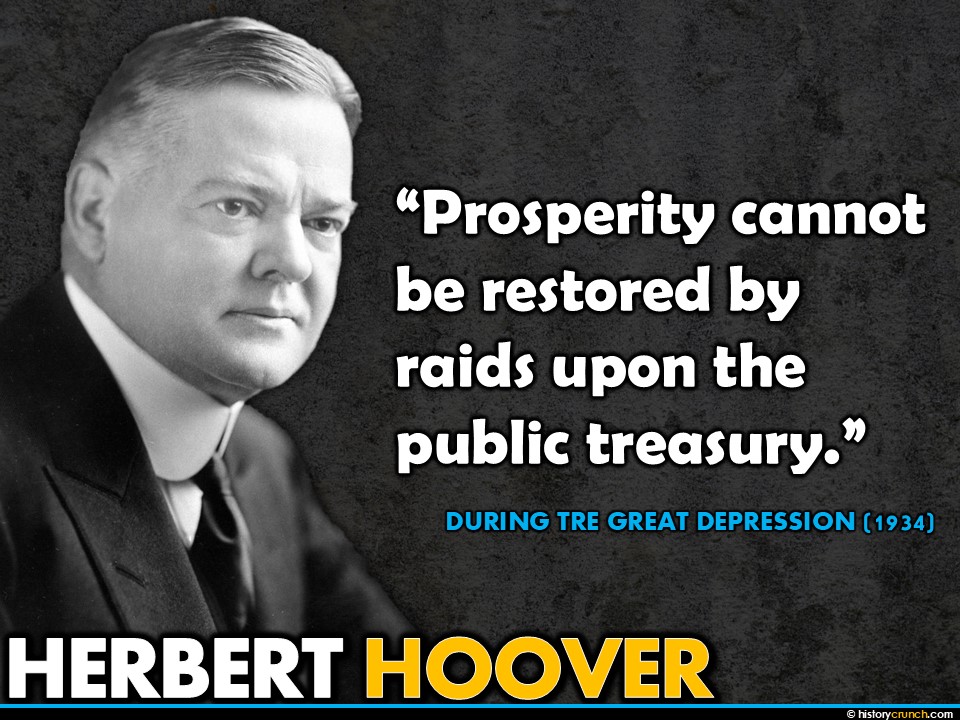
Thanks to the policies, Roosevelt led the United States through the Great Depression, and by 1935 the country showed signs of economic recovery. Roosevelt supported much more government intervention in the economy than did Hoover. As a result, Roovelt’s New Deal policies shifted the United States left on the economic spectrum and led to several democratic socialist policies. In general, socialism is a left-wing economic system that favors government intervention in the economy in order to try to solve economic issues. At the time, socialist policies were popular around the world and were causing many countries to change their policies. American politics and economics had been much more right-wing in the decades before the Great Depression. This meant that the United States was based upon the principles of capitalism, which is the idea that the government should play as little a role as possible in the economy and allow people to have more control over their own economic wellbeing. The policies of Roosevelt and the creation of the New Deal fundamentally shifted the United States left on the economic spectrum to a form of capitalism that economists refer to as the Welfare State. Regardless, the Great Depression ended in the late 1930s with the outbreak of World War II.