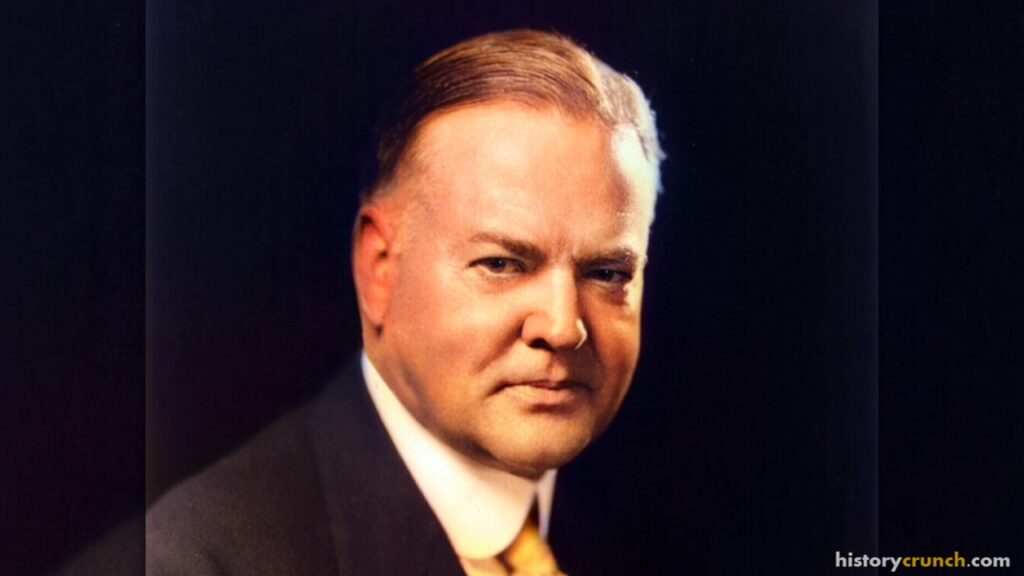
Herbert Hoover was the 31st President of the United States. Specifically, his legacy as president is often linked to the events of the Great Depression and his handling of the economic turmoil of the time. While, he came into office shortly before the economic crash of October 1929, many at the time blamed him and his policies for their hardships.
HERBERT HOOVER – EARLY LIFE
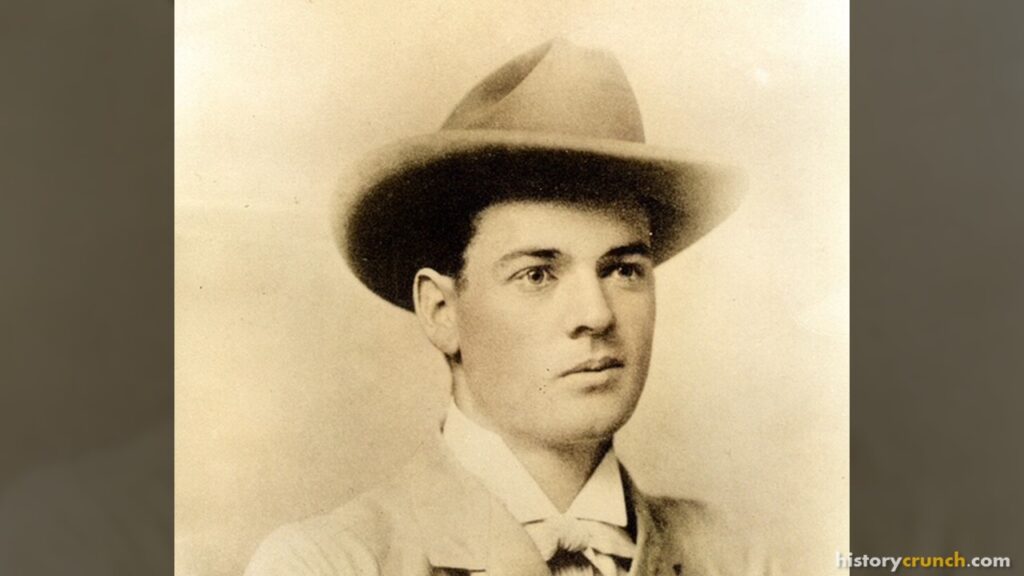
Hoover was born on August 10th, 1874 in Iowa. His father, Jesse Hoover, was a blacksmith and storeowner, who had moved to Iowa from Ohio earlier in his life. His mother, Hulda Randall Minthorn, was born in Canada. Hoover attended Stanford University in 1891 which was its inaugural year. While he struggled in many of his classes, he completed his studies in 1895 with a degree in geology. Following his graduation he began working as a geologist for gold mining companies throughout Nevada and California before finally going to Australia in 1897 for the Bewick, Moreing &Co. mining company. His time in Australia was significant because it helped to form some of his economic views. After being made a mine manger he faced a labor movement from his Australian workers. In response, he hired immigrant workers and actively fought against minimum wage and workers compensation benefits, believing that they put too much hardship on business owners. After finding success running mines in Australia, he returned to the United States to marry Lou Henry, a woman he had first met while at Stanford University.
HERBERT HOOVER – EARLY POLITICAL LIFE
He continued on in the mining industry with Bewick, Moreing &Co. in mines in China and Australia, but so left the company to become an independent mining specialist. He helped struggling mines with their operations and finances in exchange for a portion of the profits. Based primarily on his humanitarian work during World War I, in which he helped over 120,000 Americans flee the erupting war in 1914, he was appointed as the head of the U.S. Food Administration by then President Woodrow Wilson. Throughout this period, his political and economic views began to change and his popularity among the American public grew as he advocated for: minimum wage laws, a 40 hour work week, and an end to child labor. As a result, President Warren G. Harding appointed his as the Secretary of Commerce following Harding’s election in 1920. Hoover kept the position until 1928 as part of Harding’s administration and later during Calvin Coolidge’s presidency.
HERBERT HOOVER – PRESIDENT OF THE UNITED STATES
Finally, in 1928, Hoover accepted the Republican nomination to run for president following Coolidge’s announcement that he would not seek a second term. At the time, the American economy was booming as part of the ‘Roaring Twenties’, and Hoover’s pro-business stance propelled him to a resounding victory, winning the 1928 election over Democrat Alfred E. Smith.
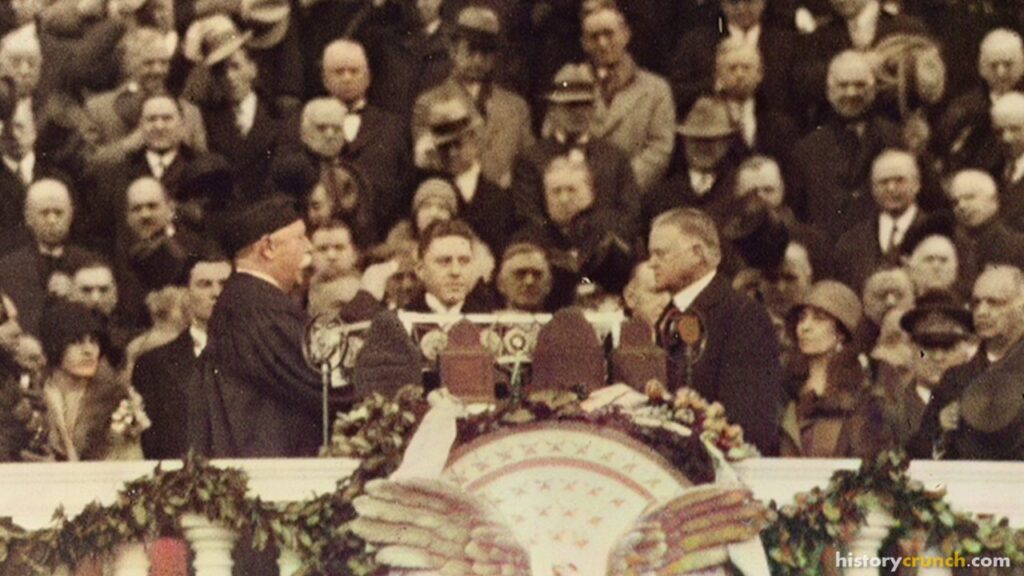
At Hoover’s inauguration on March 4th, 1929, the country was already showing signs of economic uncertainty. For example, a small stock market crash occurred on the New York Stock Exchange on March 25th, and was only slowed when National City Bank announced that it would make $25 million of credit available. However, the event showed the weakness of the stock market at the time and foreshadowed the events of October.
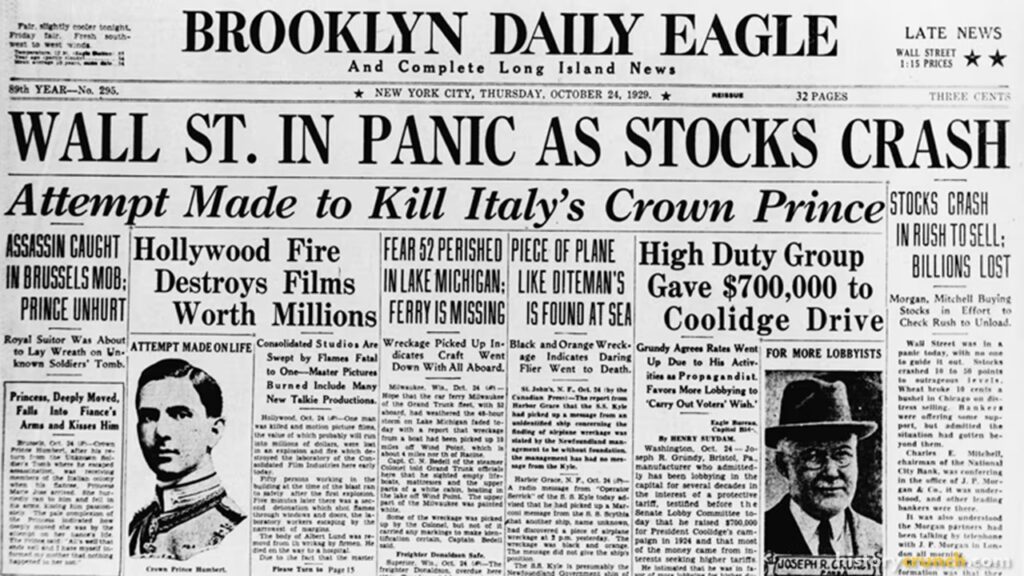
Beginning on October 24th, also known as ‘Black Thursday’, the New York Stock Exchange began to experience volatility and heavy trading which resulted in a large drop of the overall value of the market. Next, on October 29th, also known as ‘Black Tuesday’, the market took another significant drop and the panic of the stock market crash reached its peak. In total, the market had lost over $30 billion with nearly $14 billion being lost on October 29th, alone. The crash led to several other major economic issues that furthered the recession, including: loss of consumer spending, increase in overall unemployment, and bank runs and closures. The Great Depression in the United States had begun and Hoover had only been president for just under 8 months.
HERBERT HOOVER – GREAT DEPRESSION
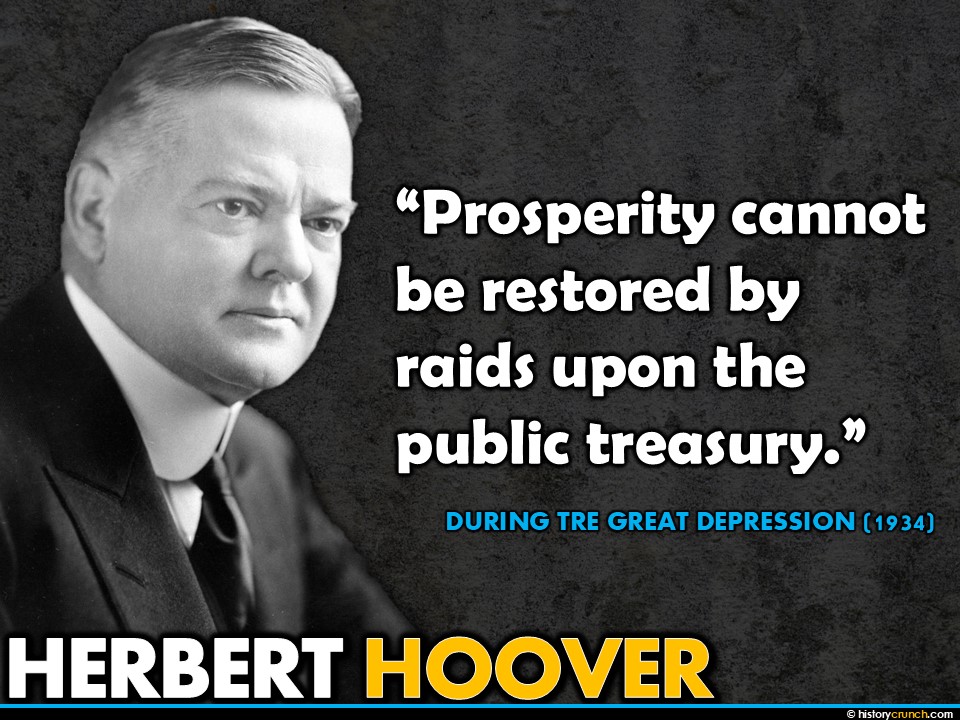
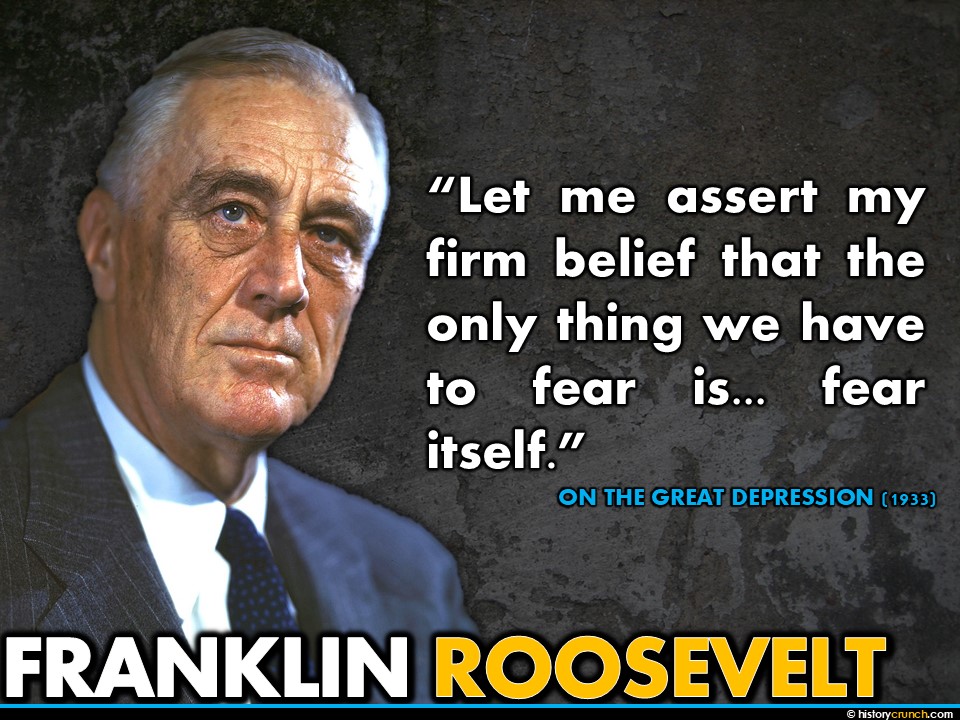
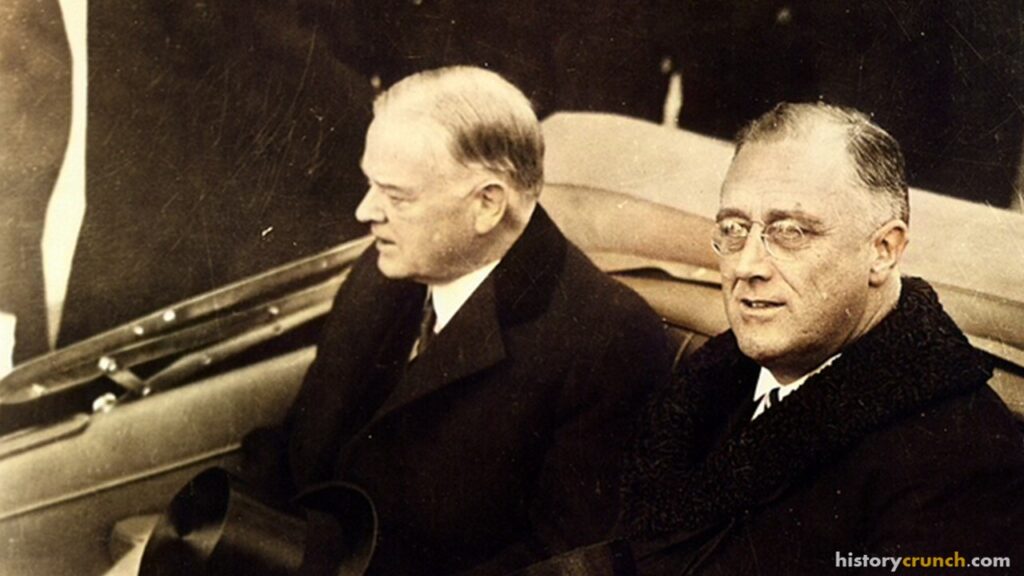
As the Great Depression unfolded Hoover held a general view of the economy based on self-reliance. This means that he believed it was the responsibility of individuals to take care of themselves and not rely on assistance from the government. As such, he did not agree that the government should intervene in the economy and referred to the economic hardship of the Great Depression as “a passing incident”. As a result of his presidency, many working-class people began to name aspects of their poverty after Hoover. For example, shanty-towns that were constructed on the edge of cities in the 1930s were often referred to as ‘Hoovervilles’. In the 1932 presidential election, Hoover faced off against Democratic candidate Franklin D. Roosevelt. Roosevelt offered a completely different view of the recession and ran on the platform of a ‘New Deal’ for the American people. With unemployment over 20% in 1932, Roosevelt blamed the worsening economic conditions on Hoover’s mishandling of the crisis. As a result, Roosevelt won the election in a landslide victory winning 472 electoral votes to Hoover’s 59. Roosevelt also dominated the popular vote with 23 million votes to Hoover’s 16 million.
HERBERT HOOVER – LATER LIFE
Following his loss, Hoover spent the remaining years of the Great Depression as an active critic of Roosevelt’s ‘New Deal’ programs. In his writings, Hoover argued against increased government involvement in the economy and warned against increased government debt to fund social-assistance programs. As well, when World War II began in 1939, Hoover opposed the United States’ involvement in the conflict and even criticized Roosevelt’s Lend-Lease Act, which helped supply Britain during the early years of the war.
HERBERT HOOVER – DEATH AND LEGACY
Hoover was 90 years old when he died on October 20th, 1964 in New York City. While many Americans had a negative view of him and his presidency in 1930s, he had restored his legacy by the time of his death. In fact, Hoover Dam, which was constructed from 1931 to 1936 was named after Herbert Hoover.
Herbert Hoover’s presidency was marked by the unprecedented challenges of the Great Depression. While his efforts to combat the economic crisis were often criticized, his earlier career as a humanitarian and public servant highlighted his dedication to the country.