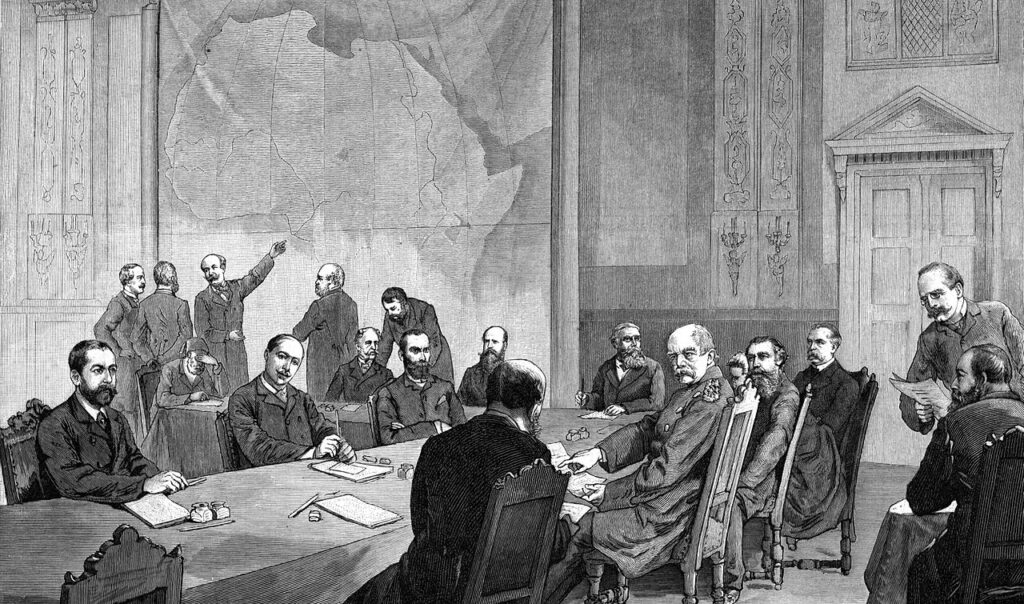
The Berlin Conference of 1884 was a significant event in the history of both Europe and Africa. More specifically, it centered on the events of European Imperialism in Africa (Scramble for Africa) and played an important role in European colonization of Africa. For instance, the Berlin Conference of 1884 led to an understanding by the major European powers in regards to the partition of Africa for the purposes of colonization.
BEFORE THE BERLIN CONFERENCE OF 1884
Europeans expressed an economic interest in Africa for a long period before the start of the Age of Imperialism. With that said, early explorations only explored the coastlines of Africa and did not result in any significant European expansion into the interior of Africa. In fact, European expeditions into Africa’s interior did not become more common until the early 1800s. This was due to the climate, geography and diseases present in Africa. For instance, Europeans struggled with diseases such as malaria and yellow fever. However, new technologies and advancements in medicine allowed European explorers to start expeditions into the interior of Africa. Regardless, European interest in Africa continued to grow and eventually resulted in the Scramble for Africa.
The Scramble for Africa is the term that historians use to refer to the expansion of European empires into Africa. It is referred to as a ‘scramble’ due to the way in which the European nations raced to capture territory to expand to their empires. The Scramble for Africa is considered to have occurred from approximately 1870 until the outbreak of World War I in 1914. During these years, almost all of Africa came under the control of the major European powers, including: Britain, France, Germany, Belgium, Italy, Portugal and Spain. The Scramble for Africa unfolded as a series of major events that eventually saw the African continent colonized and then divided by the major European powers. This led to a growing set of tensions between the European powers, as they competed for power in Africa. As a result, in hopes of avoiding a larger conflict, the European powers called the Berlin Conference of 1884.

OVERVIEW OF THE BERLIN CONFERENCE OF 1884
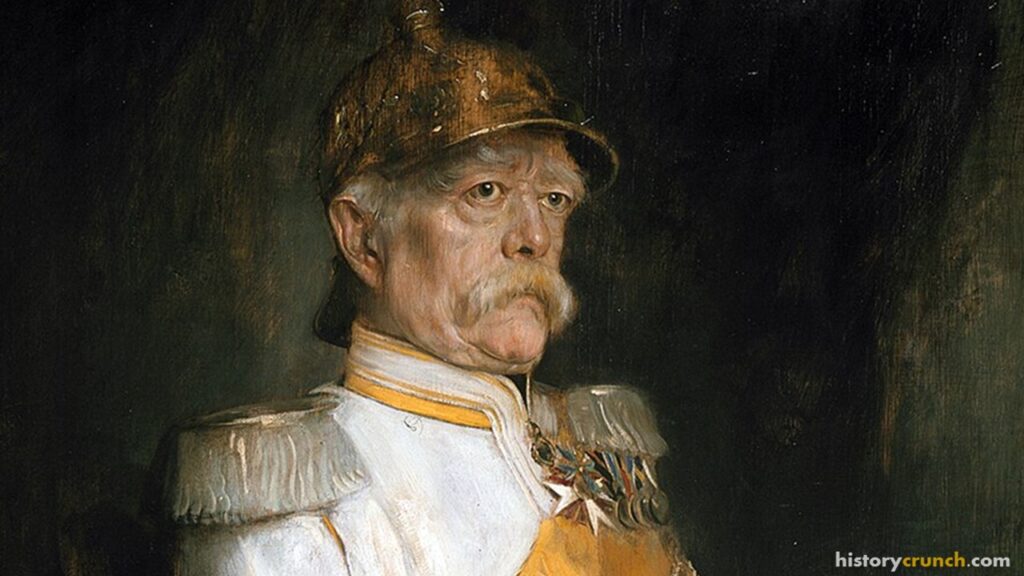
The Berlin Conference of 1884 was called by German Chancellor Otto von Bismarck and lasted from November 15th, 1884, until February 26th, 1885. At the time, Germany was emerging as a colonial power in Africa, which caused tensions with the other major powers, such as: Britain, France and Belgium. As a result, German Chancellor Otto von Bismarck called for the Berlin Conference as a means of reducing tensions between the European powers and determining how to divide the African continent between each other.
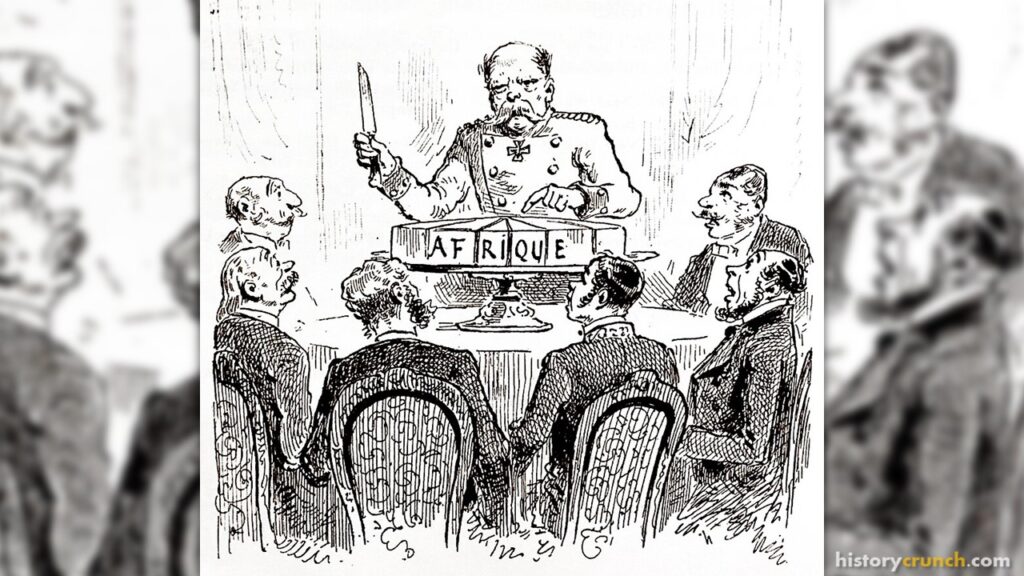
Between 1870 and 1914 the entire continent of Africa came under European rule, except for Liberia and Ethiopia. European nations such as Britain and France dominated the Scramble for Africa and controlled most of the territory. Other nations, such as Belgium, Germany, Spain, Portugal and Italy colonized smaller sections. This competition for territory between the European nations pushed the European powers to the brink of war in the 1800’s, and was eventually a contributing factor to the outbreak of World War I in 1914. For example, the First Moroccan Crisis and the Second Moroccan Crisis are examples of European imperialism in Africa, which historians consider to be significant causes of World War I.
In order to try to avoid a conflict in the late 1800’s, the European nations held a conference in the German capital of Berlin in 1884. More specifically, the Berlin Conference was made up of 14 nations in total, including: Austria-Hungary, Belgium, Britain, Denmark, France, Germany, Italy, Netherlands, Ottoman Empire, Portugal, Russia, Spain, Sweden and the United States. The goal of the Berlin Conference was to create a set of boundary lines and create defined territory for the nations involved. What resulted was a mix of approximately 50 African states with irregular borders. African societies were not consulted in this process and sometimes it forced African groups together that had a history of conflict. As such, while the Berlin Conference was a positive experience for the European and other nations and resulted in a temporary reduction of tensions, it was ultimately a negative experience for the African societies.
LEGACY OF THE BERLIN CONFERENCE OF 1884
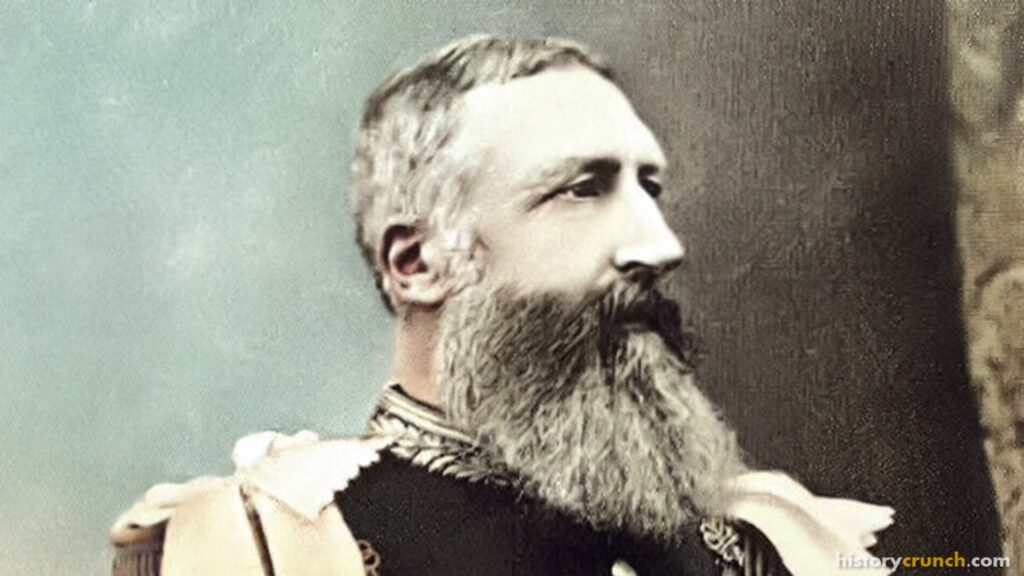
The legacy of the Berlin Conference can be seen in several 20th century conflicts, as the African peoples struggled to come out of European imperialism. For instance, the brutal actions of Leopold II in the Congo were a result of the Berlin Conference since he was granted control over the Congo River Basin region at the conference. Leopold II was the King of Belgium and ruled over the Congo as his own personal possession, which led to the death of millions of Congolese people. As well, the Rwanda Genocide of 1994 was partially caused by the legacy of imperialism in the small nation and the impact it had on the people that lived there. For instance, Rwanda was originally colonized by Germany but was later controlled by Belgium after World War I. The people of Rwanda were categorized by the Belgians, which led to societal divisions and tensions that erupted in the 1994 Rwanda Genocide.