Aztec food and farming were important aspects of the culture and daily life of the people in the Aztec Empire. For instance, Aztec food was highlighted by the importance of different types of foods, such as maize (corn) and chocolate. As well, Aztec farming practises included ‘chinampas’ which were a type of ‘floating gardens’ that the Aztec people used in the shallow areas of Lake Texcoco.
WHO WERE THE AZTEC?
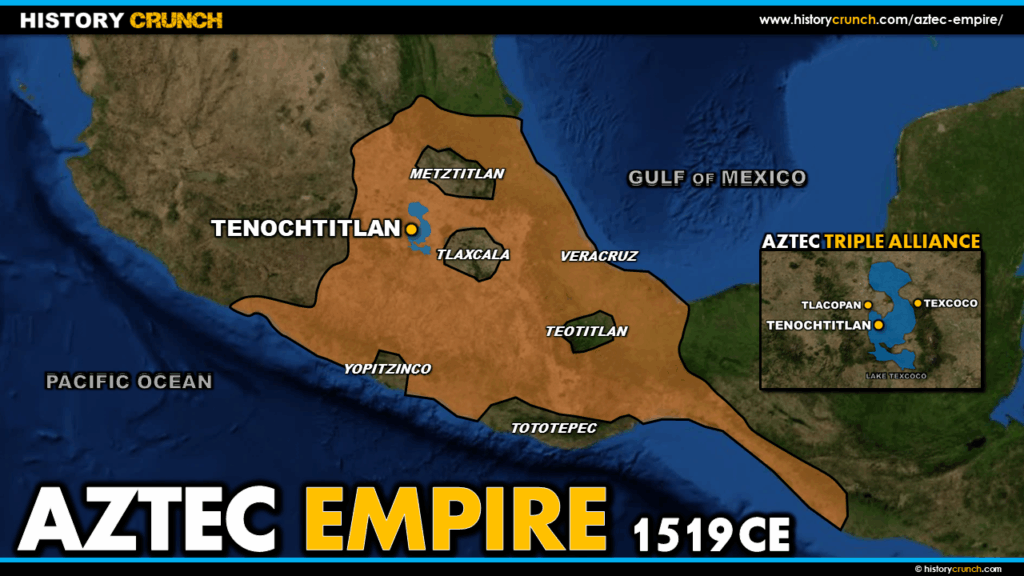
The Aztec Empire was a civilization in central Mexico that thrived in the time before the arrival of European explorers during the Age of Exploration. Throughout its history as a civilization the Aztec Empire expanded across much of central Mexico and other surrounding areas, to become the most dominant and powerful people in the region. Tenochtitlan, the main Aztec city (or altepetl), was the center of this vast empire.
AZTEC FOOD AND FARMING – EXAMPLES
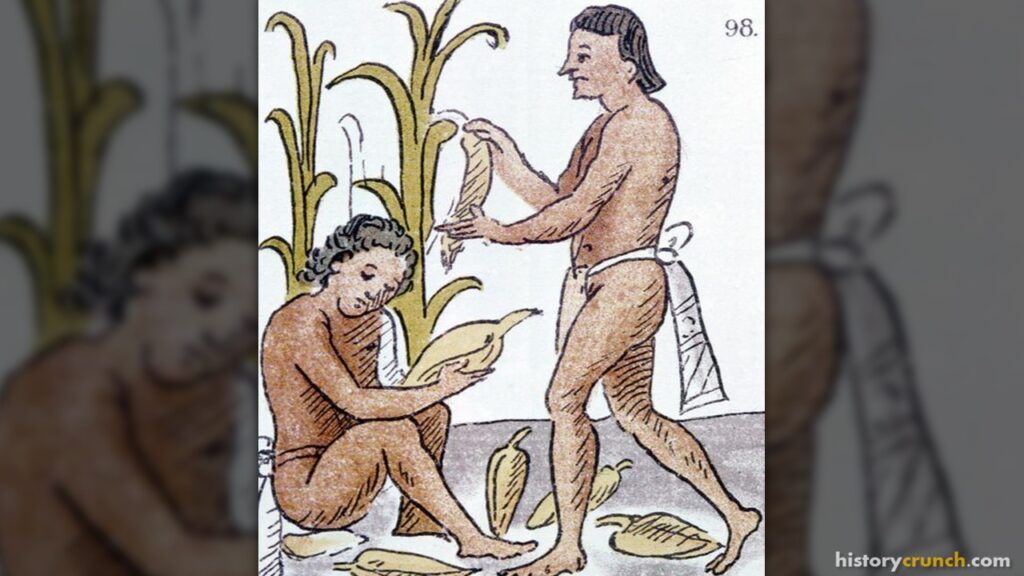
The Aztec had a diverse range of food items that made up their diet. With that said, because the events of the Columbian Exchange had not yet occurred, the Aztec were limited to locally grown foods. As such, since most domesticated animals originate from Eurasia, the Aztec diet was primarily based upon vegetables and fruits. For instance, likely the most common food item of the Aztec Empire was maize (corn). Maize is a cereal grain that was likely first grown by humans over 10,000 years ago in modern-day Mexico. As such, by the time of the Aztec Empire, maize had a long history of use in farming practices in Mexico. The Aztec would prepare the maize in several different ways, including grounding it down into a flour that could then be used to create a tortilla. Maize remains an important crop today and has spread across the world and is used in many different types of foods.
Besides maize, the Aztec also had other foods that were also important, such as beans, squash, tomatoes, potatoes, peanuts, chilies, and chocolate. In general, the vegetables listed provided the Aztec people with much of their nutritional needs. However, the Aztec were also known to eat some animals, including: ducks, turkeys, dogs, fish, and other smaller animals.
AZTEC FOOD AND FARMING – CHOCOLATE
Another important food item in the Aztec Empire was chocolate. In fact, chocolate had a long history of use by Mesoamerican people dating back over thousands of years. The cacao bean (of which chocolate is made from) is native to Mesoamerican and as such, was an important resource for many different Mesoamerican people, including: Olmec, Mayan, and Aztec. For example, the word chocolate comes from the Nahuatl (language of the Aztec) word ‘chocolātl’. When the Spanish conquistadors arrived in Aztec territory in 1519, they noted that the Aztec emperor Moctezuma II and other nobles would consume a chocolate drink. The chocolate drink was mixed with spices and maize. Moctexuma II was said to drink dozens of cups of it each day. Chocolate was surprising for the Spanish, since the cacao bean had only ever grown in the New World prior to the arrival of Europeans in the 15th and 16th centuries. Eventually, the Spanish took the cacao bean back to Europe with them and it has since spread worldwide. Europeans were the ones who added sugar to the chocolate drink that led to modern forms of hot chocolate. Beyond use as a drink, the cacao bean was also an important factor in the Aztec economy. For the Aztecs the cacao beans were viewed as a gift from the god Quetzalcoatl and were held in high value. As a result, the cacao bean was used as a form of currency in the Aztec Empire. For instance, Aztec traders and merchants would use it to carry out the exchange of goods in the different markets across the Aztec Empire.

AZTEC FOOD AND FARMING – CHINAMPAS
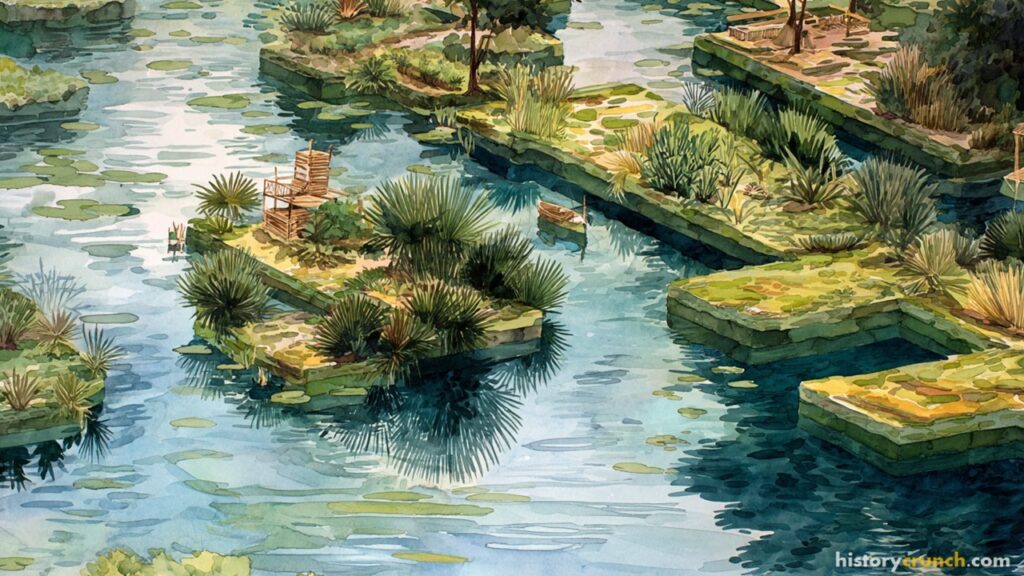
Due to its island location the Aztec economy was based primarily on agriculture in the form of chinampas. Also referred to as ‘floating gardens’ chinampas were mounds of dirt and other debris built up in the shallow, swampy areas of Lake Texcoco which surrounded Tenochtitlan. The use of chinampas was particularly popular in southern area of Lake Texcoco near the altepetl of Xochimilco. It was a common practice throughout Mesoamerica but the Aztec Empire was the first to use the farming technique on a mass scale. The Aztec farmers had to follow a few key points to create the chinampas. First, the farmers would use wooden stakes to section off the area they were going to build up. Next, they would use vines to create a fence like structure under the water between the stakes. Finally, they would fill the fenced off area with dirt and vegetation to build it up above the surface of the water. Sometimes trees were planted on the edges of the chinampas such that their roots could anchor the dirt and prevent the mounds from shifting. Then the farmers would plant crops such as corn (maize) in the fertile mounds of dirt. When combined with other forms of farming such as traditional farms and terraced hill sides, the agriculture of Aztec Empire grew dramatically and became a central component of the economy.