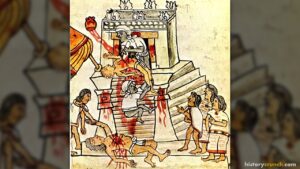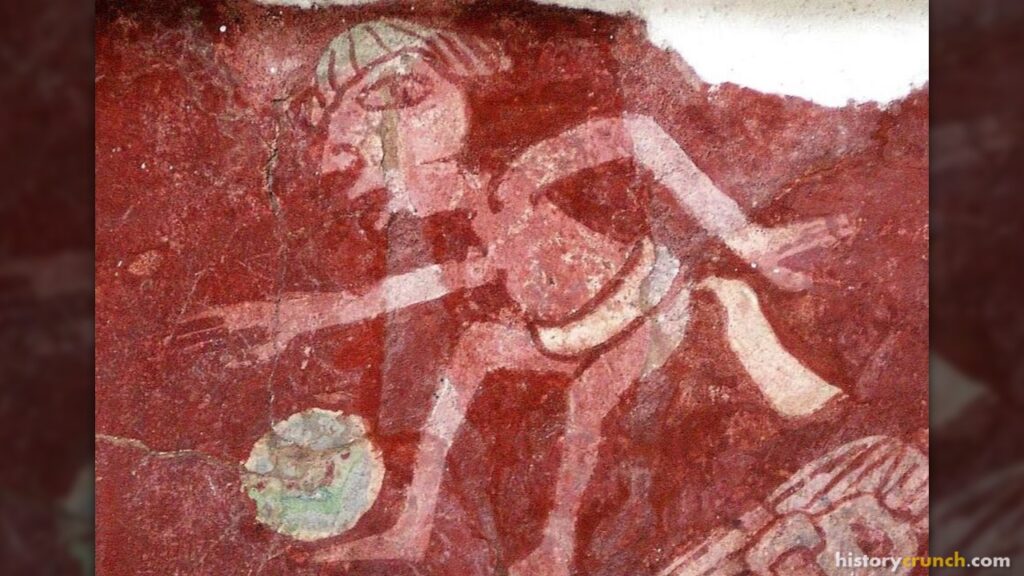
The Aztec ballgame was a ritualistic sport played with a heavy rubber ball on a large court. Players used their hips, elbows, and knees to keep the ball in play, often aiming to pass it through a stone ring mounted high on the court walls. The game had deep religious significance to the Aztec people and sometimes was related to the practise of human sacrifice.
WHO ARE THE AZTEC?
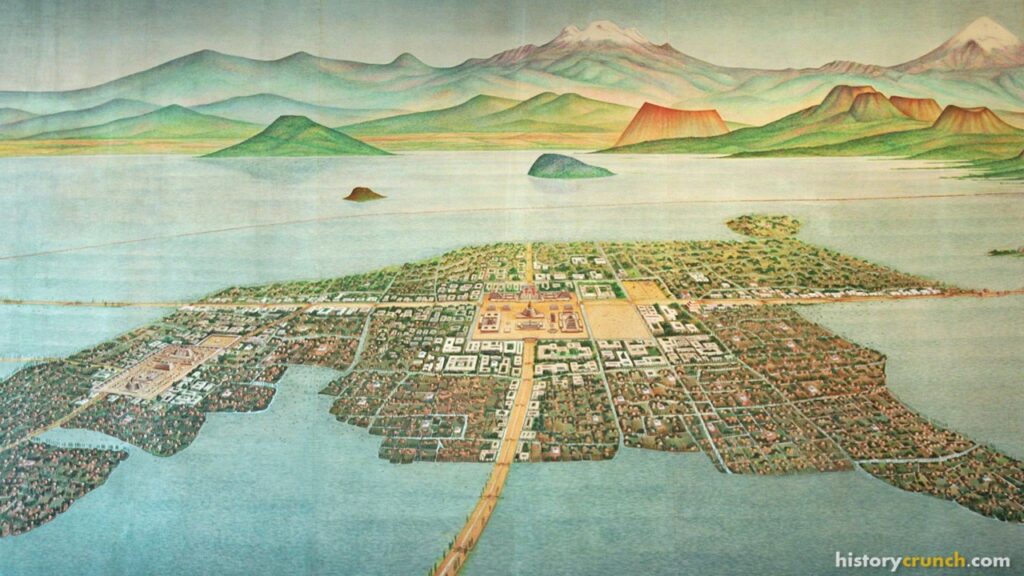
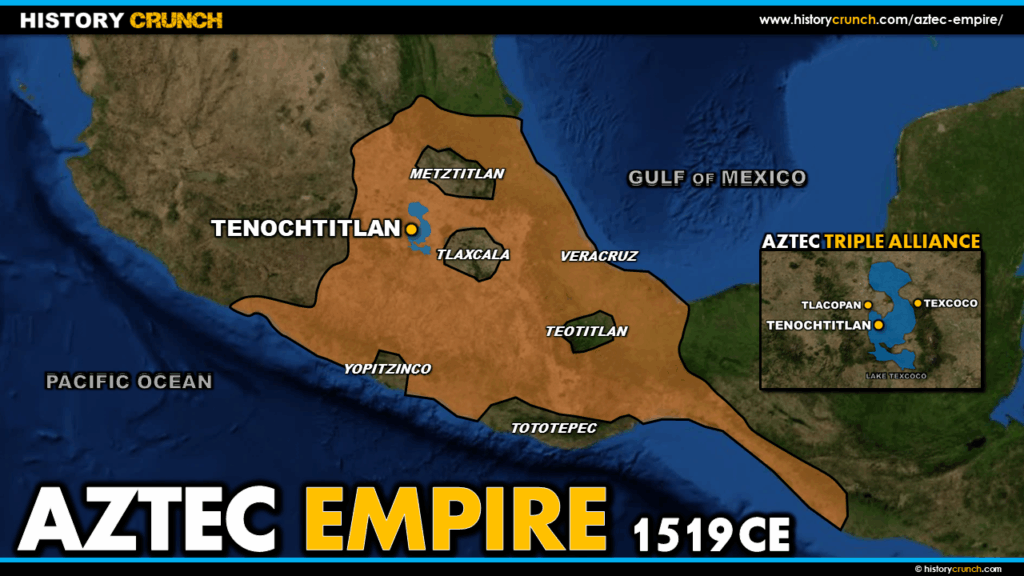
The Aztec Empire was a civilization in central Mexico that thrived in the time before the arrival of European explorers during the Age of Exploration. Throughout its history as a civilization the Aztec Empire expanded across much of central Mexico and other surrounding areas, to become the most dominant and powerful people in the region. Tenochtitlan, the main Aztec city (or altepetl), was the center of this vast empire.
WHAT WAS THE AZTEC BALLGAME?
Despite being concerned with regular military expansion throughout central Mexico, the Aztec people were also known to participate in different games and be entertained. One of the most important games in Aztec history was the ballgame referred to as ōllamalitzli. The term ‘ōllamalitzli’ translates to ‘rubber to play ball’. In fact, the ballgame was common throughout much of Mesoamerica and was played by many different groups of people, including: Maya, Teotihuacan, and the Aztec. It is believed that the game originated sometimes around 1400 BCE in modern-day Mexico, meaning it had a long history in the region.
HOW WAS THE AZTEC BALLGAME PLAYED?
Historians do not know the exact rules of the game, but there are some basic assumptions of how it was played. For example, two teams would face off against each out in a ‘ball court’ which was essentially a large rectangular space. Furthermore, in the Tenochtitlan (the Aztec capital), the largest ball court was called ‘teotlachco’ meaning ‘holy ball court’. The ball court was, of course, the location of the game but it also served purposes for other religious festivals and ceremonies.
The game was played with a rubber ball that was approximately 10 pounds (4.5 kilograms) in weight. It is believed that the point of the game was for the players to hit the ball back and forth to each other by using their hips, forearms or thighs. The purpose was to keep the ball in play and keep the game going. Some versions of the game included a hoop on the side of the court which the players were required to pass the ball through.
WHY WAS THE AZTEC BALLGAME IMPORTANT?
The ballgame had important religious and cultural significance for the Aztec people. For instance, it was a major event in Aztec society that brought many people together in a common space. As well, historians believe that the Aztec people may have viewed the ballgame as a metaphor for the conflict between the sun and the moon. As such, it is believed that the Aztec associated the game closely with the god Huitzilopochtli. For the Aztec he was the representation of the sun. He was also considered to be the national god of the ‘Mexica’ which is the term the Aztec used to refer to themselves. As well, he was the patron god of the Aztec capital Tenochtitlan. In fact, there was a temple built in his and Tlaloc’s honor in the center of the city called Templo Mayor, which some refer to as the Great Temple of Tenochtitlan. In Aztec tradition Huitzilopochtli was viewed as the sun, his sister the moon, and his brothers the stars. The constant movement of the sun, moon and stars was viewed by the Aztecs as an ongoing battle between Huitzilopochtli and his siblings. Thus, the Aztec believed that they needed to provide tribute to Huitzilopochtli in order to ensure the sun’s survival and ability to ‘fight’ each day.
Beyond its religious connections, the game was form of entertainment for the Aztec people. This was especially true of the pipiltin (nobility), who were taught to play the game as children in the Calmecac schools.