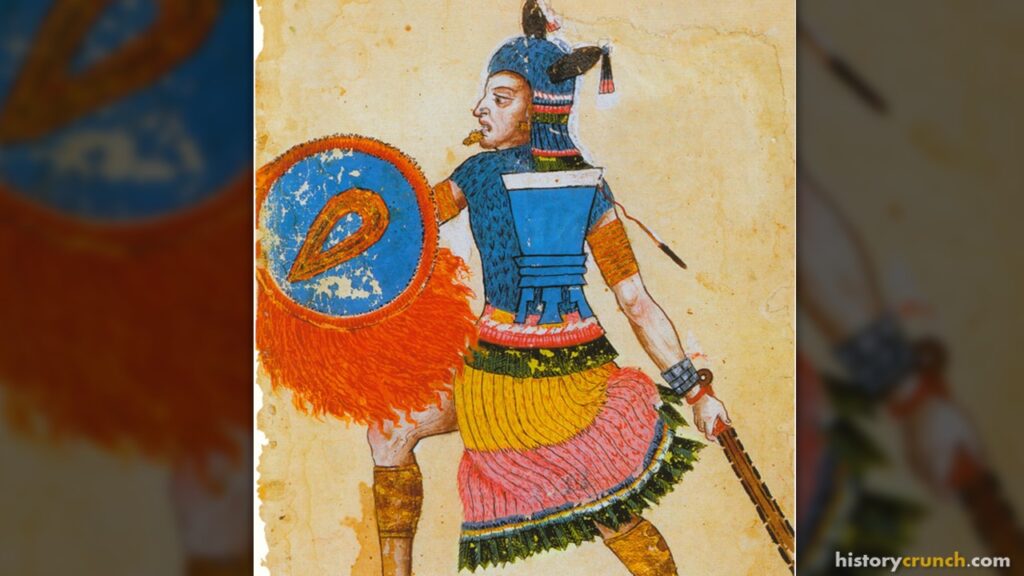
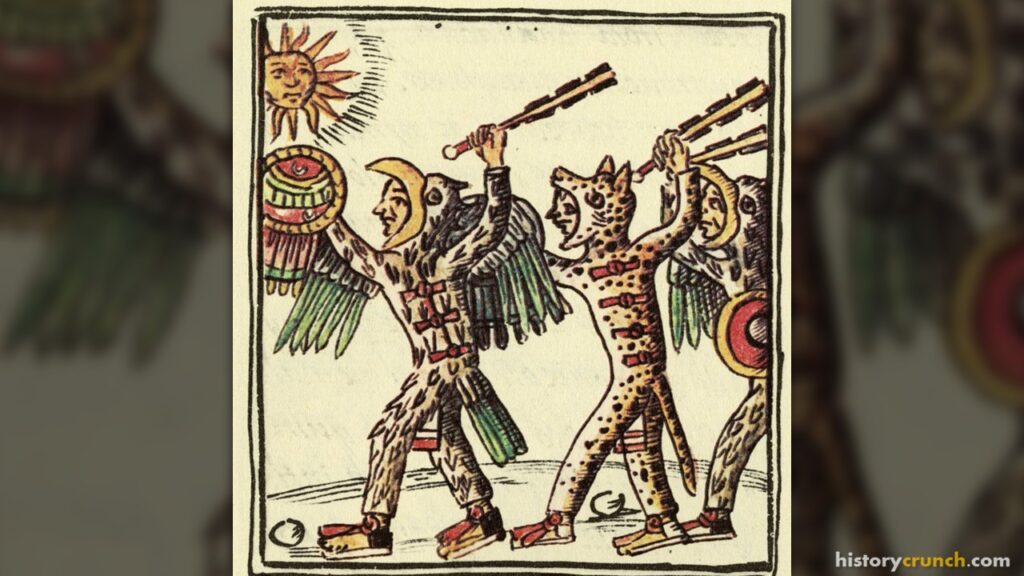
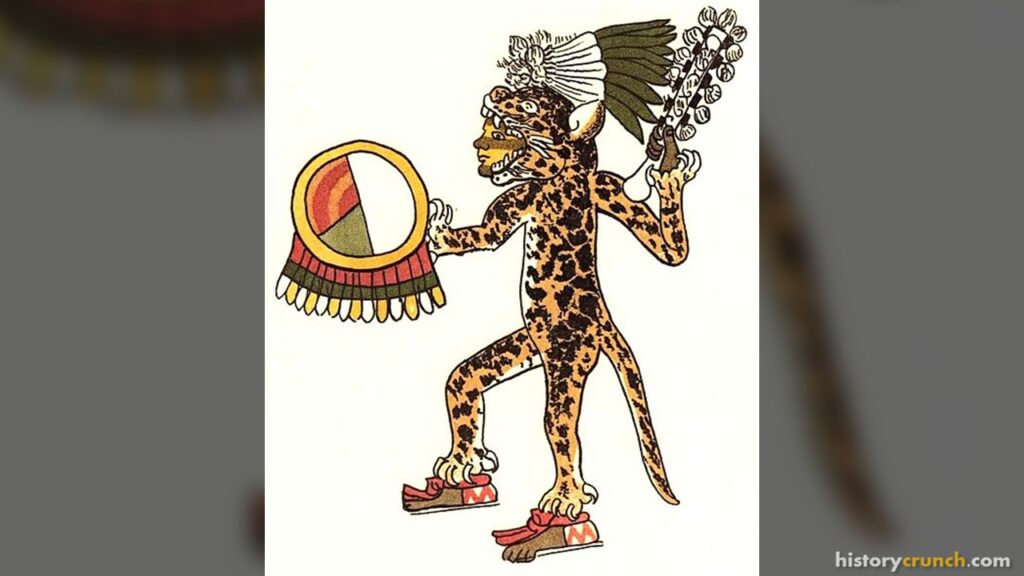
Aztec warfare was a central component of the expansion of the Aztec Empire. For example, warfare help the Aztec to capture prisoners for sacrifice, and collect tribute from conquered regions in the Valley of Mexico. Aztec warriors trained from a young age, and elite fighters, such as the Jaguar and Eagle warriors, held high status in Aztec society. Battles were highly organized and made use of weapons like obsidian-bladed macuahuitl swords, atlatls (spear-throwers), and bows.
WHO WERE THE AZTEC?
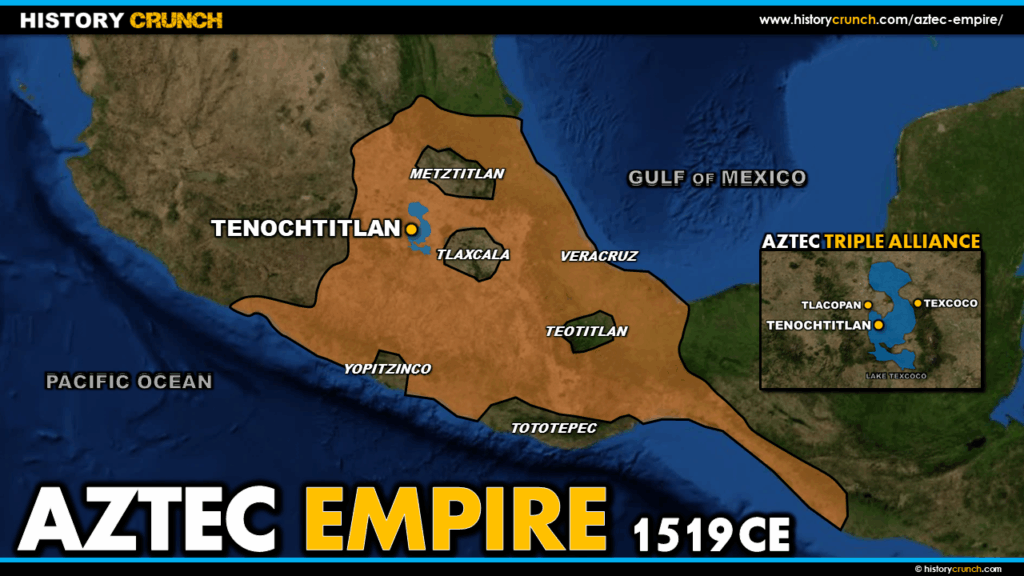
The Aztec Empire was a civilization in central Mexico that thrived in the time before the arrival of European explorers during the Age of Exploration. Throughout its history as a civilization the Aztec Empire expanded across much of central Mexico and other surrounding areas, to become the most dominant and powerful people in the region. Tenochtitlan, the main Aztec city (or altepetl), was the center of this vast empire. Aztec warfare was an important aspect of the expansion of the Aztec Empire throughout its history, as the Aztec warriors and tribute system helped the central leaders of Tenochtitlan control the surrounding areas.
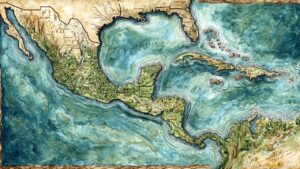
Throughout much of their history, the Aztec were a militaristic people who focused on the expansion of their empire. Following the Aztec’s founding and construction of Tenochtitlan in the Valley of Mexico in 1325, they quickly established their authority across the other societies in the valley. At the time the Valley of Mexico was populated by many different powerful civilizations, including: Chalco, Tepanec, Tlacopan, Texcoco, Culhuacan, and Chichimec. Several of these civilizations were also on the shores of Lake Texcoco, including the Culhuacan, which were on the south shore. Eventually, the Aztec Empire extended throughout most of central Mexico. As such, warfare was a central component of Aztec culture and Aztec warriors played an important role in Aztec society.
AZTEC WARFARE – IMPORTANCE TO THE AZTEC EMPIRE
In general, warfare served two main purposes in Aztec society. First, it was important to the territorial expansion of the Aztec Empire. As stated above, central Mexico was made of many different city-states during the rise to prominence of the Aztec civilization. The Aztec used their warriors and military might to defeat and suppress these different societies. The defeated city-states, which are referred to as ‘altepetl’, were allowed to maintain their current rulers and religion so long as they met several requirements, including: support the Aztec Empire and huey tlatoani of Tenochtitlan, pay tribute to Tenochtitlan, and include the Aztec god Huitzilopochtli in their own religious beliefs and practices. Any altepetl that did not follow these conditions were often severely punished by the powerful Aztec military which would attack the city and destroy temples and public buildings. While this allowed the Aztecs to become the most powerful society in all of Mesoamerica, it also caused them to create many enemies from the surrounding city-states that they controlled. As such, Aztec warfare was important in terms of maintaining the overall empire and ensuring the continuation of the tribute system which funneled goods into Tenochtitlan on a regular basis.
The second main purpose of warfare for the Aztec was for the objective of obtaining slaves or captives that could be sacrificed as part of the Aztec religious beliefs. The Aztec obtained the people for sacrifice in a number of different ways. Some were willingly sacrificed while others were prisoners in war. Regardless, the Aztec (and other Mesoamerican societies) viewed dying for the gods to be an honor.
AZTEC WARFARE – BATTLES AND FLOWER WARS
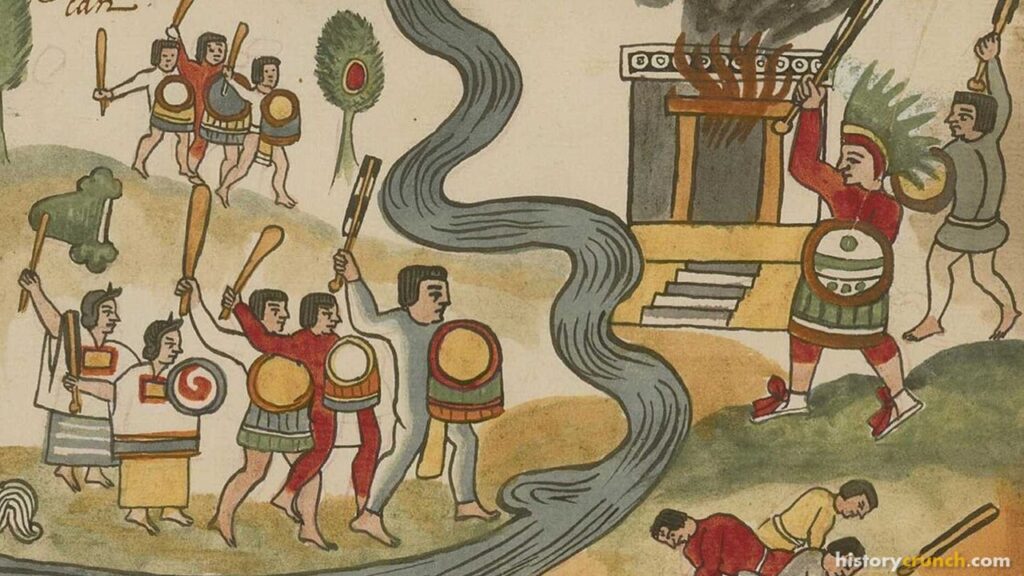
In terms of combat, battles were usually initiated at dawn and their beginning was marked by the start of smoke signals. Drums and other loud instruments were sometimes used to notify the many soldiers that the battle was to begin. The battle generally began with projectile type weapons such as slings, darts and arrows, after which the warriors would run into the battlefield to carry out hand-to-hand combat with melee weapons.
In addition, the Aztec often organized other battles with their rivals called the ‘Flower Wars’. These battles occurred at different times of the year than the campaigns of conquest that the Aztec used to expand their empire and were much different in their intent. The Flower Wars were generally organized battles in which members of the Triple Alliance including Aztecs faced off against rival city-states. The two sides would structure the battle such that each side has an equal number of warriors and used only close-combat weapons. The purpose of the Flower Wars was for warriors to practice and display their combat skills while also allowing them the ability to take prisoners for the purpose of sacrifice. A common participant of the Flower Wars was the Tlaxcala, who were a rival city-state to the Aztec. Historians believe the Flower Wars occurred primarily between 1450 and 1520 when Spanish conquistadors arrived into the region and famously overthrew the city of Tenochtitlan.
AZTEC WARFARE – SPANISH ACCOUNT
A Spanish account from the 16th century highlights Aztec warfare. Titled ‘Narrative of Some Things of New Spain and of the Great City of Temestitan’, the account is from an unknown Spanish conquistador who tells of his experiences in the New World and what he witnessed of the Aztec Empire.
“It is one of the most beautiful sights in the world to see them in their battle array because they keep formation wonderfully and are very handsome. Among them are extraordinary brave men who face death with absolute determination. I saw one of them defend himself courageously against two swift horses, and another against three and four, and when the Spanish horseman could not kill him one of the horsemen in desperation hurled his lance, which the Indian caught in the air, and fought with him for more than an hour, until two foot soldiers approached and wounded him with two or three arrows. He turned on one of the soldiers but the other grasped him from behind and stabbed him. During combat they sing and dance and sometimes give the wildest shouts and whistles imaginable, especially when they know they have the advantage. Anyone facing them for the first can be terrified by their screams and their ferocity.”