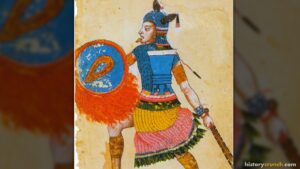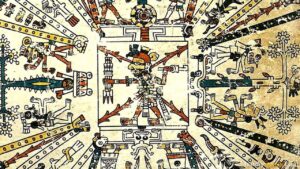
The impact of European diseases on the Aztec Empire was profound. Before the arrival of the Spanish conquistadors into Aztec territory, the Aztec Empire extended across much of the Valley of Mexico. In fact, the Aztec were the most dominant Mesoamerican civilization in the region. However, after the arrival of the Spanish also brought European diseases which devastated the Aztec people (along with other Indigenous populations).
THE ARRIVAL OF THE SPANISH IN THE AZTEC EMPIRE
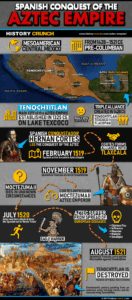
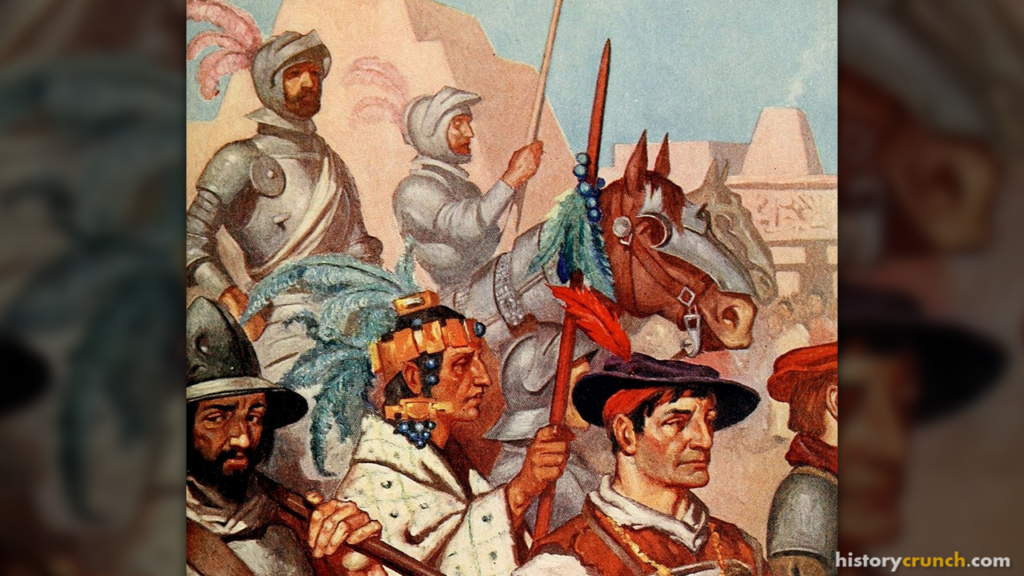
As part of the conquest the Spanish conquistadors, who were led by Hernan Cortés, took the Aztec leader Moctezuma II captive. Soon after, Moctezuma II was dead and the Aztec people retaliated against the Spanish forcing them to flee the Aztec capital. The Spanish referred to this event as ‘Noche Triste’. Following the events of Noche Triste, the Spanish fled to Tlaxcala, chased away by Aztec warriors. In Tlaxcala the Spanish recovered from their wounds, including Cortés and Alvarado who were both injured in the escape from Tenochtitlan. This time in Tlaxcala had impacts for both the Spanish and the Aztec, because the Spanish were able to resupply and received new Spanish troops while the Aztec suffered from the consequences of the spread of European diseases.
IMPACT OF EUROPEAN DISEASES ON THE AZTEC EMPIRE
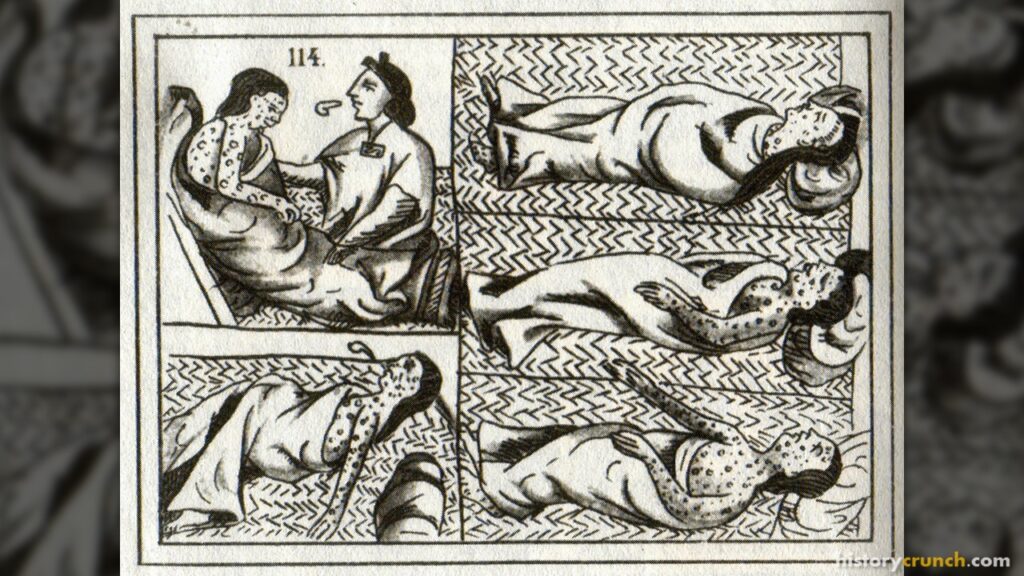
When European explorers arrived in the New World during the Age of Exploration they brought with them many different types of diseases that were not already present in the New World, including: smallpox, influenza, measles, malaria, chicken pox and yellow fever. These diseases were spread as part of the Columbian Exchange and led to the deaths of millions of people. In fact, some historians have suggested that as many as 90% of people in the New World died from the spread of European diseases. Since the indigenous people of the New World had never been exposed to these diseases before, they lacked the immunity and were susceptible to the deadly effects of the disease. One of the more significant European diseases was smallpox which is said to have had the largest impact on the indigenous people of the New World. For example, the Aztecs in Tenochtitlan supposedly underwent a mass spread of smallpox from September to November of 1520. Historians are unsure of how many of the Aztec people suffered and died from the disease at this time, but their newest tlatoani, Cuitláhuac, died from the disease. This is important because the Aztecs lacked stable leadership during the Spanish conquest of Tenochtitlan, since their leaders (Moctezuma II and Cuitláhuac) died. Regardless, the spread of smallpox throughout Tenochtitlan severely weakened the Aztec people and aided the Spanish in their final battle against the city. A new tlatoani, and the final one to rule over the Aztec Empire, Cuauhtémoc, was chosen in February of 1521.