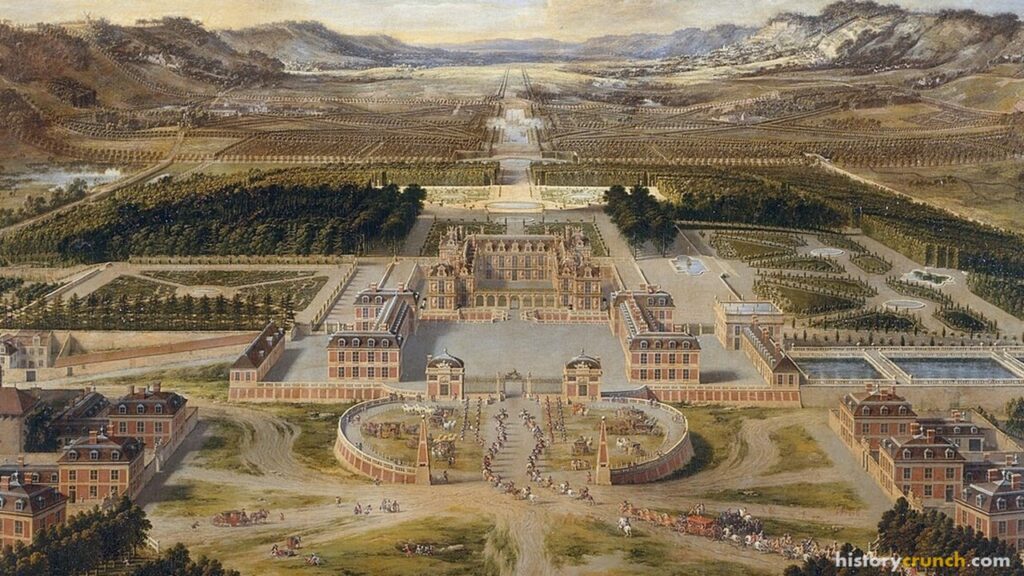
The Palace of Versailles, located near Paris, France was the royal residence of numerous French monarchs. Built in the 17th century, the palace is famous for its lavish architecture, beautiful gardens, and the stunning Hall of Mirrors. Versailles was a central aspect of political power in France until the events of the French Revolution, which saw the end of the French absolute monarchy. The Palace of Versailles remained important in the years after the revolution, and was notably used for the signing of the Treaty of Versailles in 1919. Today, the Palace of Versailles is recognized as a UNESCO World Heritage site, highlighting its significance in world history.
PALACE OF VERSAILLES – CONSTRUCTION
The Palace of Versailles was originally built by Louis XIII in 1623, as a hunting lodge. The palace was constructed out of brick and stone near the town of Versailles which was southwest of Paris. The palace saw extensive renovations and additions over the next 155 years, including major expansions during the reign of Louis XIV. For example, from 1678 to 1715, the palace saw the addition of two large wings and construction was undertaken to expand the royal apartments. In general, the palace today is fairly unchanged from 1715. The total cost of building and renovating the palace is difficult to ascertain, but recent studies have suggested that the construction of the Versailles Palace cost France over $2 billion USD in today’s value. In total, the palace has over 700 rooms, 1250 fireplaces, and is over 700,000 square feet in size.
PALACE OF VERSAILLES – FRENCH REVOLUTION
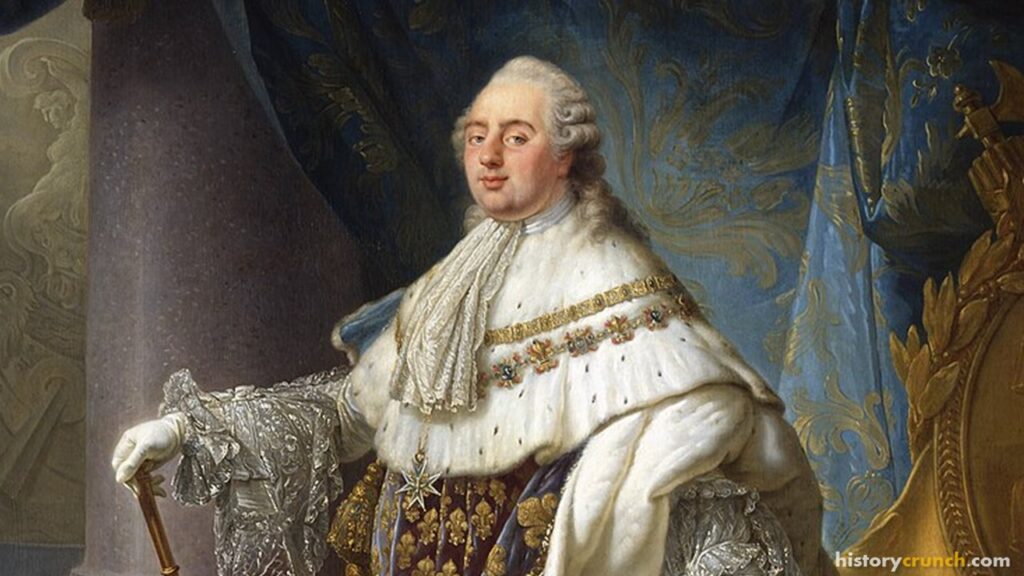
The French Revolution began in 1789, as the people of France pushed to overthrow the absolute monarchy of Louis XVI. There were several different causes of the revolution, but one of the most important was the economic crisis facing France at the time and the excesses of the monarchy of Louis XVI and Marie Antoinette.
During the French Revolution, the palace was important for several reasons. First, for the working class members of the Third Estate, the Palace of Versailles represented the excesses of the monarchy and the inequality between the Third Estate and the royalty. This was a central theme of the French Revolution, which saw France move from a society based on class privilege to one based on liberty for the individual and equality among all in society.
Second, the Palace of Versailles was an important site during the French Revolution. For example, as the revolution began in 1789, Louis XVI and his family left Paris for Versailles. Angered by the rising cost of bread and the king’s apparent lack of willingness to deal with the situation, thousands of Parisian women marched to Versailles in protest on October 5th 1789. Upon arriving, the women killed several of the king’s guards, putting their severed heads on pikes, and forced the royal family to return to Paris with them. After being forced back to Paris by the mob of women, Louis XVI and his family were effectively held prisoners by the revolutionaries and citizens of France.
PALACE OF VERSAILLES – WORLD WAR I
Following the French Revolution, the palace would still be the site of several significant historical events. The most important of all was the signing of the Treaty of Versailles, which formally ended World War I. The Treaty of Versailles was signed on June 28th, 1919 in the Hall of Mirrors at the Palace of Versailles. The palace was still one of the largest buildings in Europe at that time and was used because it provided the space needed to house all of the representatives of the participating nations.

PALACE OF VERSAILLES – SIGNIFICANCE
The Palace of Versailles is significant for a variety of reasons. First, the palce was as a symbol of the absolute power and excesses of the French monarchy, especially under Louis XIV, whom carried out numerous renovations and expansions. Also, the extravagance of the Palace of Versailles highlighted the growing disconnect between the monarchy and the common people of France, which ultimately helped contribue to the outbreak of the French Revolution.