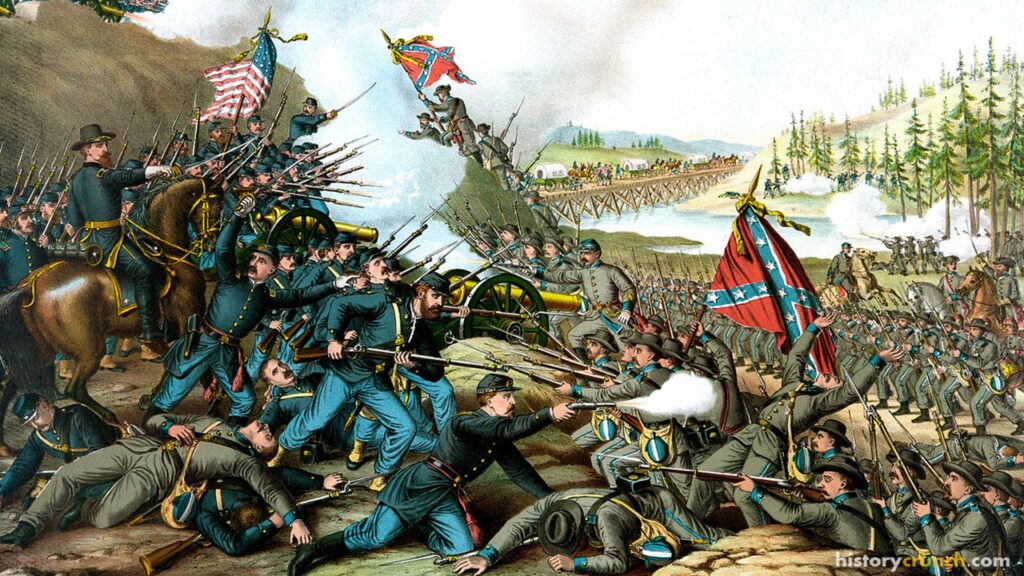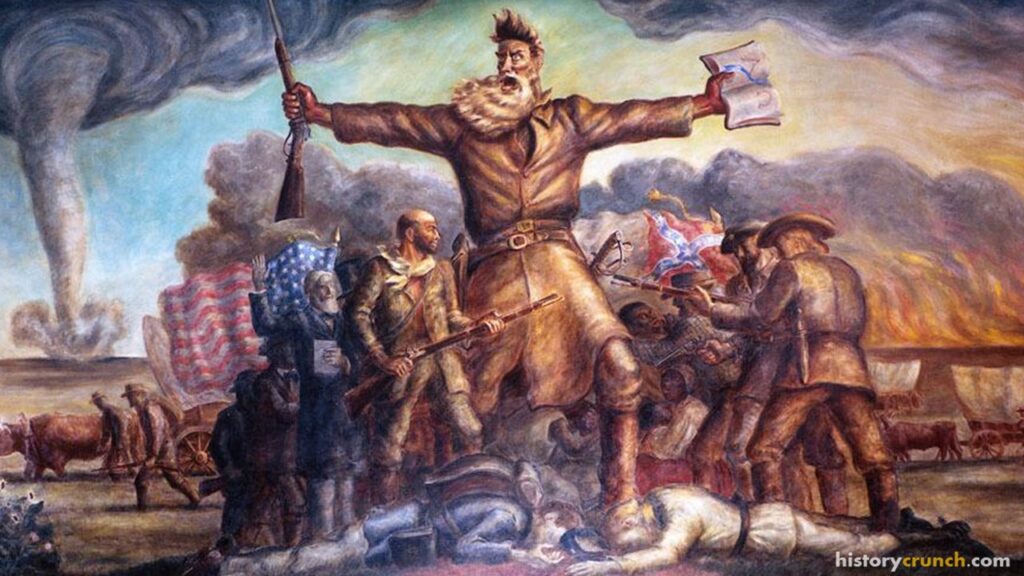
‘Bleeding Kansas’ is the term used to refer to the violence that erupted in the new state of Kansas after the introduction of the Kansas-Nebraska Act in 1854. As a historical event, Bleeding Kansas is very significant in terms of American history in the 19th century. For instance, the violence occurred between 1854 and 1861 and set the stage for the eventual outbreak of the American Civil War. At the heart of the issue, was a disagreement over the continuation of slavery in the United States. As such, Bleeding Kansas is often discussed when learning about other topics from the same timeframe, including: slavery in the United States, American Civil War, American Abolitionist Movement, life of John Brown, and the Kansas-Nebraska Act.
THE KANSAS-NEBRASKA ACT
As stated above, ‘Bleeding Kansas’ was a period of violent outbursts that occurred from 1854 until 1861. An immediate cause of this violence was the passage of the Kansas-Nebraska Act in 1854. The Kansas-Nebraska Act was passed in in the midst of growing tensions over the practise of slavery in the United States. At the time, the American Abolitionist Movement had been rising in popularity and slavery had become a central issue between the Northern and Southern states of the country. More specifically, the Northern states were the first to support the American Abolitionist Movement and by the end of the 18th century, most Northern states has some sort of anti-slavery legislation. However, the situation in the Southern states was much different, with most people supporting the practise of slavery well into the 19th century.
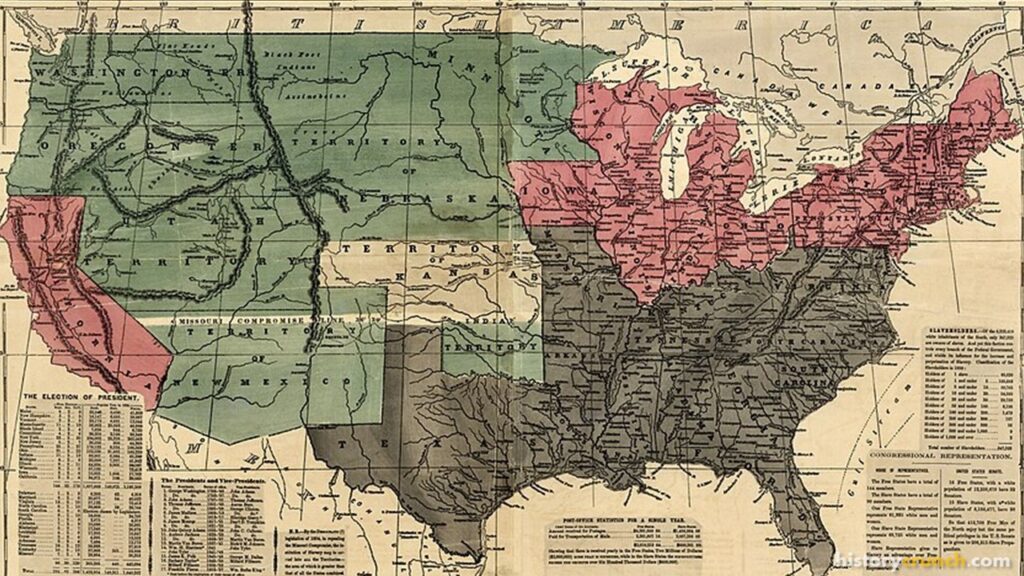
In general, the Kansas-Nebraska Act dealt with whether newly added states would be allowed to carry on the practise of slavery or not. At the time, the addition of both Kansas and Nebraska to the United States was considered important to completing the Transcontinental Railroad, but it enflamed the issue of slavery and led to the events of ‘Bleeding Kansas’.
MAJOR EVENTS OF ‘BLEEDING KANSAS’
The passage of the Kansas-Nebraska Act in 1854, created a situation wherein states were free to choose for themselves if they wanted to allow slavery. Since slavery was a controversial topic at the time due to the growth of the American Abolitionist Movement, Kansas became a central point of the debate over slavery. In fact, after the Kansas-Nebraska Act was passed, many settlers began migrating into the new state of Kansas in an effort to gain the opportunity to vote on the issue of slavery. More specifically, Southern settlers, mostly from Missouri, moved into Kansas in order to influence the vote in favor of slavery. On the other hand, Northern settlers, who were mostly abolitionists, moved into the state to try to prevent the spread of slavery. This situation began to create tensions in the new state and led to both sides arming themselves. In fact, the settlers on both sides were promoted to move to Kansas by organizations who wanted to influence the practise of slavery. As such, Kansas was essentially a ‘battleground’ for the divide that was emerging between the Northern and Southern states.
The first election for the Kansas territory was held on March 30th, 1855. This election was marked by controversy, as the Southern ‘pro-slavery’ settlers dominated the voted and elected a mostly pro-slavery legislature. However, many in Kansas at the time argued that the vote was fraudulent, due to Southerners from Missouri crossing into Kansas in order to vote. This was wrong, as you needed to be a resident in Kansas to vote. This issue eventually escalated to the point that anti-slavery residents in Kansas elected their own anti-slavery legislature. The two legislatures in the Kansas Territory highlighted the issues facing the country at the time and heightened the tensions surrounding slavery. These tensions eventually erupted in violence throughout Kansas.
The violent clashes were between Northerners (‘Free-Staters’) who were against slavery and Southerners (‘Border Ruffians’) who were in favor of slavery. This was ultimately due to ‘popular sovereignty’ and how it was used to decide the slave ownership status of the state. In general, ‘popular sovereignty’ was the central concept of the Kansas-Nebraska Act, which allowed for states to decide for themselves whether they should allow slavery or not. Essentially, both the ‘Free-Staters’ and the ‘Border Ruffians’ entered Kansas to try and win the vote on the issue of slavery in the new state. Violence between the two groups soon became common in the area as both tried to fight for control. As such, the event gained the name ‘Bleeding Kansas’ by the national media. John Brown, the famous abolitionist, participated in the fighting in Kansas. In fact, Brown and his sons helped carry out the Pottawatomie Massacre, which occurred from May 24th to May 25th in 1856. The massacre saw Brown and other anti-slavery supporters kill five pro-slavery settlers in Kansas.

There were several other major incidents of violence in 1856, in relation to Bleeding Kansas. In fact, 1856 was the peak of the violence between the pro-slavery and anti-slavery fighters. While the violence lessened in the years that followed, there were still several clashes that resulted in bloodshed between the years of 1857 and 1861. In fact, historians estimate that approximately 56 people died in Kansas during the years of Bleeding Kansas. Furthermore, the violence during the events of ‘Bleeding Kansas’ was a significant factor in the lead up to the outbreak of the American Civil War in 1861. As such, historians consider Bleeding Kansas to be one of the main causes of the Civil War.
Eventually, the pro-slavery movement in Kansas was defeated and Kansas was granted statehood. In fact, Kansas was officially admitted as a ‘free’ state on January 29th, 1861. The end of the issues surrounding Bleeding Kansas came after Kansas adopted its constitution, which is referred to as the Wyandotte Constitution. It was created in 1859 and represented the anti-slavery views of the Northern settlers that lived in the Kansas Territory. It was passed on October 4th, 1859, following the results of a referendum, in which most Kansas residents voted in its favor. The issue of slavery in Kansas was over, but the controversy around the topic was increasing for the country as a whole.
SIGNIFICANCE OF ‘BLEEDING KANSAS’
As stated previously, Bleeding Kansas was a significant event in American history and played an important role in many other events in the 19th century. For instance, Bleeding Kansas is considered a major event in relation to the outbreak of the Civil War. The violence in Kansas was a preview of the violence that emerged with the start of the Civil War in 1861. As well, Bleeding Kansas highlighted the differing views on slavery and its importance to the United States at the time. Also, historians consider Bleeding Kansas to be an important event in the history of the American Abolitionist Movement, as it was trying to stop the practise of slavery in the United States. This is especially true when discussing important abolitionists such as John Brown. He is a significant figure in American history from the time period and Bleeding Kansas was an important event in his own life.