Soviet expansionism in the Cold War was significant because it increased global tensions and caused the United States and its allies to adopt the policy of containment to resist the spread of communism. The Cold War lasted from the end of World War II in 1945 until the early 1990s, and was one of the most significant events of the 20th century. At its heart, the Cold War was essentially a ‘face off’ or competition between the United States and the Soviet Union in the years following World War II. This conflict between the two major superpowers led to different foreign policy strategies, including the policy of expansionism.
SOVIET EXPANSIONISM IN THE COLD WAR – SUMMARY
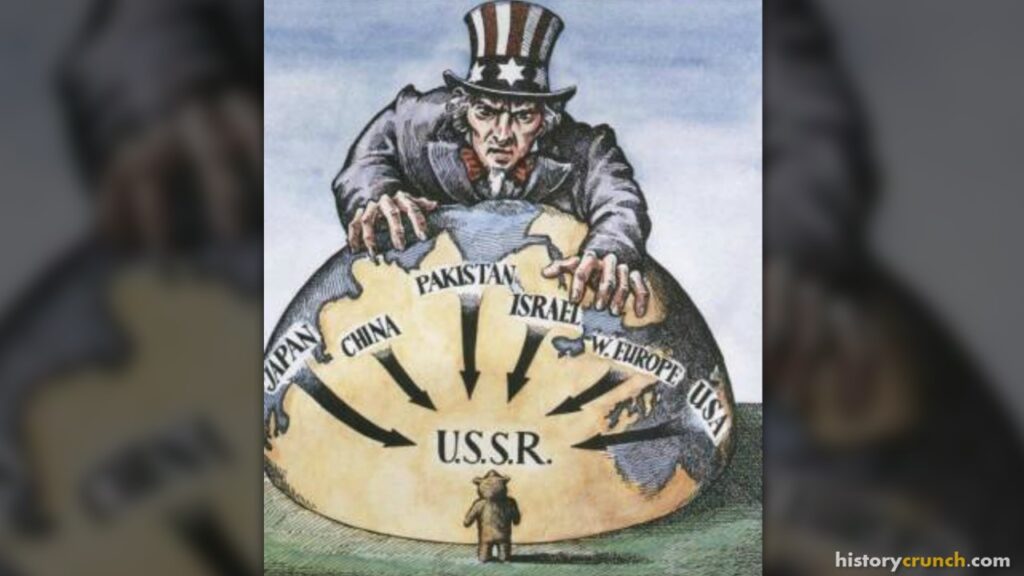
Expansionism as a foreign policy strategy was used by the Soviet Union in the timeframe of the Cold War. For instance, the Soviet Union sought to spread communism and its influence to other regions of the world in the years following the end of World War II. This is important, because in the Cold War both the United States and the Soviet Union worked to spread their ‘sphere of influence’. Both wanted to expand their influence around the world in order to gain support for their separate ideologies, which included communism (for the Soviets) and liberalism (for the Americans). Soviet expansionism in the Cold War was often met with containment on the part of the United States, because the Americans hoped to stop the spread of communism. As such, Soviet expansionism and American containment led to many different examples of conflict between the two superpowers, which heightened tensions throughout the 20th century.
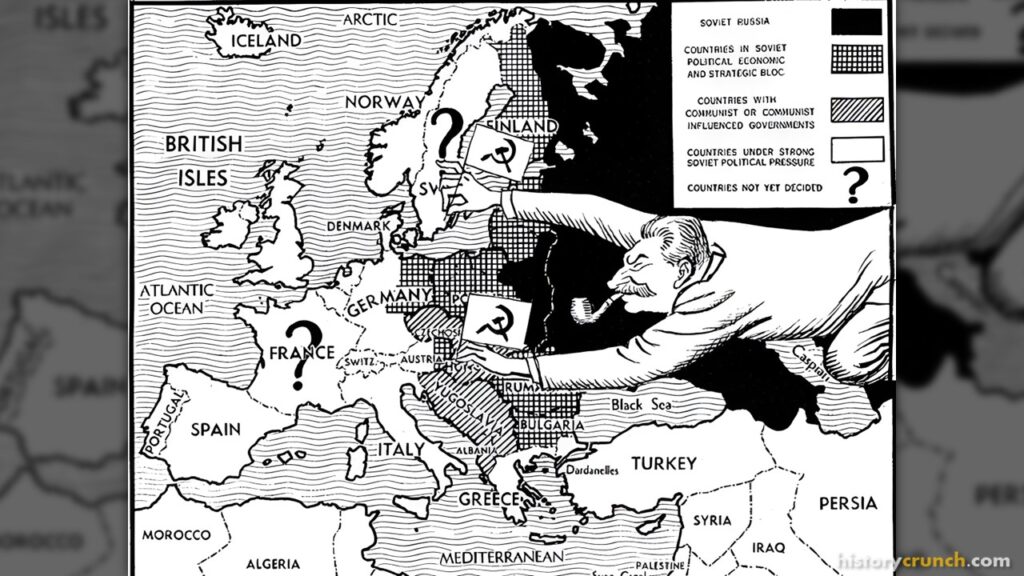
As stated above, the Soviet Union used the foreign policy of expansionism regularly throughout the timeframe of the Cold War. They did this in the hopes of gaining access to new territory and influence over specific regions, which they considered to be economically, politically and militarily important. One of the first examples of Soviet expansionism in the Cold War was the spread of Soviet influence in Eastern Europe at the end of World War II. During the Second World War, the Soviet Union was allied with the other Allied Powers, which included: France, Britain and the United States. As such, near the end of World War II, when Nazi Germany began to lose the war, each of the Allied armies pushed in towards German territory. For their part, the Soviet Army captured large sections of Eastern Europe including the Eastern half of Germany. While the other Allied Powers (such as Britain and the United States) liberated Western Europe, the Soviet Union chose to maintain control over the territories in Eastern Europe. Winston Churchill, the famous Prime Minister of Britain during World War II, famously referred to this as an ‘Iron Curtain’. In fact, the Soviet Union held control over Eastern Germany until the early 1990s, when the Soviet Union collapsed, and the two halves of Germany were reunited.
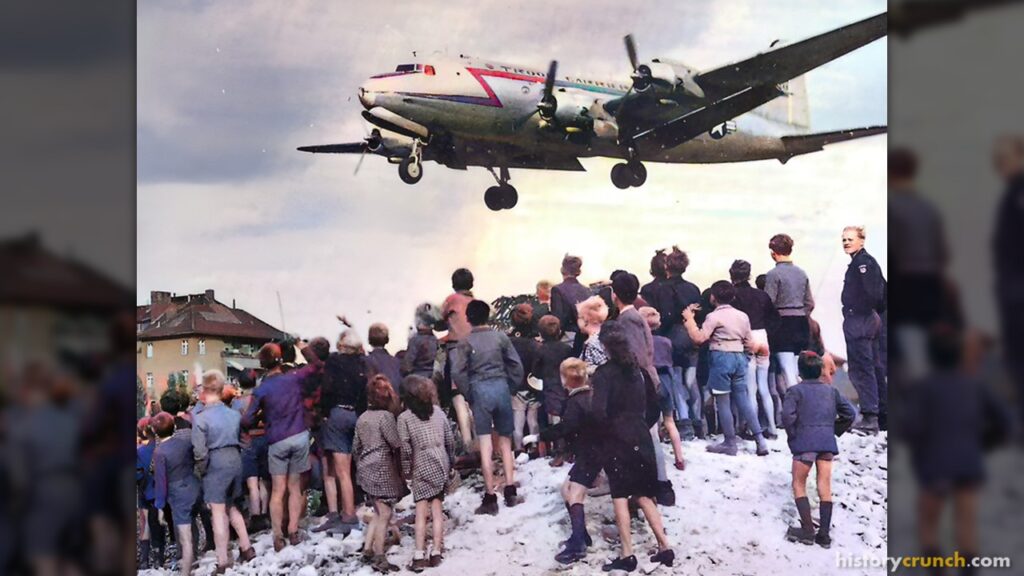
Throughout the Cold War, there were several more examples of Soviet expansionism. In each of the examples, the Soviet Union was attempting to increase its influence and gain an advantage over the United States. These examples include: Berlin Blockade, Korean War and the Vietnam War. In the Berlin Blockade, which took place from 1948 until 1949, the Soviet Union was trying to gain control over Western Berlin. Berlin was the German capital, and had been split into four zones by the Allied Powers, at the end of World War II. However, the Soviet leader, Joseph Stalin, was unhappy with this arrangement and sought to control the entire city of Berlin. It led to a major conflict, in which the United States (and its allies) ‘fought’ back against the Soviet expansion attempt with the events of the Berlin Airlift. Second, the two proxy wars in Korea and Vietnam involved the Soviet Union trying to expand its influence into regions in the South Pacific areas of Asia. This worried the United States and led to the events of both the wars, which saw American soldiers invade each of the two countries. In fact, the wars in Korea and Vietnam were some of the largest conflicts following the events of World War II.