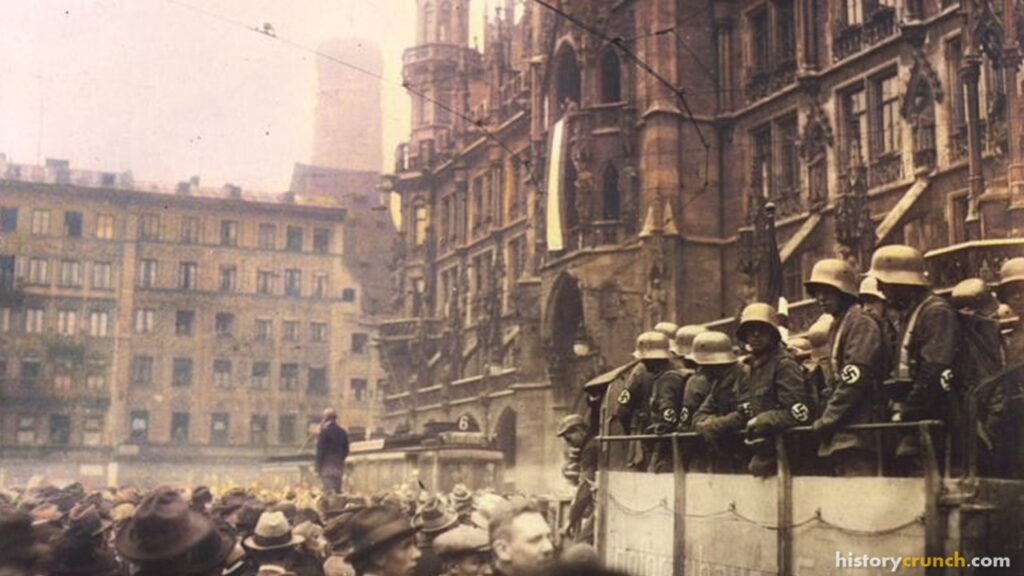
The Beer Hall Putsch was a failed attempt by Adolf Hitler and the Nazi Party to overthrow the government (Weimar Republic) of Germany in November of 1923. It took place in the city of Munich and was an important event in the rise to power of Adolf Hitler. At a time, Germany was suffering from political instability and an economic crisis that resulted from hyperinflation following the agreement of the Treaty of Versailles and the end of World War I. Historians consider the Beer Hall Putsch to be important to understanding the history of Nazi Germany and the life of Adolf Hitler.
BEER HALL PUTSCH – BACKGROUND
As stated above, the Beer Hall Putsch was an important event in the rise to power of Adolf Hitler and the Nazi Party. As such, it is first important to understand the events that led to or caused the Beer Hall Putsch. Historians have identified several causes, including: economic crisis, political instability, and the influence of Benito Mussolini in Italy.
Economically, Germany was suffering from hyperinflation and massive unemployment following World War I. The terms of the Treaty of Versailles had a profound impact on Germany in the years after the First World War. As such, many Germans resented the terms of the Treaty of Versailles, and sought to end them. This was important because Hitler and the Nazi Party were openly against the Treaty of Versailles and sought to end its impacts on Germany. This created the perfect economic climate in Germany, wherein the Nazi Party believed it could seize the reigns of power and overthrow the German government (Weimar Republic).
Politically, the democratic Weimar government was widely seen as ineffective and unpopular across German society. As mentioned in the previous paragraph, Germany was struggling economically in the years after World War I, and for many Germans they blamed these hardships on the leadership of the Weimar Republic. As such, this created a unstable political environment where people were angry and looking for change. This was especially true among right-wing nationalists like Hitler who advocated for a stronger government based on authoritarianism.
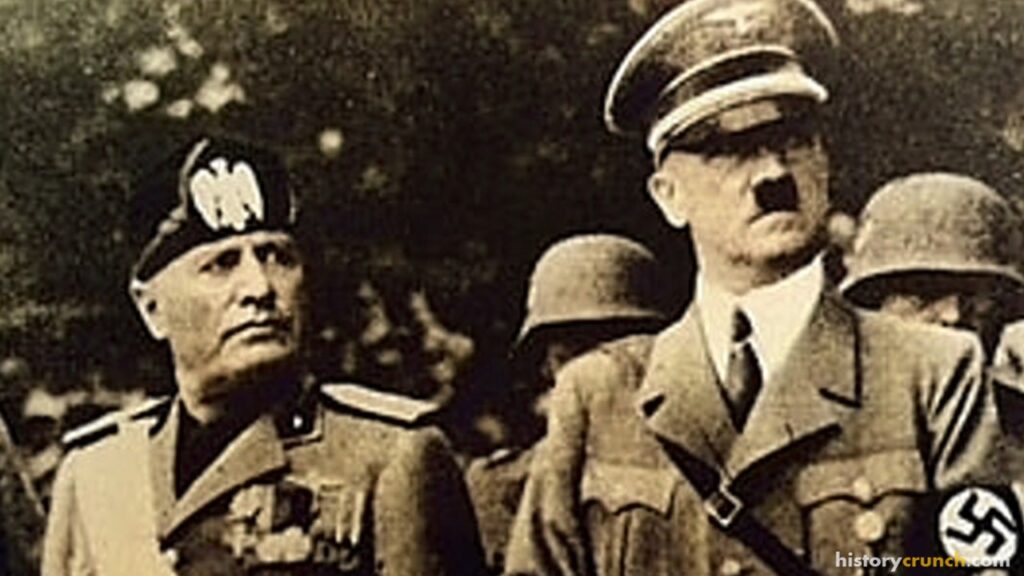
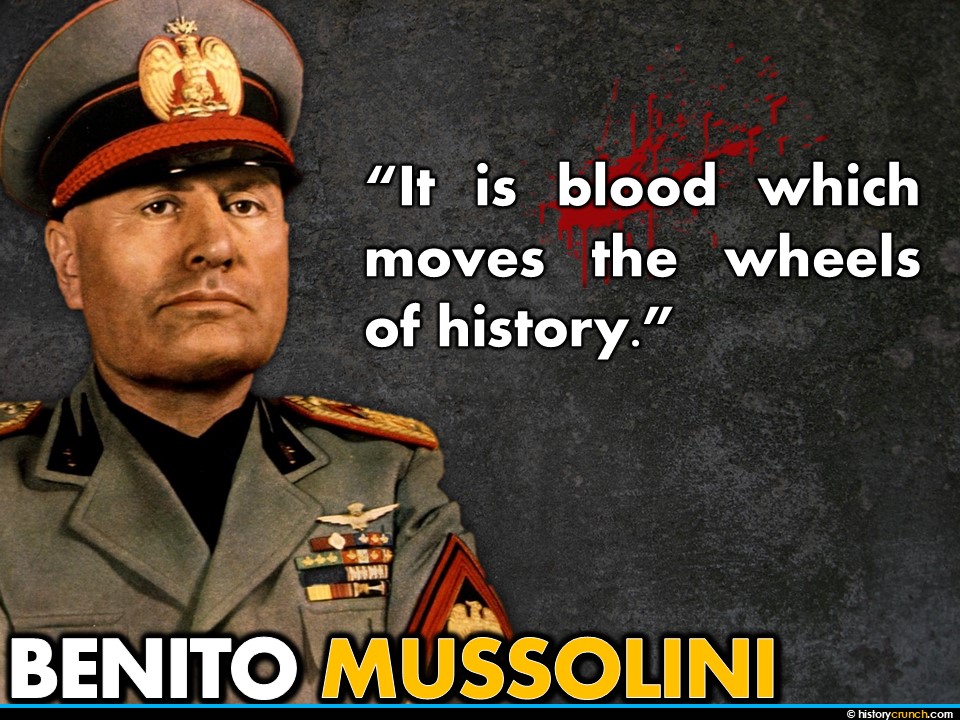
Finally, the actions of Benito Mussolini in Italy had an impact on the Beer Hall Putsch. This is because Hitler was inspired by Benito Mussolini’s March on Rome in 1922. This was when Mussolini seized power in Italy through a coup d’etat, which is violent overthrow of the government. Mussolini did this as a means of gaining power for himself and his fascist movement. As such, Hitler and the Nazi Party witnessed this event and were inspired to carry out their own coup d’etat in Germany.
BEER HALL PUTSCH – SUMMARY
Inspired partially by Benito Mussolini in Italy, Adolf Hitler decided in 1923 that the Nazi Party would need to seize power in Germany through the use of force. In fact, Hitler believed that a violent seizure of power would spark a national uprising in favor of the Nazi Party. As such, on the evening of November 8, 1923, Hitler and hundreds of Nazi Stormtroopers (SA) stormed the Bürgerbräukeller, which was a large beer hall in the Bavaria region of Germany. It was there that Hitler announced the start of a ‘national revolution’ and took Bavarian officials hostage, hoping to gain their support for his ‘March on Berlin’. Essentially, Hitler and the Nazi Party were attempting to overrun the German government and assume control for itself.
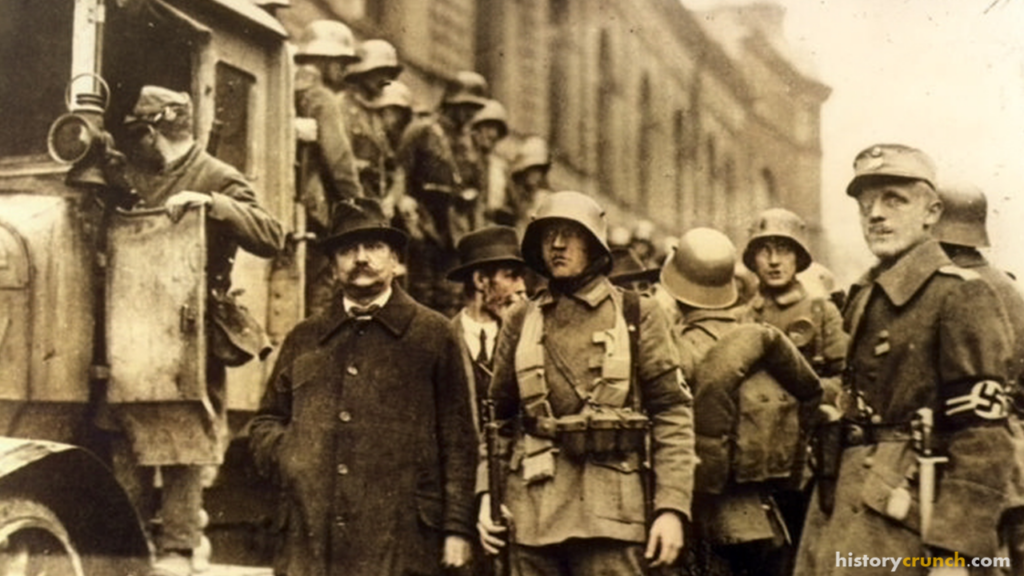
However, the Beer Hall Putsch quickly failed. By the next day, the Bavarian authorities had regained control and organized a counter-response to the violence of the Nazis. As Hitler and around 2,000 Nazis marched through Munich, they were met by police gunfire, which resulted in the deaths of 16 Nazis and 4 police officers. Hitler was arrested just two days later and charged with treason.
BEER HALL PUTSCH – OUTCOME AND SIGNIFICANCE
The Beer Hall Putsch was a failure and Hitler was put on trial for treason. In a rather spectacular trial in which Hitler endeavoured to turn the tables and put democracy and the Weimar Republic (German Government) on trial as traitors to the German people, he was convicted and sentenced to five years imprisonment. The trial also gave Hitler national publicity and turned him into a symbolic figure for far-right movements in Germany. As well, Hitler was actually well-treated in prison. He had a room with a view of the river, wore a tie, received visitors to his chambers and was permitted the use of a private secretary. He was eventually paroled, served only a little over eight months after his sentencing in early 1924.
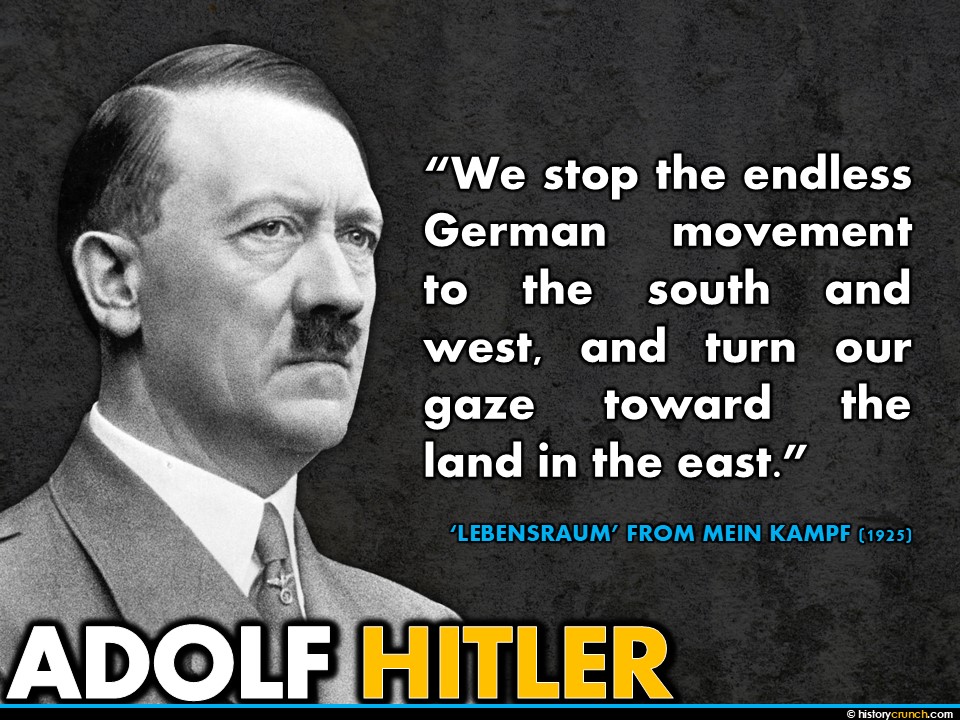
Hitler used the time in prison to consider his political strategy and write the first volume of his book Mein Kampf (My Struggle), which was an autobiographical account of his movement and its underlying ideology. Hitler’s ideology at the time centered on extreme German nationalism, anti-Semitism, anti-communism and Lebensraum (Living Space).
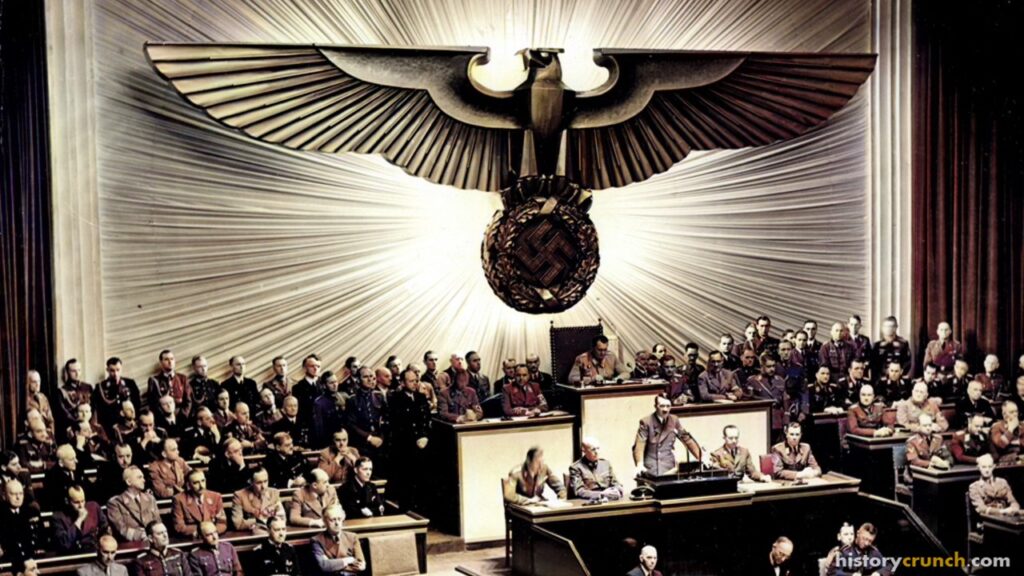
The Beer Hall Putsch is significant because it was the Nazi Party’s first major attempt to gain power. The failure taught Hitler that power in Germany would have to be achieved legally, not through force, leading him to later pursue a strategy of gaining influence through elections and the manipulation of democratic institutions. Furthermore, the events of the Beer Hall Putsch were later used by the Nazis as a tool of propaganda. For example, the Nazis who were killed in the clash with the police were celebrated as ‘martyrs’ in Nazi propaganda.
Overall, the Beer Hall Putsch helped lay the foundation for Hitler’s eventual rise to power and the events that followed, such as: the rise to power of the Nazi Party, World War II and the Holocaust.