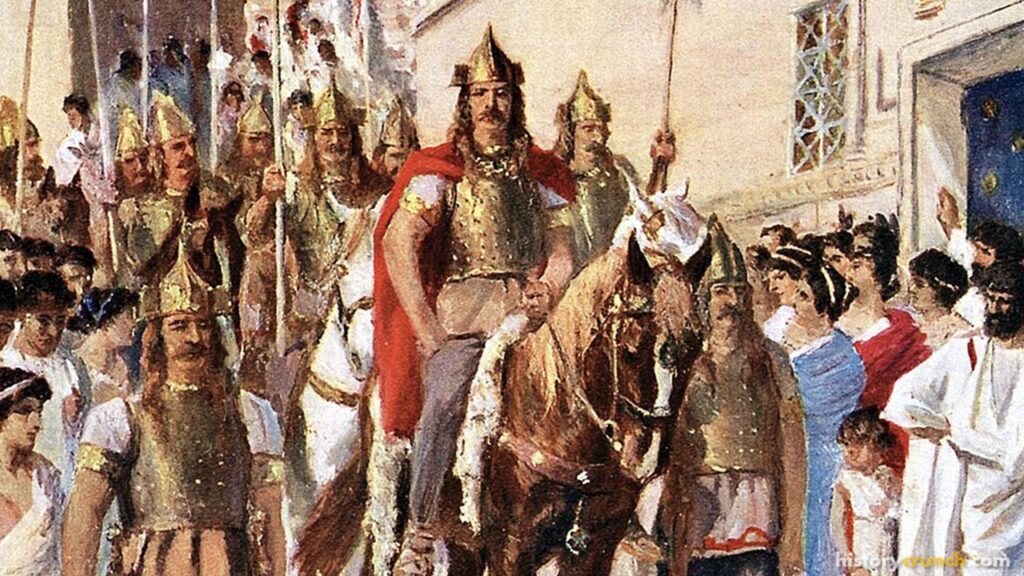
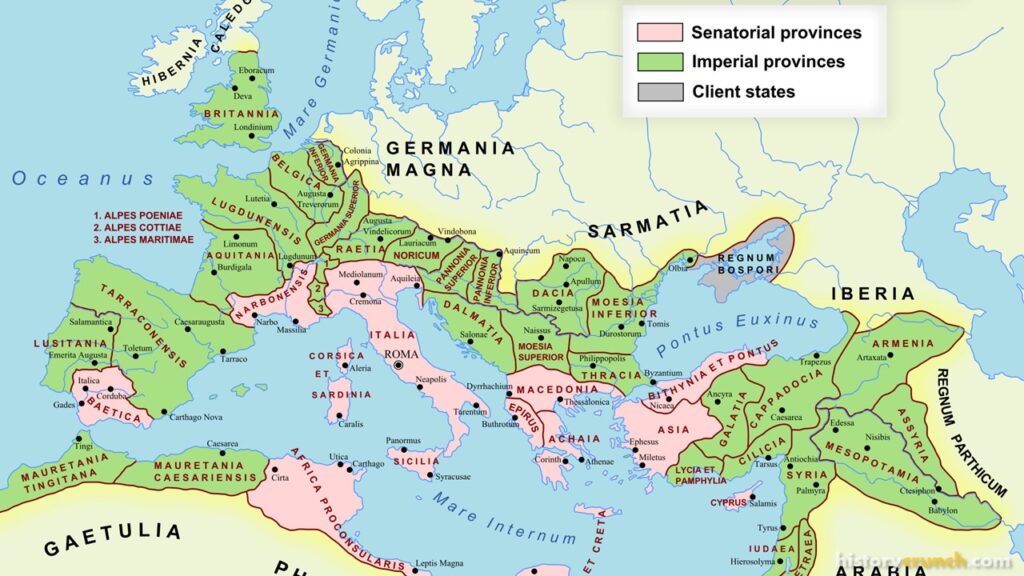
The collapse of Ancient Rome is one of the most significant events in world history. At its height the Roman Empire included much of the territory that is now modern day Western Europe. The empire stretched out from modern day Italy and consisted of land in the following regions: England, Spain, France, Greece, the Middle East and the North African coastal region. Historians have studied the decline and collapse of Ancient Rome and determined that it was the result of a combination of factors that gradually weakened the empire’s strength until it could no longer survive.
In fact, in the fifth century the Roman Empire fell after nearly 500 years as the world’s greatest power. Historians have developed several theories or reasons for the collapse of the Roman Empire, including: the division of the Roman Empire, the vast size and regions of the Roman Empire, the growth of Christianity, economic crisis and the role of outside invaders.
COLLAPSE OF ANCIENT ROME – A DIVIDED EMPIRE
In the 330 AD, Roman Emperor Constantine divided the empire into two halves. The western half was based out of Rome while the eastern half was based out of Constantinople – a city that Constantine named after himself. The division made the empire easier to govern in the short term, especially considering the crisis that Rome faced at the time, such as: economic instability and barbarian invasions. However, over time the two halves of the empire drifted apart.
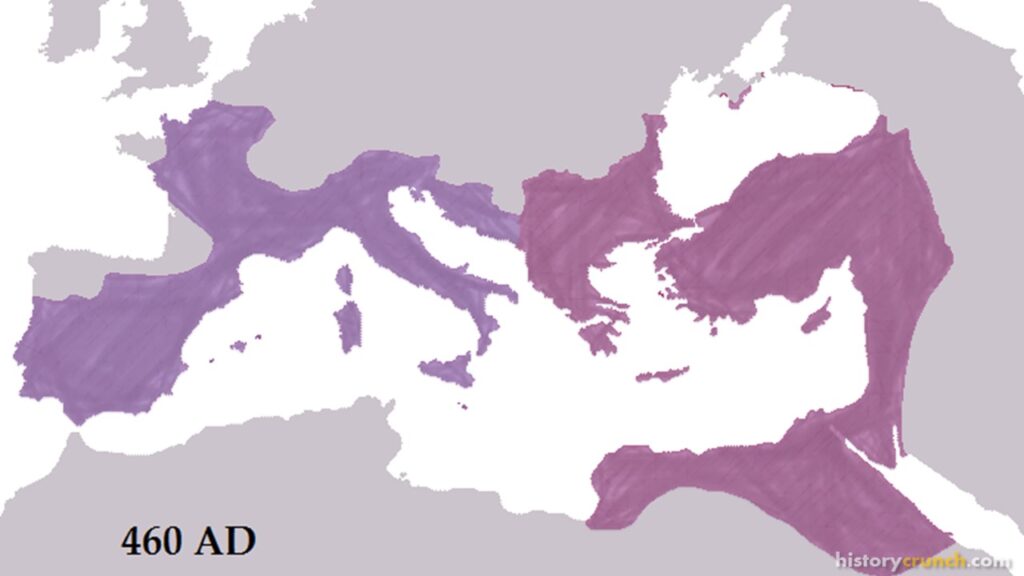
The two halves of the empire did not work together to combat outside threats, and the two often argued over resources and how best to run the overall Roman Empire. As time passed, the Greek-speaking Eastern Empire grew in wealth and prospered while the Latin-speaking West struggled in economic crisis. In fact, the western half of the empire fell in 476 with the Goth invasion of Rome while the eastern half continued on for centuries as the Byzantine Empire. Therefore, when talking about the fall of the Roman Empire it is important to note that the western half of the empire experienced the first and most dramatic collapse.
COLLAPSE OF ANCIENT ROME – AN OVEREXTENDED EMPIRE
At its height, the Roman Empire was one of the largest empires in human history. It stretched from Western Europe and the Atlantic Ocean to territory in the Middle East and south to areas of Northern Africa. The vastness of the empire made it difficult for the rulers in Rome to effectively control all areas of the empire. Even with their excellent road systems, the Romans were unable to communicate effectively. Therefore, Rome struggled to spread out its troops and resources to defend its borders from the invasions of rival “barbaric” tribes.
COLLAPSE OF ANCIENT ROME – GROWTH OF CHRISTIANITY
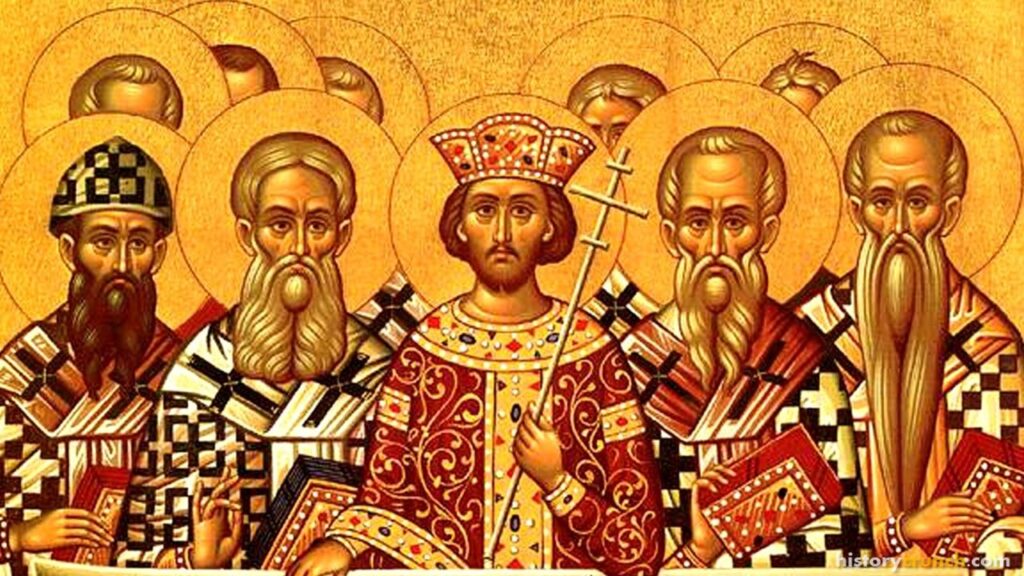
The spread of Christianity also played a role in the fall of the Roman Empire. Christianity monotheistic, which means is involved a belief in one god. This was different from the traditional Roman religion, which was polytheistic, meaning a belief in many gods. For much of Rome’s history, Christianity was opposed and Christians were even persecuted because their beliefs were different from traditional Roman religion.
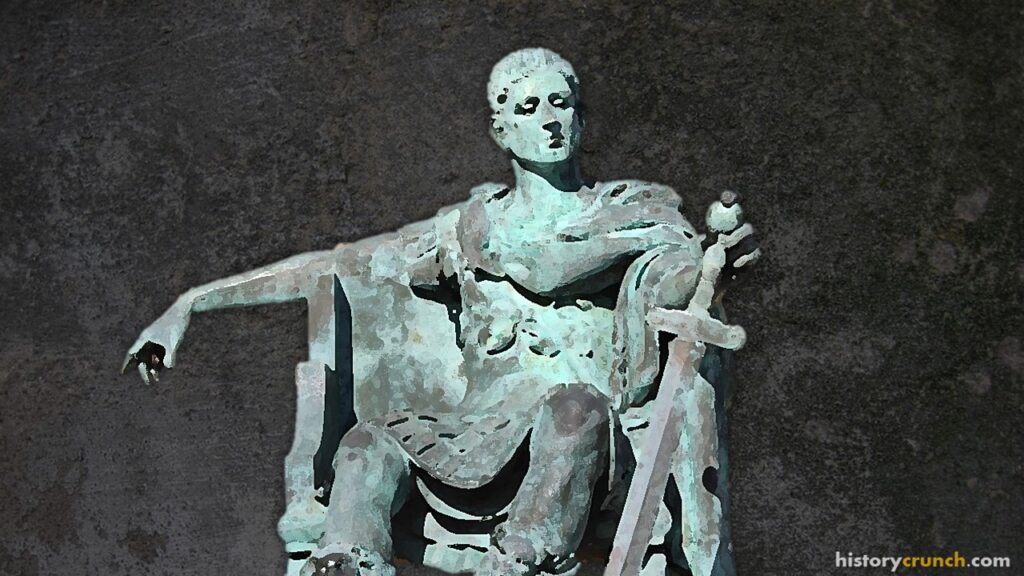
However, In 313 AD, the role of Christianity in Rome would take a dramatic change, and the religion would spread throughout the empire. Roman emperor Constantine ended all persecution and declared that Christianity should be tolerated. This would be taken further when decades later Christianity became the official religion of the Roman Empire.
By approving Christianity, the Roman Empire caused the downfall of its own religious traditions and began a dramatic change throughout its empire. For example, within the Roman Empire the emperor was considered to be a god, whoever, the Christian belief in one god — who was not the emperor — weakened the authority and credibility of the emperor and led to the downfall of the overall empire.
COLLAPSE OF ANCIENT ROME – ECONOMIC CRISIS
This theory holds that the Roman Empire experienced years of economic crisis that weakened it. The empire had been involved in constant wars and overspending had significantly lessened its reserves and financial stability. In response to the overspending, the empire imposed higher taxation on its citizens to try to raise more money for the government. This taxation system and inflation had widened the gap between rich and poor, which caused a divide in Roman society.
Another economic problem to hit Rome was the lack of new workers and territories. Rome’s economy depended on slaves to work in its fields and as laborers. Many of these slaves came from conquered territories that Rome captured as it expanded its empire. Its military might had traditionally provided a fresh supply of conquered peoples to put to work. However, Roman expansion began to slow in the later years of the history of the empire. When expansion slowed in the second century, Rome’s supply of slaves and other war treasures began to dry up.
A final economic concern for the Roman Empire was caused by the invading “barbarian” tribes. The invading tribes caused the empire to become separated in parts and severely limited the ability of the Roman Empire to carry out trade. For example, in the fifth century, the Vandals claimed North Africa and began disrupting the empire’s trade. With its economy faltering the Empire began to lose its control over its territory in Europe.
COLLAPSE OF ANCIENT ROME – OUTSIDE INVADERS
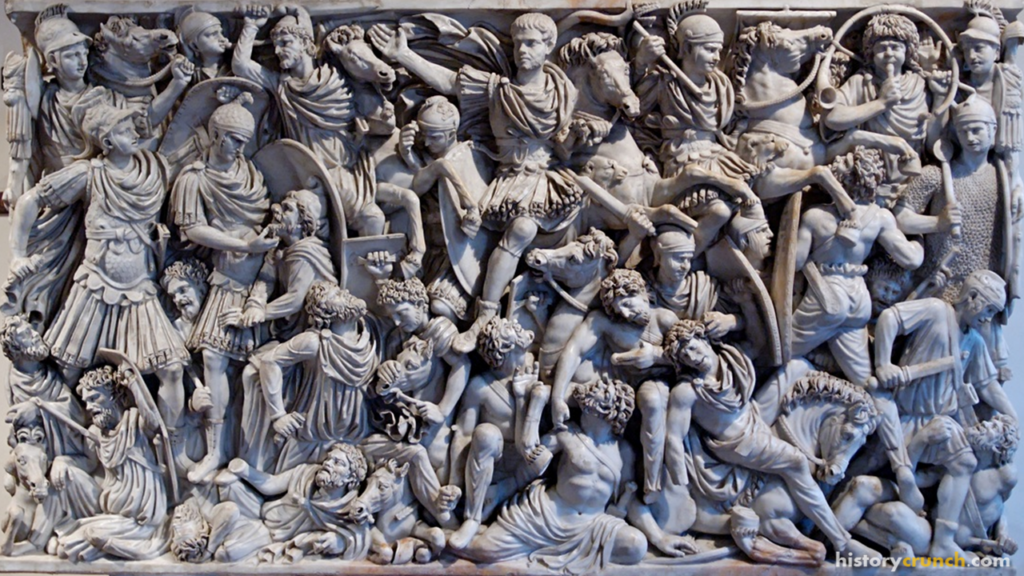
A popular theory for the fall of the Roman Empire is the repeated invasions of Roman territory in Europe by Germanic Barbarian tribes. For example, the Roman Empire was attacked by tribes such as the Goths and the Vandals. Rome had tangled with these Germanic tribes for centuries, but by 300 AD groups like the Goths had moved beyond the Empire’s borders. The Goths wanted to move south into parts of Europe that experienced a better climate that would assist their farming practices. This brought the Goths into conflict with the Romans.
The Romans experienced an attack from Germanic tribes in the early 5th century. In 410 the city of Rome was successfully invaded and defeated by the Goth King, Alaric. Alaric realized that the Roman Army was so thinly spread, that the city of Rome would be relatively easy to invade. Alaric moved cautiously south but in AD 410 he captured the city of Rome. Roman held territory in Spain, France, northern Africa and England would all eventually fall to the various tribes that attacked them.
Finally, in 476 AD, Germanic leader Odoacer staged a revolt against the Roman Empire and caused the end of the rule of Roman Emperor Romulus Augustulus. Since no Roman Emperor ever ruled again from within Italy, many historians consider 476 AD to be the date in which the western portion of the Roman Empire collapsed.