Jesus Christ (who is also known as Jesus of Nazareth) is the most important figure of Christianity. He was a Jewish religious leader and preacher from the timeframe of the 1st century which is when Christianity first emerged from Judaism in the Middle East.
JESUS CHRIST – SIGNIFICANCE
Jesus Christ is believed to have lived from 4 BCE to approximately 30 CE. Christianity is centered on the teachings and life of Christ. Our understanding of the life of Christ today comes from the accounts in the Gospels. These were written by four of the twelve disciples, which were the people who followed Jesus and helped to spread his teachings. These twelve disciples believed him to be what is referred to in Christian ideology as a Messiah, or the chosen prophet talked about in the Old Testament teachings. In the Gospels we learn that Jesus taught people during his life and built a considerable following among the poorest. As part of his teachings, Jesus taught his followers to reject sin and instead follow the code passed down in the Sermon on the Mount. The Sermon on the Mount was a series of teachings on morals found in the Gospel of Matthew. The purpose of Jesus’s teachings was in preparation for Judgement Day when God was said to reward the righteous and condemn the sinners. These teachings and writings later were solidified into a book known today as the Holy Bible. Christ’s following caused anger among some people at the time and ultimately led to his death. For instance, Jewish religious leaders at the time disagreed with Jesus and his teachings. As a result, they arrested him and pressured the Roman government to crucify him (meaning that he was nailed to a large wooden stake). The symbolism of Jesus being crucified on the cross is very important to Christians today and has become of well known symbol across the world.
JESUS CHRIST – BELIEFS
There are several significant factors related to the beliefs of Christians. First, Christians believe that Jesus is the Son of God and that he died for the sins of humanity. As such, Christian believe that in order to obtain eternal life they must accept and believe in the death and resurrection of Jesus. The death and resurrection of Jesus is one of the most important factors of Christian faith. Christ’s following at the time caused anger among some people and ultimately led to his death. According to the New Testament, his body was placed within a tomb shortly after his death and resurrected (rose to heaven) three days later. This belief about the life, death, and rising again of Jesus is why the cross is also considered an important part of the religion, as it signifies his death for the sins of the world.
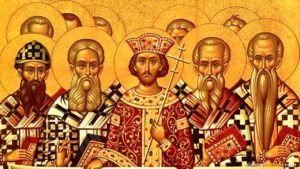
Furthermore, Christians believe that Jesus will return, and that judgement will be passed on humanity. Judgement Day will guarantee some people’s salvation while others will be damned. As such, Christians believe in an afterlife with either eternal life or eternal damnation. For example, the following passage is from the Nicene Creed and is a widely held Christian belief: “…he ascended into heaven and is seated at the right hand of the Father. He will come again in his glory to judge the living and the dead, and his kingdom will have no end. … We look for the resurrection of the dead, and the life of the world to come.” The Nicene Creed originates from the Council of Nicaea in 325 CE. The Council was called by the Roman Emperor Constantine I and led to the first agreed upon Christian doctrine.
Today, the teachings and life of Jesus Christ remains vitally important to Christians around the world. For example, the tradition of the Eucharist is very important in Christianity. The Eucharist which is also known as Holy Communion is a Christian rite which was began by Jesus Christ during the Last Supper. The Last Supper was the final meal that, in the Gospel accounts, Jesus shared with his Apostles in Jerusalem before his death by crucifixion. At the Last Supper Jesus Christ gave his disciples bread and wine during the meal. He then stated to his followers to ‘do this in memory of me’ while referring to the bread as ‘my body’ and the wine as ‘my blood’. The tradition of the Eucharistic continues throughout churches still today and by doing so Christians remember Christ’s sacrifice on the cross.