The Holy Bible is a collection of writings (or scriptures) that believers in Judaism and Christianity consider to be important to their faith. The Bible is comprised of two major sections called the Old Testament and the New Testament.
HOLY BIBLE – OLD TESTAMENT
The Old Testament is the first part of the Bible and is based on the Hebrew Bible which is considered by both Jewish people and Christians to be the word of God. It was written by a various number of authors over several centuries. However, it is though to be much older than the New Testament and possibly dates as far back as 1500 BCE. The original text of the Old Testament was written in Hebrew. The content of the Old Testament focuses on the creation of the world by God as well as other topics, such as: faith, ethics, morals, salvation, and more.
HOLY BIBLE – NEW TESTAMENT
The New Testament is the second part of the Christian Bible and focuses on the life and teachings of Jesus Christ. Similar to the Old Testament, the New Testament was written by various authors over several centuries. More specifically, the writing in the New Testament is considered to have come from the first two centuries with the latest work dated around 120 CE. It was first written in Greek, which was the common language around the Mediterranean Sea at the time. Today, the New Testament is considered especially important to Christianity because of its focus on Jesus Christ. Christianity first emerged from Judaism in the Middle East in the mid-1st century. It began in the century after the death of Jesus Christ of Nazareth by crucifixion. Our understanding of the life of Christ today comes from the accounts in the Gospels. These were written by four of the twelve disciples, which were the people who followed Jesus and helped to spread his teachings. These twelve disciples believed him to be what is referred to in Christian ideology as a Messiah, or the chosen prophet talked about in the Old Testament teachings. In the Gospels we learn that Jesus taught people during his life and built a considerable following among the poorest. As part of his teachings, Jesus taught his followers to reject sin and instead follow the code passed down in the Sermon on the Mount. The Sermon on the Mount was a series of teachings on morals found in the Gospel of Matthew. The purpose of Jesus’s teachings was in preparation for Judgement Day when God was said to reward the righteous and condemn the sinners. These teachings and writings later were solidified into a book known today as the Holy Bible.
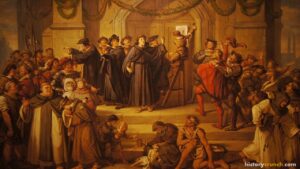
While not all Christians believe in the same interpretation of the life of Jesus Christ and the Trinity, they are central components of Christian faith. The variation in belief is due to the long and turbulent history of Christianity. For example, different events such as the Protest Reformation caused the Church to divide at times. This has led to several different denominations of faith with each having a slightly different interpretation of the Holy Bible. With that said, for most Christians, the Old Testament and the New Testament of the Holy Bible are representative of the word of God. As a result, the Gospels represented in the Bible are held in high regard.