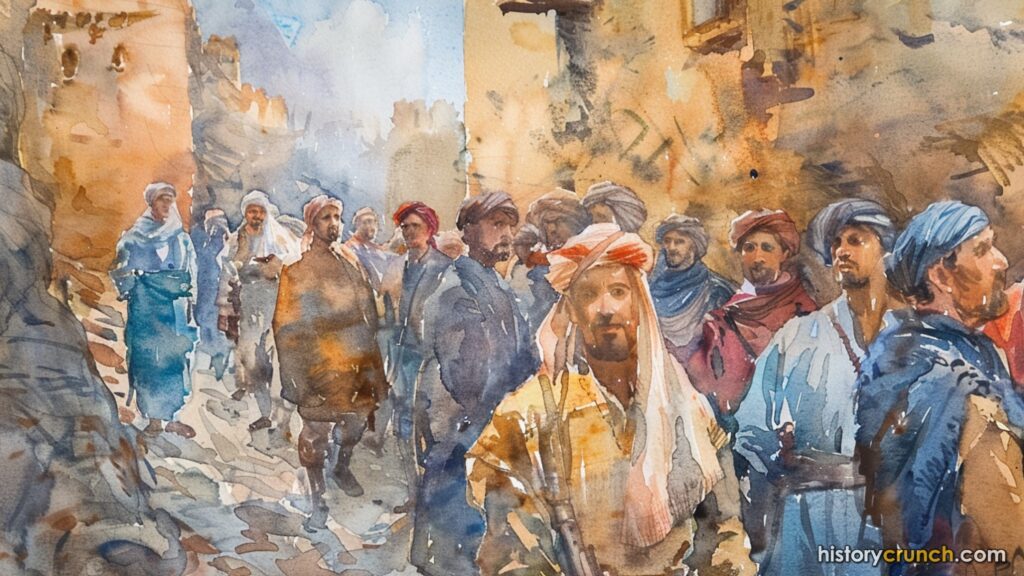
The First Moroccan Crisis (which is also known as the ‘Tangier Crisis’) was an important conflict that took place from March 1905 until May of 1906 and led to increased tensions between the European powers of France and Germany. In fact, the two European nations disagreed over the status of the African nation of Morocco and who should have influence over the region. Historians consider the events of the First Moroccan Crisis (and later Second Moroccan Crisis) as significant causes of World War I, because they increased the tensions between the European powers before the outbreak of the First World War in 1914.
WHAT CAUSED THE FIRST MOROCCAN CRISIS?
To recognize the importance of the First Moroccan Crisis, its first important to understand the history and significance of European imperialism in the 19th century. Imperialism is understood as a process in which a country overtakes another country or region’s political, economic or social life. Imperialism was carried out by the powerful European nations against the rest of world in the decades before World War I began. For example, in the 19th century European nations carried out massive campaigns of imperialism against the regions of Africa in an event known as the Scramble for Africa. The Scramble of Africa led to the start of World War I because it increased the rivalry between the European nations as they fought against each other for territory in Africa and control over different regions. The First Moroccan Crisis was one of these significant times in which tensions from European imperialism created conflict between the main powers in Europe.

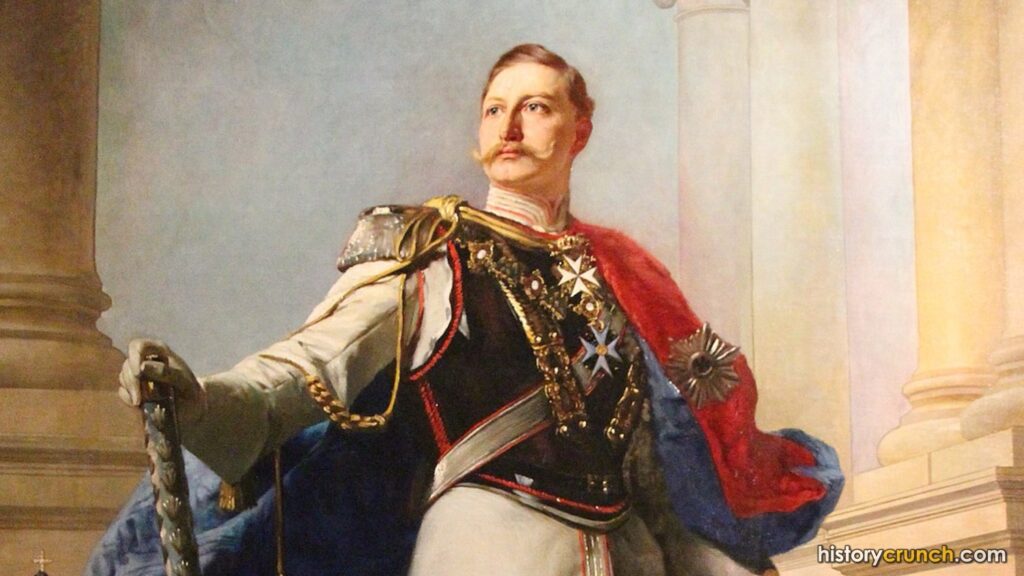
In general, European imperialism of Africa created tensions in that Germany felt left out of territory in the region. For instance, Britain and France were the two Europeans nations that had control over the largest regions of Africa during the Scramble for Africa and this caused tension with Germany. Germany was angry that it lacked the colonies in Africa (as well as Asia) that both Britain and France had and resented their general role in Africa. For example, in 1914, Britain had 56 total colonies around the world; France had 29 colonies and Germany was limited to just 10 colonies. This anger by Germany led to the First Moroccan Crisis. In fact, the event that sparked the First Moroccan Crisis was a visit to Morocco by the German Kaiser, Wilhelm II, on March 31st in 1905.
MAJOR EVENTS OF THE FIRST MOROCCAN CRISIS
As stated previously, Morocco is a nation located in northwestern Africa. In the early 20th century, this region of Africa was under the influence of French imperialism. As such, France considered Morocco to be within its ‘sphere of influence’. As such, when the German Kaiser, Wilhelm II, arrived in Tangier, Morocco in 1905 it caused anger to erupt from France. Wilhelm II went to Morocco to speak with representatives of the Moroccan Sultan – Abdelaziz. He also toured the city for a bit and then returned to his ship after just a few hours. While the visit was quite short, it was the hope of Germany to create a divide in Morocco that would cause France to lose its influence over the region. In fact, Germany soon called for a conference of the European nations to determine France’s role in Morocco.
Throughout the spring and summer of 1905, the tensions between France and Germany threatened to boil over into actual war. For example, while neither nation really wanted to go to war over the issue of Morocco there were still calls on both sides that they were willing to do just as such. Both nations prepared their armies for war and Germany even positioned armed units at the border it shared with France. This situation continued until the Algeciras Conference, which was called to settle the disagreement.
The Algeciras Conference took place from January 16th until April 7th in 1906 and was held in Algeciras, Spain. At the conference, Germany hoped to gain support from the other European nations for its role in Africa. However, the Algeciras Conference ended up being a failure for Germany, as almost all of the nations present sided with France in the dispute. In fact, only Austria-Hungary agreed with Germany’s view. Whereas, France had the support of the following: Britain, Italy, Russia, Spain and the United States.

OUTCOMES OF THE FIRST MOROCCAN CRISIS
On its own, the First Moroccan Crisis was not necessarily one of the most significant events in World history. However, when viewed in the context of World War I and European imperialism, the First Moroccan Crisis was an important factor that led to later events. In fact, it was a contributing factor to the Second Moroccan Crisis, which occurred just a few years later in 1911. As well, historians view the Frist Moroccan Crisis as one of the most important events that led to outbreak of World War I in 1914. This is because the crisis heightened the tensions between France and Germany, which became two of the major nations involved in the First World War.
Another important outcome of the First Moroccan Crisis, which also impacted World War I, was the increased assistance between Britain and France. For instance, the two countries had aligned with each other just a year earlier in 1904 with the ‘Entente Cordiale’. The Entente Cordiale was an agreement between France and Britain that was finalized on April 8th in 1904. The Entente Cordiale was significant because it essentially ended century’s worth of tensions between the two countries and led to the eventual Triple Entente with Russia. The main focus of the Entente Cordiale was on overseas colonies and the rivalry that existed between France and Britain for these territories. In short, they each agreed to recognize each other’s spheres of influence in Africa and Asia, which united them in a common front against Germany. From Germany’s perspective, the Entente Cordiale was disappointing because they ad used the previous French and English tensions as a way of asserting their own dominance in Europe. The events of the First Moroccan Crisis caused France and Britain to grow closer in their alliance, which eventually became the Triple Entente with the inclusion of Russia. Another significant cause of World War I was the alliance systems that existed before World War I.