The Ottoman Empire was a Muslim empire that controlled a vast territory across parts of Europe, Asia, and Africa for more than 600 years. At its height in the 16th and 17th centuries, it stretched from the borders of Persia in the east to the gates of Vienna in the west, and from the Black Sea in the north to North Africa in the south. The empire was founded in the late 13th century by a Turkish leader named Osman I and came to an end in 1922 following its defeat in World War I. Throughout its long history, the Ottoman Empire shaped the political, religious, and cultural life of three continents. Historians often consider the Ottoman Empire to be important to the Middle Ages and Age of Exploration in terms of of its timeframe in history.
OTTOMAN EMPIRE – ORIGINS AND FOUNDING
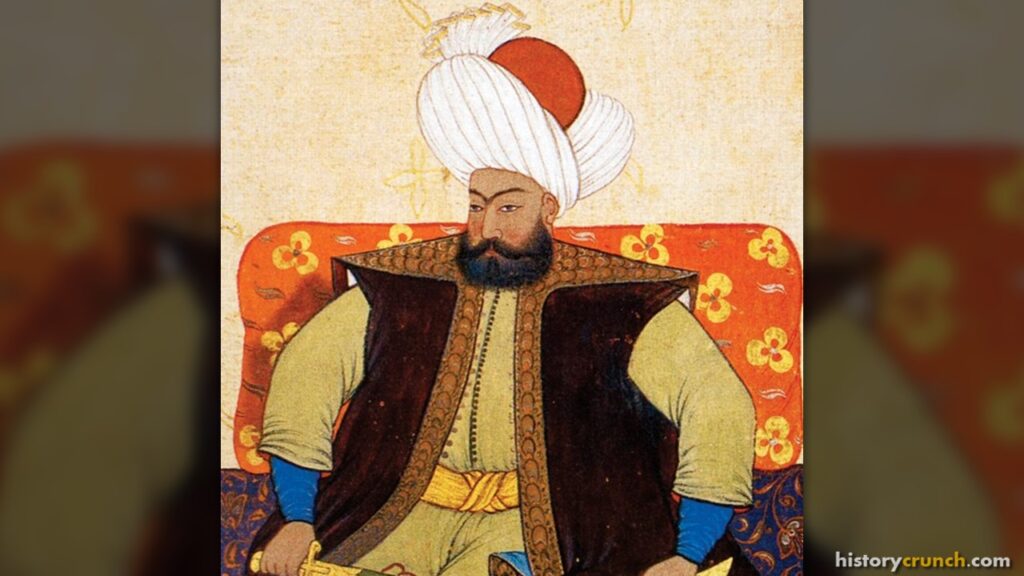
The Ottoman Empire had its roots in the decline of the Seljuk Turks, a Muslim dynasty that had controlled much of Anatolia, which is the region that makes up the bulk of modern-day Turkey. In the late 13th century, the Seljuk state fragmented into a series of smaller Turkish principalities. One of these principalities was led by a warrior chieftain named Osman I, who ruled a small territory in northwestern Anatolia near the borders of the weakening Byzantine Empire. Osman proved to be an effective military leader and gradually expanded his territory at the expense of the Byzantines. His followers became known as Osmanlis, which European languages later rendered as Ottomans.
Osman I died around 1326, but the state he founded continued to grow rapidly under his successors. His son Orhan captured the important Byzantine city of Bursa in 1326, which became the first Ottoman capital. The Ottomans then crossed into Europe for the first time in the 1350s, establishing a foothold on the Balkan Peninsula. This expansion into Europe would prove to be one of the defining features of the early Ottoman state.
OTTOMAN EMPIRE – EXPANSION AND THE FALL OF CONSTANTINOPLE
The Ottoman Empire expanded steadily through the late 14th and early 15th centuries, bringing much of the Balkan Peninsula under its control. However, the empire suffered a severe setback in 1402 when a Central Asian conqueror named Timur, also known as Tamerlane, defeated and captured the Ottoman Sultan Bayezid I at the Battle of Ankara. The empire nearly collapsed as a result and spent several decades rebuilding under a series of successors.
By the mid-15th century, the Ottomans had recovered their strength and turned their attention to the most prized target in the region: Constantinople, the capital of the Byzantine Empire. Constantinople was one of the most strategically important and historically significant cities in the world, sitting at the crossroads of Europe and Asia. The Byzantine Empire had been weakening for centuries and was by this point a shadow of its former self, controlling little more than the city itself.
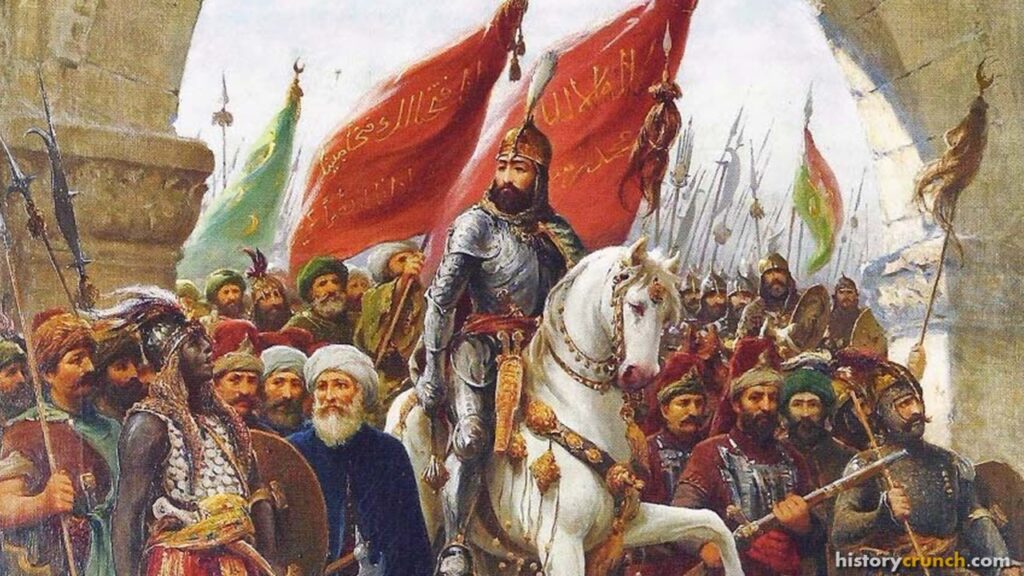
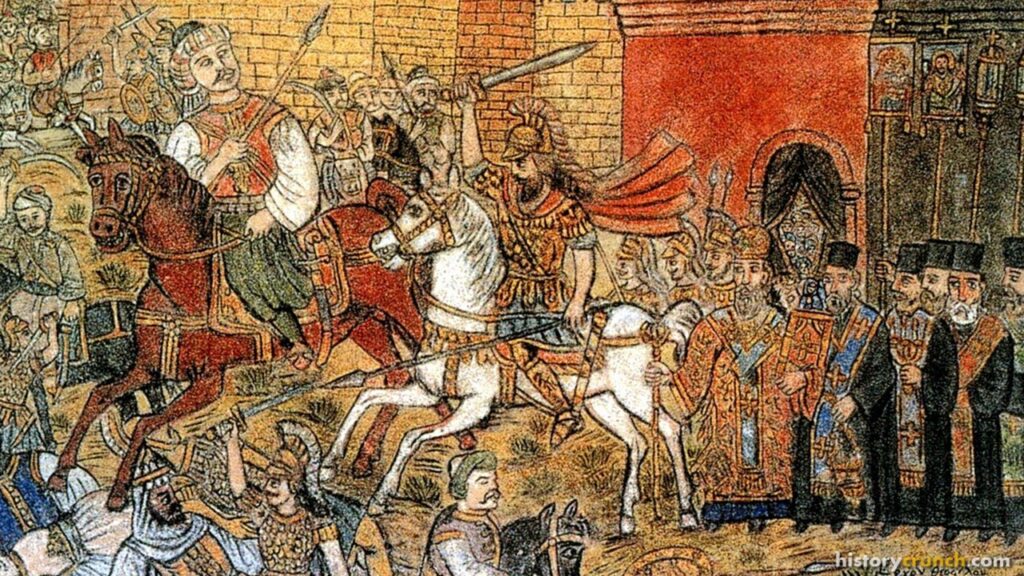
In 1453, the Ottoman Sultan Mehmed II, known as Mehmed the Conqueror, launched a massive siege of Constantinople with an army estimated at well over 80,000 men. The Byzantine defenders were vastly outnumbered. After a siege of roughly 53 days, Ottoman forces broke through the city’s ancient walls on May 29th, 1453, and Constantinople fell. The Byzantine Empire, which had existed for over a thousand years as the eastern continuation of the Roman Empire, came to an end. Mehmed II renamed the city Istanbul and made it the new capital of the Ottoman Empire. The fall of Constantinople sent shockwaves across Europe and is considered one of the most significant events of the Middle Ages. In fact, historians consider the fall of Constantinople to be significant in the European explorations of the Age of Exploration due to the search for a new sea route to the eastern markets in Asia.
OTTOMAN EMPIRE – HEIGHT OF POWER
The Ottoman Empire reached its greatest power and territorial extent during the reign of Sultan Suleiman I, known in the West as Suleiman the Magnificent, who ruled from 1520 to 1566. Under Suleiman, the empire expanded dramatically in multiple directions at once. In Europe, Ottoman armies pushed deep into Hungary and laid siege to Vienna in 1529, coming closer than any Muslim force ever had to the heart of Western Europe. In the Middle East, Suleiman conquered much of Persia, Mesopotamia, and the Arab lands of the Levant. In North Africa, Ottoman control extended across Egypt and along the Mediterranean coast.
Suleiman was not only a great military commander but also a skilled administrator and lawmaker. In fact, he is known in Turkish history as Kanuni, meaning the Lawgiver, for the extensive legal reforms he carried out during his reign. He reorganized the Ottoman legal system and created a more consistent framework of laws that governed the empire’s diverse population. Furthermore, his reign was considered a golden age for Ottoman art, architecture, and culture. The construction of magnificent mosques, palaces, and public buildings during this period left a lasting mark on the cities of the empire, most notably Istanbul.
At its height, the Ottoman Empire controlled a population of tens of millions of people from many different ethnic, religious, and linguistic backgrounds. The empire used a system known as the millet system to manage this diversity, allowing non-Muslim communities such as Christians and Jews to govern their own internal affairs according to their own laws and religious leaders, as long as they paid taxes and remained loyal to the sultan. This system allowed the empire to maintain a degree of order across its vast and diverse territories for centuries.
OTTOMAN EMPIRE – GOVERNMENT AND SOCIETY
The Ottoman Empire was an absolute monarchy headed by the sultan, who held supreme political, military, and religious authority. The sultan was advised by a council of senior officials known as the Divan, which was led by a chief minister called the Grand Vizier. The Grand Vizier effectively managed the day-to-day administration of the empire on behalf of the sultan and was one of the most powerful positions in the Ottoman state.
One of the most distinctive features of Ottoman government was the devshirme system, which was used to staff the imperial administration and military. Under this system, the empire recruited boys from Christian families in the Balkan regions, converted them to Islam, and trained them for service in the Ottoman state. The most talented were educated in the palace schools and went on to become senior officials, ministers, and generals. Others were trained as soldiers in the elite infantry corps known as the Janissaries, which became the backbone of the Ottoman military. The Janissaries were among the most feared and effective soldiers in the world during the height of Ottoman power.
Ottoman society was organized around religion as much as it was around ethnic or national identity. Islam was the official religion of the empire and shaped its laws, culture, and public life. However, the empire’s large Christian and Jewish populations were generally tolerated and allowed to practice their faiths, provided they accepted the political authority of the sultan and paid the required taxes. The major cities of the empire, including Istanbul, Cairo, and Baghdad, were important centers of trade, scholarship, and culture that attracted people from across the known world.
OTTOMAN EMPIRE – CONFLICT WITH EUROPE AND PERSIA
Throughout its history, the Ottoman Empire was engaged in near-constant conflict with its neighbors. In Europe, the primary opponents were the Habsburg Empire, which controlled much of central Europe, and the Republic of Venice, which competed with the Ottomans for control of the eastern Mediterranean. The Ottomans and Habsburgs fought a series of wars across Hungary and the Balkans over many decades, with neither side able to decisively defeat the other.
In the east, the Ottomans were locked in a long rivalry with the Safavid Empire of Persia. The conflict between the two empires was driven by both territorial competition and religious differences. The Ottomans were Sunni Muslims, while the Safavids were Shia Muslims, and the religious dimension of the conflict made it particularly bitter and persistent. The two empires fought a series of wars over the course of the 16th and 17th centuries, with control of Mesopotamia and the Caucasus region changing hands on several occasions.
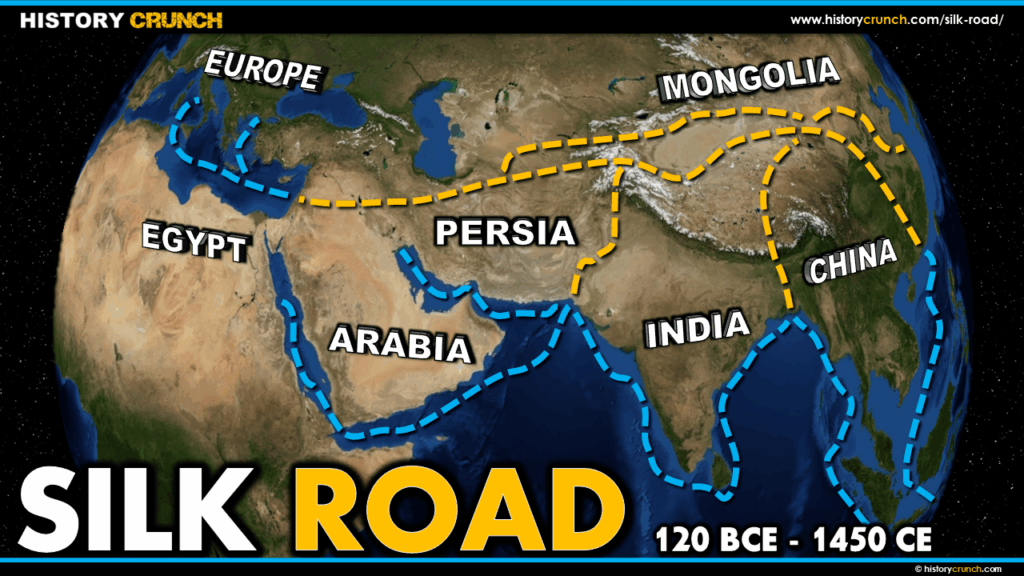
As mentioned above, the Ottoman Empire also played an important role in shaping the Age of Exploration. The Ottoman control of overland trade routes between Europe and Asia, including the old Silk Road networks, made it difficult and expensive for European merchants to trade directly with the Far East. In reality, the desire to find alternative sea routes around Ottoman-controlled territory was one of the key reasons why Portugal, Spain, and other European nations invested so heavily in maritime exploration during the 15th and 16th centuries.
OTTOMAN EMPIRE – DECLINE
The Ottoman Empire began to show signs of decline in the late 17th century. A second Ottoman attempt to capture Vienna in 1683 ended in a decisive defeat at the hands of a combined European force, marking a turning point after which the empire was increasingly on the defensive in Europe. Over the following decades and centuries, the empire gradually lost territory in the Balkans and around the Black Sea to the expanding powers of Austria and Russia.
Internal problems also weakened the empire from within. The power of the Janissaries grew to the point where they became a destabilizing political force, frequently overthrowing sultans who attempted to reform the military or reduce their influence. Corruption, economic difficulties, and the growing weakness of the central government made it harder to administer the empire’s vast territories effectively. Furthermore, the rise of nationalism in the 19th century created serious problems within the empire, as various ethnic and religious groups in the Balkans and the Middle East began to seek independence.
The 19th century brought a series of painful losses. Greece won its independence in 1830 after a war of independence that drew support from European powers. Serbia, Romania, and Bulgaria gradually broke away in the decades that followed. By the late 19th century, the empire had lost most of its European territory and was being referred to by European observers as the “sick man of Europe,” a term that reflected its weakened condition and the expectation that it would eventually collapse entirely.
OTTOMAN EMPIRE – WORLD WAR I AND THE END OF THE EMPIRE
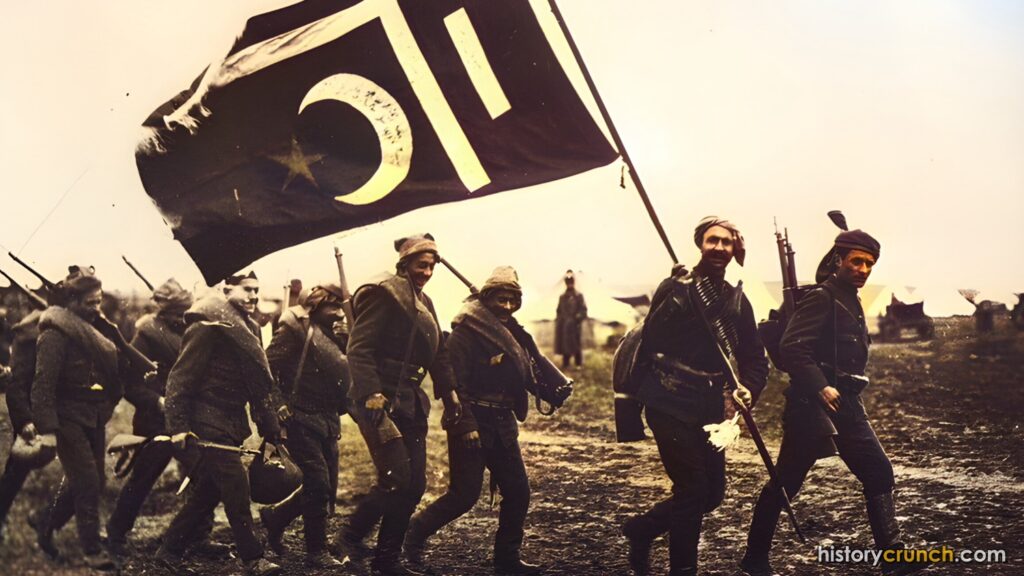
The Ottoman Empire entered World War I in 1914 on the side of the Central Powers, alongside Germany and Austria-Hungary. The decision proved catastrophic. Ottoman forces fought on multiple fronts simultaneously, including against Britain in the Middle East and against Russia in the Caucasus. The war strained the empire’s already weakened resources to the breaking point.
During the war, the Ottoman government carried out the systematic deportation and killing of the Armenian population of Anatolia, an event that resulted in the deaths of an estimated 600,000 to 1.5 million Armenians. Historians widely recognize these events as the Armenian Genocide, one of the first genocides of the 20th century. The Ottoman government at the time justified the deportations on security grounds, but the scale and deliberate nature of the killings have left a lasting historical controversy that continues to be debated today.
The Ottoman Empire was on the losing side when World War I ended in 1918. The empire’s Arab territories were divided between Britain and France under a system of League of Nations mandates. A war of independence in Anatolia, led by the Turkish military commander Mustafa Kemal, successfully resisted the partition of the Turkish heartland by the Allied powers. In 1922, Mustafa Kemal abolished the Ottoman sultanate, formally ending the empire that had lasted for more than 600 years. The following year, in 1923, the modern Republic of Turkey was proclaimed, with Mustafa Kemal as its first president. He later took the surname Ataturk, meaning Father of the Turks.

OTTOMAN EMPIRE – SIGNIFICANCE
The significance of the Ottoman Empire is difficult to overstate. For more than six centuries, it was one of the most powerful states in the world and shaped the history of three continents. Its conquest of Constantinople in 1453 ended the Byzantine Empire and permanently altered the balance of power between the Christian and Muslim worlds. Its control of trade routes between Europe and Asia helped drive the Age of Exploration and, in doing so, contributed indirectly to the European discovery of the Americas.
The legacy of the Ottoman Empire continues to shape the modern world in important ways. The borders of many modern states in the Middle East, the Balkans, and North Africa were drawn largely in response to the collapse of Ottoman territory after World War I. Ethnic and religious conflicts that trace their roots to the Ottoman period continue to affect those regions today. More specifically, the history of the empire remains central to the national identities of Turkey, Greece, the Arab states of the Middle East, and many other countries. As such, the Ottoman Empire stands as one of the most consequential political structures in the history of the modern world.